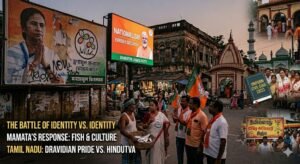
This time, the election in West Bengal is no longer limited to the performance of the government versus the criticism by the opposition, but has transformed into a battle of ‘identity versus identity’. The report card of nearly 15 years in power is on the backfoot, while issues like nationalism, religion, and pride have come to the frontfoot.
The Bharatiya Janata Party’s strategy is clearly visible – to gain electoral edge by consolidating majority voters. Under this, issues like border security, infiltration, and religious balance are emerging more prominently in election speeches compared to development and employment. Prime Minister Narendra Modi and Home Minister Amit Shah have created a big narrative in their speeches by linking the election with nation and religion. The Prime Minister even went so far as to say that if the current situation continues, Hindus could become a minority in West Bengal.
Emotional Narrative vs Data
According to political analysts, the BJP is trying to create a widespread emotional appeal by linking this election to demographic and identity issues. The opposition terms this as the politics of fear and an attempt to divert attention from real issues. However, it is also true that the impact of emotional appeal is faster and more widespread compared to data and report cards. In this sequence, Home Minister Amit Shah, linking the election to national security, emphasized the need to stop infiltration.
Mamata Banerjee’s response
In response to this narrative of the BJP, Chief Minister Mamata Banerjee has tried to take the electoral debate to the lives and food habits of common people. She presented the culture and cuisine of Bengal, especially fish, as a symbol of identity. Trinamool Congress leader Mahua Moitra, taking this debate further, called it an issue of cultural identity and personal freedom.
UCC and Linguistic Identity in Assam
In Assam, the electoral contest is stuck between the issues of Uniform Civil Code, religion, and regional identity. Here, the contest between BJP and Congress is not limited only to Hindu versus Muslim, but identity politics has also emerged between the Assamese and Bangla-speaking communities. Leaders like Congress leader Gaurav Gogoi and Karnataka Deputy Chief Minister D K Shivakumar are also pushing their respective political lines in this debate.
Hindutva vs Dravidian Model in Tamil Nadu
The electoral story in Tamil Nadu appears in still different colors. Here, the contest is between Hindutva and Dravidian identity. Dravidian parties are keeping language and regional culture in the center, while the BJP is trying to establish its ideological narrative. In Kerala and Puducherry too, ‘soft politics’ related to religion and culture is influencing the electoral atmosphere.
Whose narrative will hit ?
Overall, even though the electoral issues may appear to change in different states, the central theme has remained ‘identity politics’. Now the biggest question is whether the voters will decide on the basis of development and performance or the impact of emotional and identity-based appeal will be greater. There is still time for the election results to come, but even before that, it has become clear that this time the real fight is more about ‘narratives’ than ‘issues’.
About the Author