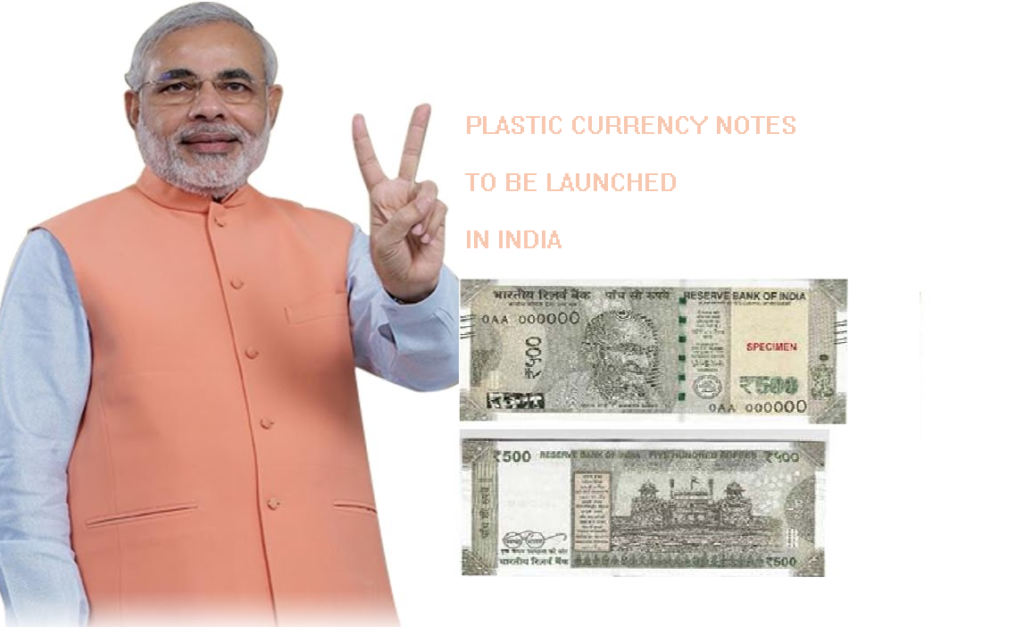

The Reserve Bank of India (RBI) is seriously considering re-introducing polymer (plastic) notes in the country, keeping in view the increasing demand for currency notes and the rising cost of printing. According to sources, this was discussed in detail at the central bank’s recent board meeting held in Patna and Mumbai.
Sources indicate that the decision was taken because plastic notes will cost less to produce and will last longer. An announcement regarding the start of public trials for plastic notes could be made very soon.
Key Reasons and Benefits for This Change – Printing Cost: According to data, the cost of printing notes has increased from ₹5,101.4 crore in FY 2023-24 to ₹6,372.8 crore in 2024-25. Polymer note production is expected to be cheaper compared to paper.
Durability: Plastic notes are more durable than paper notes and last longer. The withdrawal of currently torn and damaged notes is a significant challenge. In FY 2024-25, 2,38,563 lakh such notes were destroyed, which is higher than the previous year’s 2,12,493 lakh notes. Among these notes, ₹500 and ₹100 notes were the highest.
Solution to Technical Bottlenecks – Although this project was suspended in 2012 due to technical challenges, technology has advanced so much now that ATMs can also easily identify and dispense these notes.
Coins and Previous Attempts – The Reserve Bank attempted to increase the circulation of currency (coins) in the market, but it did not yield the desired results. The total supply of coins increased from 12,056 lakh in 2023-24 to 15,000 lakh in 2024-25. In 2012, the then government had decided to issue one billion notes of 10-rupee polymer on a pilot basis in five cities.
Global Status – India is not the only country taking steps in this direction. About 60 countries worldwide are already using polymer notes. Australia first adopted it in 1988, followed by countries like Singapore, Indonesia, Thailand, and Malaysia applying this technology. Very soon, the RBI may announce public trials of these plastic notes.
Analysis of Plastic Notes – This thought of the RBI regarding the introduction of plastic notes is significant from a scientific and economic perspective. Its positive and negative aspects were analyzed below:
Positive Aspects (Pros):
High Durability – Plastic notes are stronger compared to paper notes. They are water-resistant and do not tear easily.
Long-term Economic Benefit – Although initial printing costs may be higher, due to their long lifespan, the need to repeatedly print new notes will decrease, bringing savings for the government in the long run.
Security & Counterfeit Prevention – It is easier to add advanced security features (Security features) to polymer notes. This makes it extremely difficult to produce counterfeit currency.
Cleanliness – Plastic notes do not get dirty easily nor do they easily get infected with germs, which is also safer from a health perspective.
Negative Aspects (Cons) :
High Initial Cost – Special machinery and technology are required for polymer notes. To introduce it across the country, the banking infrastructure (ATMs, counting machines) will have to be changed, which could be a large financial burden.
Environmental Impact – ଝPaper notes are completely bio-degradable (Bio-degradable). Plastic notes may pose a challenge for the environment, as the process to destroy them needs to be environmentally friendly.
User Problems – According to some studies, plastic notes may be more slippery or stick together while counting in banks, which can cause inconvenience during counting.
Damage in High Heat- In severe heat, there is a risk of these notes becoming deformed, which is a concern for a country with a hot climate like India.
Conclusion –
Stepping towards plastic notes is a modern thought. If the RBI is successful in its first phase of testing, it could bring about a major change in the Indian economy. But its success will depend entirely on how the technical standards and environmental challenges are resolved.