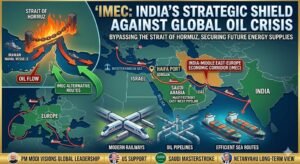
Amidst a looming global energy crisis triggered by Iran’s influence over the vital Strait of Hormuz, a beacon of hope has emerged. Arab nations, seeking to break free from dependencies on traditional, vulnerable maritime routes, are actively devising a new strategic masterplan. Centering this strategy is India’s mega infrastructure initiative, the India-Middle East-Europe Economic Corridor (IMEC), which is poised to be a definitive ‘game-changer’ in securing future global petrol and diesel supplies.
For decades, the narrow Strait of Hormuz has served as the critical lifeline for transporting Gulf oil worldwide. However, recent escalations in regional tensions have brutally exposed its inherent vulnerability. Energy experts fear that even a minor disruption in this volatile maritime passage could paralyze global energy flows within days.
Recognizing this existential threat, Middle Eastern nations are now urgently exploring alternative logistical networks—including vast networks of pipelines, railways, and roads—to bypass this geographical bottleneck.
India’s IMEC: The Ultimate Security Guarantee
The Financial Times reports that the US-backed IMEC project stands at the absolute center of these high-level discussions regarding alternative oil routes. This ambitious corridor aims to connect India directly to Europe via the Middle East.
Prime Minister Narendra Modi’s recent visionary call during his visit to Israel, urging for strengthened cooperation under both the IMEC and I2U2 (India, Israel, UAE, and USA) frameworks, is now rapidly manifesting on the ground. India, once primarily viewed as a massive consumer market, is now rapidly ascending as a potent global leader capable of securing and stabilizing vital international supply chains.
Saudi Arabia’s Strategic ‘Masterstroke’
Anticipating future challenges, Saudi Arabia has already established a robust alternative. Its expansive ‘East-West Pipeline’ transports crude oil directly to the Red Sea, effectively eliminating the need for shipments to traverse the Strait of Hormuz. A senior Gulf energy official lauded this move as a “genius masterstroke.”
Furthermore, an incredibly ambitious project is underway to link the Arabian Peninsula directly to the Mediterranean Sea via Israel’s strategic port of Haifa. Christopher Bush, CEO of the Lebanese construction giant ‘CAT Group’, confirmed that market interest in various pipeline ventures has surged dramatically.
Trump and Netanyahu’s Strategic Vision
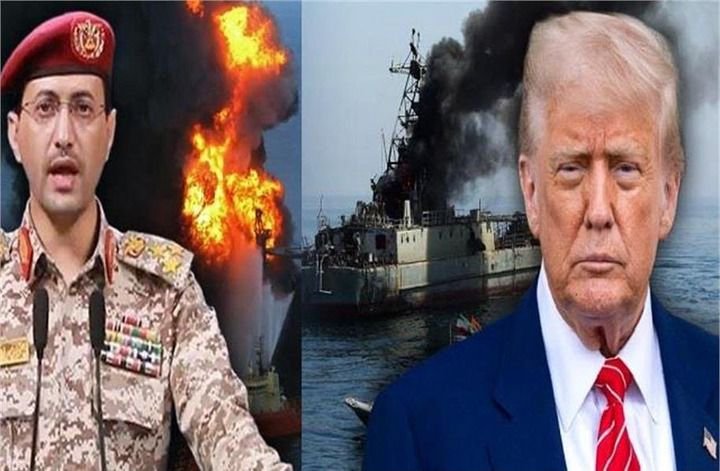
Amidst this tectonic shift in regional strategy, President Donald Trump has issued a clear message to nations reliant on the Strait of Hormuz for oil: show resolve and take control of this crucial waterway themselves. While Trump reassured Middle Eastern allies of continued security support, he simultaneously emphasized that nations must secure their own trade routes and utilize them.
Concurrently, Israeli Prime Minister Benjamin Netanyahu has emerged as a staunch advocate for these alternative corridors. He maintains that while military options provide only transient relief, enduring peace can only be secured through strategic shifts in foundational infrastructure—such as bypassing Iran’s geographical chokepoints by constructing extensive pipelines towards the West.
About the Author