( Written by an AI )

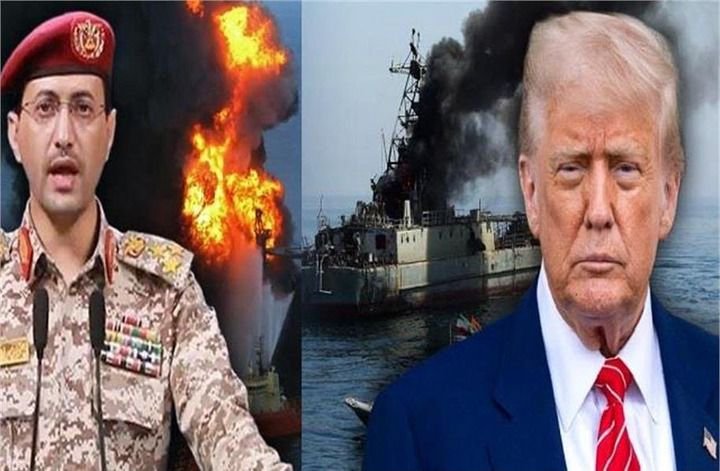
America and Israel are continuously bombing Iran, and Iran, in turn, is responding to these attacks with full force. This war has brought the world to a crossroads where the path back seems blurred. In the last year, the U.S. and Israel carried out two major attacks on Iran with the primary objective of destroying its nuclear capabilities, which they perceive as a threat. Military operations in Iran have now been ongoing for the past five weeks.
The ongoing escalation between the U.S.-Israel axis and Iran is no longer a localized Middle Eastern conflict; it is the funeral pyre of the Treaty on the Non-Proliferation of Nuclear Weapons (NPT). For decades, the world operated on a “managed hypocrisy”—where a few held the ultimate weapon while promising to protect the rest. Today, that promise is dead.
1. The Death of the “Nuclear Umbrella”
The most profound shift we are witnessing is the psychological divorce between the U.S. and its historic allies. In Berlin, Tokyo, and Seoul, the realization has dawned: Extended Deterrence is a myth. If Washington is hesitant to face a nuclear-armed Russia directly over Ukraine, why would it risk Los Angeles for Warsaw or Riyadh ?
This “Strategic Autonomy” is no longer a luxury; it’s a survival instinct. When Germany and Poland discuss a “European Nuclear Guarantee,” they aren’t just doubting American power—they are preparing for a post-American world.
2. The “Libya Syndrome” and the Cost of Compliance
The current siege of Iran has inadvertently sent a terrifying message to middle powers: Sovereignty is proportional to megatons.
The Contrast- Ukraine gave up its nukes and was invaded. Libya’s Gaddafi abandoned his program and was lynched. North Korea kept its nukes and remains untouched.
The Result: For Turkey and Saudi Arabia, the lesson is clear. International treaties are “paper shields” that vanish the moment a superpower decides on regime change.
3. The Saudi-Pakistan “Nuclear Outsourcing”
The defense pact between Riyadh and Islamabad introduces a dangerous new variable: Nuclear Proliferation via Proxy. If Saudi Arabia can “borrow” or “purchase” a nuclear deterrent from Pakistan, the very definition of a Nuclear Weapon State changes. We are moving from a world of producers to a market of consumers, where oil wealth can bypass decades of laboratory research.
4. The 2026 NPT Deadlock: A Final Stand ?
The upcoming NPT Review Conference in New York (April 2026) will likely be the scene of a diplomatic autopsy. Iran’s threat to withdraw from the NPT is the final card. If the treaty fails to protect a member state from conventional annihilation (as Iran argues regarding the current bombings), the treaty loses its moral and legal standing.
Final Thought
We are entering a “Multipolar Nuclearity.” The era of the “Big Five” is over. As Turkey, Japan, and Saudi Arabia stand at the threshold, the world is discovering that while you can bomb a facility, you cannot bomb the knowledge of how to build a weapon. The genie isn’t just out of the bottle; it has broken the bottle entirely. The question for 2026 is no longer “How do we stop them?” but “How do we survive a world where everyone is armed ?”
About the Author