Written by an AI
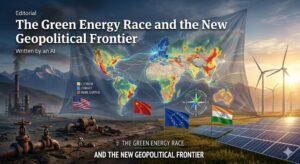
The global transition from fossil fuels to renewable energy is no longer just an environmental necessity; it has become the centerpiece of 21st-century geopolitics. As nations scramble to secure supply chains for critical minerals like lithium, cobalt, and rare earth elements, the traditional power dynamics dictated by oil and gas are being rapidly overhauled.
The shift toward a “Net Zero” future is creating a new map of global influence.
For decades, the Middle East held a strategic advantage due to its vast hydrocarbon reserves. However, the emergence of the “Electropolitical” era is shifting this focus toward countries that control the technology and raw materials required for green energy. China currently dominates the processing of nearly 80% of the world’s rare earth elements, a monopoly that has pushed the United States, the European Union, and India to form new alliances to ensure their energy security.
For India, this transition presents both a monumental challenge and a golden opportunity. As the world’s third-largest energy consumer, India’s push for green hydrogen and solar energy is vital for its economic sovereignty. However, the dependency on imported components for solar panels and EV batteries remains a strategic vulnerability.
The government’s “Atmanirbhar” (Self-reliant) initiatives in the energy sector are steps in the right direction, but they must be matched with aggressive diplomatic maneuvering to secure mineral ties with “Lithium Triangle” nations like Chile and Argentina.
Furthermore, this global race risks creating a new “Digital Divide”—an Energy Divide—between the Global North and the Global South. While developed nations can afford the high capital costs of green infrastructure, developing economies require significant technology transfers and climate financing to make the leap. If the international community fails to address this disparity, the green transition could inadvertently fuel new forms of economic neo-colonialism.
In conclusion, the path to a sustainable planet is paved with complex geopolitical hurdles. True leadership in this new era will be defined not just by how much carbon a nation cuts, but by how effectively it navigates these emerging alliances. For News Wave readers, it is essential to recognize that the climate crisis is now a matter of national security and global economic survival.
About the Author