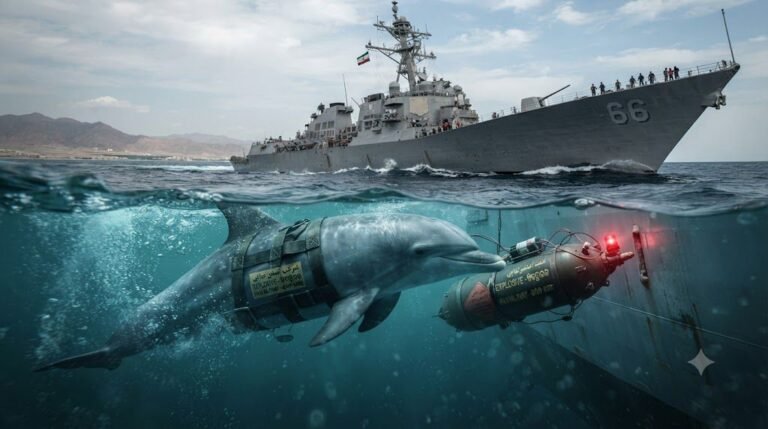
The rising tension in the Middle East has pushed the entire world toward a new and dangerous crisis. This is being termed an ‘Energy Lockdown.’ The situation is so grave that the Southeast Asian nation, the Philippines, has already declared a ‘National Energy Emergency’ in its country. According to a Bloomberg report, this is the first nationwide emergency in the country since the 2020 COVID crisis. The Philippines is entirely dependent on the Middle East for its oil requirements; hence, there is a state of outcry there. But the question arises: will this also impact India?
What exactly is this ‘Energy Lockdown’?
To understand it in simple terms, an ‘Energy Emergency’ or ‘Energy Lockdown’ is imposed when a country’s fuel supply (such as oil, gas, and electricity) suddenly faces a major crisis. When the supply chain of petrol, diesel, and gas completely breaks down due to war or a significant dispute, the country is left without sufficient fuel to meet its needs. This type of situation is called an ‘Energy Lockdown.’
When does such a situation arise?
An Energy Lockdown is primarily imposed due to war between two countries or international tension. When the supply stops, the balance of demand and supply in the market gets disrupted. The very first impact is felt on petrol and diesel prices, which begin to skyrocket. Following this, electricity generation starts to shut down, factories close, and the inflation situation becomes uncontrollable. Since India is heavily dependent on imports for its energy requirements, such a situation could break the back of the country’s economy.
Is the warning bell ringing for India too?
The biggest concern for India is regarding the ‘Strait of Hormuz.’ About 20% of the world’s crude oil passes through this route. If this route is closed due to war, oil prices will soar like a rocket. India imports about 90% of its oil requirements from abroad, which is a major challenge for us.
Surprisingly, India currently has a Strategic Petroleum Reserve (SPR) capable of meeting only 9.5 days of its requirements. Prime Minister Narendra Modi also recently stated in the Lok Sabha that the war in West Asia is a major challenge. He warned the citizens that we must be mentally prepared to face any major challenge, similar to Corona.
What is SOH and SPR
Amidst the ongoing instability in the Middle East, it is extremely important to know about the ‘Strait of Hormuz’ and India’s Strategic Petroleum Reserve (SPR). These two subjects are directly linked to India’s energy security.
1. Strait of Hormuz: The Energy Jugular of the World
It is a narrow maritime passage located between Oman and Iran, connecting the Persian Gulf with the Gulf of Oman and the Arabian Sea.
Importance: More than 20% of the world’s crude oil is transported through this small route. Major exporting countries like Saudi Arabia, Iraq, Kuwait, and the United Arab Emirates (UAE) depend on this route to ship their oil.
Risk for India: India imports a large quantity of oil from this region. If Iran closes this route due to war, the global oil supply will come to a standstill, and oil prices in countries like India will rise abnormally.
Constraints: This route is so narrow that the width of its shipping lane is only a few kilometers. Therefore, even minor military tension can affect the movement of large ships.
2. India’s Strategic Petroleum Reserve (SPR)
When oil imports from the international market stop due to war or natural disasters, the Government of India stores oil in underground caverns to meet the country’s demand. This is called the ‘Strategic Petroleum Reserve.’
Current Status: India currently has the capacity to store a total of 5.33 Million Metric Tonnes (MMT) of crude oil in 3 locations:
Visakhapatnam (Andhra Pradesh): 1.33 MMT
Mangalore (Karnataka): 1.50 MMT
Padur (Karnataka): 2.50 MMT
Time Frame: This 5.33 MMT of oil can meet India’s emergency demand for approximately 9.5 days.
Future Plans: In the second phase, the government plans to build reserves at Chandikhole in Odisha (4 MMT) and an additional 2.5 MMT capacity at Padur. Once completed, India will have an additional reserve for about 22 days.
Note: According to the rules of the International Energy Agency (IEA), every country should have a reserve equal to at least 90 days of its oil imports. India is currently working toward this goal.
About the Author