( Analysis and Experts’ view is given below)
Summary –
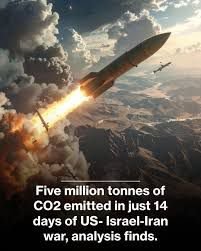
Attacks on Iran by the US and Israel caused 5 million tons of greenhouse gas emissions in two weeks. The destruction of buildings, oil strikes, and military activities significantly increased pollution levels, equivalent to the annual emissions of several countries.
…………………………………………………………………..
Iran-Israel-US War Climate Impact: A recent climate analysis has revealed that attacks on Iran by the US and Israel over the past two weeks have resulted in the emission of approximately 5 million tons of greenhouse gases. According to the report, emissions from this war are rising so rapidly that they are having an impact equivalent to the total emissions of 84 countries in the world. Along with this, it is rapidly depleting the global carbon budget.
Destruction of Buildings: The Biggest Cause
The study stated that the destruction of civilian buildings is the largest source of emissions. According to the Iranian Red Crescent, approximately 20,000 buildings have been destroyed due to attacks in Iran. The collapse of these buildings has resulted in an estimated emission equivalent to 2.4 million tons of CO_2 (tCO_2e), which is a major portion of the total emissions.
Pollution Increased by Military Activities
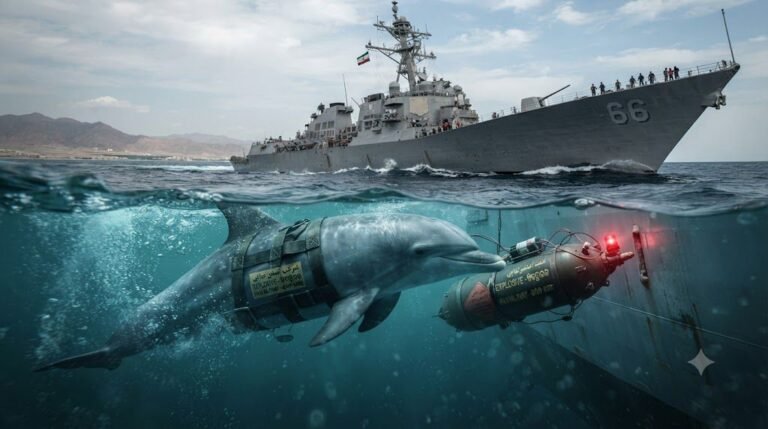
Experts say that keeping stealth bombers, fighter jets, and naval fleets constantly active significantly increases greenhouse gas emissions. Benjamin Neimark, an expert from Queen Mary University of London, previously stated that the US Navy’s large fleet remains active for long periods, requiring constant energy, food, and resources. He described them as “floating cities” that require massive amounts of energy to operate.
Attacks on Oil Facilities and Risk of Acid Rain
Attacks on oil facilities in Tehran and other areas of Iran caused toxic acid rain and affected millions of people with pollution. In these attacks, 2.5 to 5.9 million barrels of oil were destroyed, resulting in approximately 1.88 million tCO_2e in emissions.
Fuel Consumption:
Massive Emissions from Planes and Ships
The analysis also found that fuel used by US heavy bombers flying from western bases in England is the second-largest cause of emissions. In the first 14 days, 150 million to 270 million liters of fuel were consumed by aircraft, ships, and military vehicles, resulting in about 529,000 tCO_2e.
Carbon Emissions from Destroyed Military Equipment
The report also included the carbon impact of destroyed military equipment. During this period, 4 US aircraft were destroyed, while 28 Iranian aircraft, 21 naval ships, and about 300 missile launchers were lost. This resulted in approximately 172,000 tCO_2e in emissions. Additionally, the use of missiles and drones caused an additional emission of about 55,000 tCO_2e.
Total Emissions: Equivalent to Annual Levels of Small Nations
In the initial two weeks of the war, a total of 5,055,016 tCO_2e was emitted. This amount is equivalent to the annual emissions of countries like Kuwait or Iceland, or the total combined emissions of 84 of the world’s lowest-emitting countries.
Experts’ Warning: Every Attack Increases Climate Risk
Patrick Bigger, Research Director at the Climate and Community Institute, said that every missile attack is making the Earth hotter and more unstable. He stated, “Every refinery fire and every attack on a tanker shows that fossil fuel-based politics and a secure future cannot go hand in hand.”
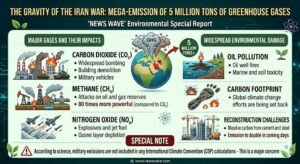
Major Emitted Gases and Their Adverse Effects:
1. Carbon Dioxide (CO_2):
Source: Extensive bombings, building collapses, and the use of military vehicles.
Impact: CO_2 constitutes the lion’s share of total emissions. The destruction of over 20,000 buildings has released dust and concrete powder into the atmosphere, significantly increasing carbon levels.
2. Methane (CH_4):
Source: Attacks on Iran’s oil and gas reserves.
Impact: Due to the damage caused to oil wells, vast amounts of methane are directly mixing into the atmosphere. Methane is approximately 80 times more potent than carbon dioxide in heating the atmosphere.
3. Nitrogen Oxide (NO_x):
Source: High-capacity explosives and jet fuel.
Impact: Besides causing air pollution, it plays a major role in the depletion of the “Ozone Layer.”
Environmental Impact: Oil Spills: Due to the attacks, approximately 1.88 million tons of crude oil have burnt, while some portions have mixed with the sea and soil. This has toxified marine life and groundwater.
Carbon Footprint: The smoke generated by approximately 270 million liters of fuel used in the war has pushed back global efforts to combat “Climate Change” by many years.
The Horror of Reconstruction: The millions of tons of cement and steel to be used in rebuilding cities after the war will double carbon emissions in the coming days.
Additional Information:
According to science, this type of “Military Emissions” is not included in the main calculations of any international climate summit (COP), which is a matter of great concern.
1. Expert Quotes (International Experts)
According to current reports from March 2026, the world’s leading environmentalists have expressed deep concern over this war:
Patrick Bigger (Director, Climate and Community Institute):
“Every missile strike is making our planet even hotter and more unstable. Burning gas equivalent to the annual emissions of a country like Iceland in just two weeks is a major catastrophe.”
Fred Otu-Larbi (Lead Author & Scientist):
“The way oil projects are being targeted is uncontrollably increasing the levels of toxic methane gas in the atmosphere.”
World Health Organization (WHO) Warning:
Due to fires in oil depots, there is a risk of “Black Rain” in Tehran and surrounding areas, which is fatal for respiration.
About the Author