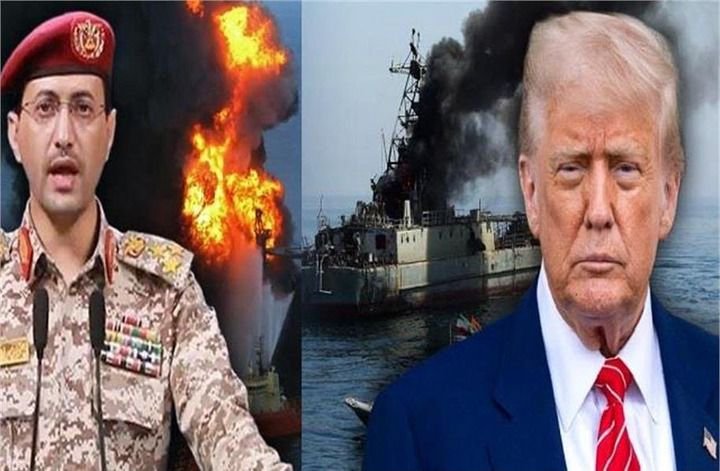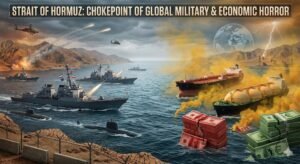
“Amidst the growing and intensifying tensions in West Asia, the world’s attention has once again zeroed in on the ‘Strait of Hormuz’. Iran has clarified that this crucial maritime route will remain open for now, but with certain specific conditions. Tehran has stated that only those ships can pass through this route which have no connection with its enemies. This statement has created new uncertainty in the global energy market and the shipping sector.”
“This strait is the world’s largest transit route for oil and gas supply, from where nearly 20 percent of crude oil and LNG (Liquefied Natural Gas) are transported. In such a situation, any kind of restriction here directly impacts the entire world. Following Iran’s decision, concern has mounted in the market that if the situation deteriorates further, there could be a terrible spike in oil prices.”
🇮🇳 The Hormuz Crisis and India:
Diplomacy of “Balance” and “Resolve”
At a time when the world is standing at the threshold of a nuclear war, this moment for India is a very complex ‘ordeal’ (Agni Pariksha). India’s diplomatic role is indispensable not just for self-defense, but also for world peace.
1. Emergence of India as the World’s “Mediator”
India’s relationships with both sides—Iran and America—are balanced. While we share ancient cultural ties and strategic interests in the ‘Chabahar Port’ with Iran, America is our major commercial and military partner. India can now become a “Peace Broker” and pave the way for Table Talks or discussion between the two.
2. Expansion of ‘Operation Sankalp’
The Indian Navy is already continuing ‘Operation Sankalp’ for the security of Indian ships in the Strait of Hormuz. In the current situation, India will have to make its naval power more active. Amidst the presence of Britain’s nuclear submarines, India, through its military presence, can make it clear that if Indian interests are harmed, it will not be tolerated.
3. Search for Parallel Energy Routes
At the diplomatic level, India must now look for alternatives for Energy Security. It is crucial to focus on increasing oil imports at higher discounts from Russia and utilizing non-Hormuz routes through Gujarat’s Kandla Port.
4. Exerting Pressure at G-20 and the World Stage
India is the voice of the ‘Global South’ or developing nations. Due to the apprehension of nuclear war, India can unite the poor and developing nations, who are bound to suffer the most, to pressure Iran and America at the United Nations.
Conclusion:
India’s supreme dharma is “Vasudhaiva Kutumbakam” (The World is One Family). But in today’s situation, along with ‘Peace’, we also have to display ‘Power’. If a fire erupts in Hormuz, its impact will affect India the most; therefore, the time has come for India not to be ‘neutral’, but to mediate ‘sincerely’.
About the Author