Highlights – US President Trump has bombed Iran’s Kharg Island, causing panic in the global oil market. Kharg Island is the main hub of Iran’s oil exports, with the majority of the oil going to China. In a sense, the U.S. has provoked China through this attack, crossing an undeclared “Laxman Rekha” (red line). Consequently, the nature of this war could become even more horrific.
…………………………………………………………………
US President Donald Trump has crossed the red line in the ongoing war with Iran. On Saturday morning, Trump announced on social media that US forces had carried out heavy bombing on military targets at Iran’s ‘crown jewel,’ Kharg Island. Trump described it as the most powerful bombing action in the history of the Middle East and claimed that every military target was completely destroyed. However, he clarified that the island’s oil export facilities were intentionally left untouched, but warned that if Iran continues to block ship movements in the Strait of Hormuz, the oil infrastructure will also be targeted.
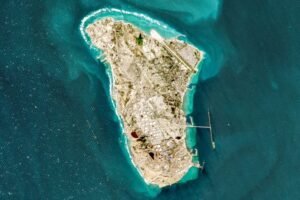
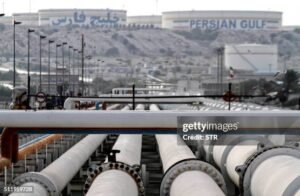
Kharg Island is a small coral island located about 25 km off the coast of Iran and is the most vital part of Iran’s economy. About 90% of Iran’s total crude oil exports are loaded from here. The island has a loading capacity of up to seven million barrels of oil daily, while its storage capacity is around 30 million barrels.
Developed by the American company
Amoco in the 1960s, this island has served as Iran’s primary export hub. Due to Iran’s shallow coastline, large tankers cannot reach the mainland, making Kharg the only option. This attack has caused a global stir. Experts believe that if Kharg’s oil facilities were damaged, 1.5 to 2 million barrels of oil would disappear from the market daily, causing global oil prices to skyrocket. Supply is already affected by the closure of the Strait of Hormuz, and prices have already surpassed $100 per barrel.
Oil Prices Set to Catch Fire
Dan Pickering, Chief Investment Officer at Pickering Energy Partners, told Reuters that if supply from Kharg were disrupted, two million barrels of oil would vanish. Iran has claimed that oil operations on the island resumed after the attack and no major damage occurred. However, Trump’s threat has made the situation more tense. Iran has already warned that if its oil infrastructure is attacked, it will strike the oil facilities of Gulf nations. This could further ignite the war.
The biggest impact of this attack could be on China. China is the world’s largest crude oil importer, and most of the oil coming from Iran passes through Kharg Island. Iranian oil has been a cheap option for China, but supply is now disrupted due to the war. Amid disturbances in the Middle East, China has tried to protect its supply by banning the export of refined fuel. If Kharg is completely shut down, China will have to seek expensive alternatives, putting pressure on its economy.
Attempt to Drag China into the War
Experts say this situation could force China to directly participate in the war or provide strong support to Iran, as its energy security is at stake. The Trump administration had previously refrained from attacking Kharg because it could shake the global energy market. But now, under the increasing pressure of war, Trump has taken this step. The US military has sent 2,500 additional Marines and an amphibious assault ship to the Middle East. Iran’s new Supreme Leader has threatened retaliation. Concern has grown worldwide. Rising oil prices, the threat of global inflation, and a potential major war are all factors troubling markets and governments. If Iran continues to lay mines in Hormuz or attack ships, Kharg’s oil facilities could be the next target, strengthening the fears of a Third World War.
Analysis: The “Kharg” Catalyst
This event represents a seismic shift in Middle Eastern dynamics. By targeting Kharg Island, the U.S. is not just attacking a military asset; it is holding the jugular vein of the Iranian economy at knifepoint.
1. The Strategy of “Calibrated Escalation”
President Trump appears to be using a “warning shot” strategy. By destroying military targets on the island while sparing the oil berths, he is demonstrating that the U.S. can dismantle Iran’s economy at will. However, this is a high-stakes gamble. History shows that when a regime’s survival is threatened economically, they often lash out with “asymmetric warfare”—in this case, the threat to target neighboring Gulf oil fields (Saudi Arabia/UAE).
2. The China Factor: From Buyer to Belligerent?
The most significant takeaway is the indirect pressure on Beijing. China relies on discounted Iranian oil to fuel its massive industrial engine.
Economic Pressure: If Kharg goes offline, China loses its cheapest energy source, forcing it to compete for more expensive Brent or WTI crude.
Geopolitical Move: By disrupting China’s energy security, the U.S. is effectively testing whether China will remain a “passive financier” of Iran or if it will be forced to intervene diplomatically or militarily to protect its interests.
3. Global Economic Contagion
With prices already north of $100 per barrel, a total shutdown of Kharg would create a supply shock that central banks cannot easily fix with interest rate hikes. This is “cost-push inflation” in its purest form. If the Strait of Hormuz is further restricted, we aren’t just looking at expensive fuel; we are looking at a potential global recession caused by energy scarcity.
4. The Risk of World War III
The mention of a “Third World War” is no longer just hyperpolarization. If Iran retaliates against U.S. allies in the Gulf, and China feels its national security (energy) is being intentionally sabotaged by U.S. kinetic action, the localized conflict in the Middle East could quickly evolve into a multi-theater global confrontation.
The Bottom Line: The “Laxman Rekha” hasn’t just been crossed; it has been erased. The world is now waiting to see if Iran chooses a suicidal retaliation or if China steps in to mediate a “cool down” to save its own economy.
About the Author