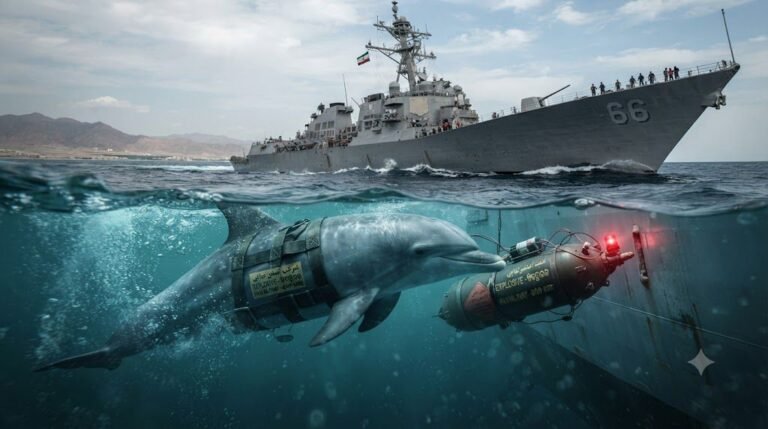
The closure of the Strait of Hormuz by Iran has triggered worldwide chaos. Oil supply has come to a near standstill. A massive upheaval in the global market caused crude oil prices to skyrocket instantly. As markets opened on Monday, Brent crude prices witnessed a staggering jump of up to 29% at one point, sending shockwaves from Washington to London and Paris.
U.S. President Donald Trump, leading the world’s largest economy, has not remained untouched by this turbulence. Intense deliberations are now underway from the White House to the Pentagon on how to control this “oil game,” because if prices continue to rise at this pace, the world will witness a level of inflation that is terrifying to imagine.
Trump Considering Options
A fresh statement from the White House has made it clear that Donald Trump is in a state of deep anxiety and is seriously considering all reliable options to stabilize oil prices. The White House spokesperson stated in clear terms that President Trump and his entire energy team had a robust plan to keep markets stable long before the start of “Operation Epic Fury.” Although the U.S. is currently trying to calm the world by describing the rising prices as a “short-term” shock, the reality is that the Trump administration is preparing to unlock its Strategic Petroleum Reserve. Trump knows that if petrol and diesel prices rise in the U.S., it will adversely affect both his domestic politics and the “operation”; therefore, he is exploring every possible path to ensure there is no shortage of oil in the market.
G-7 Nations in Tension
Meanwhile, finance ministers from the G-7—the world’s seven most powerful nations—held an emergency virtual meeting to discuss an “all-out” strategy to deal with the oil crisis. Chaired by France, the meeting included heads of the International Monetary Fund (IMF), the World Bank, and the International Energy Agency (IEA). The joint statement released after the meeting gave a major signal to the world: G-7 nations are fully prepared to release their emergency oil reserves into the market. Although French Finance Minister Roland Lescure stated for now that “we have not yet reached the point where reserves need to be opened,” he also clarified that these countries will not hesitate to take any major step to increase supply as soon as the need arises. As this news broke, the market’s volatility calmed slightly, but the fear remains.
The Root of the Trouble
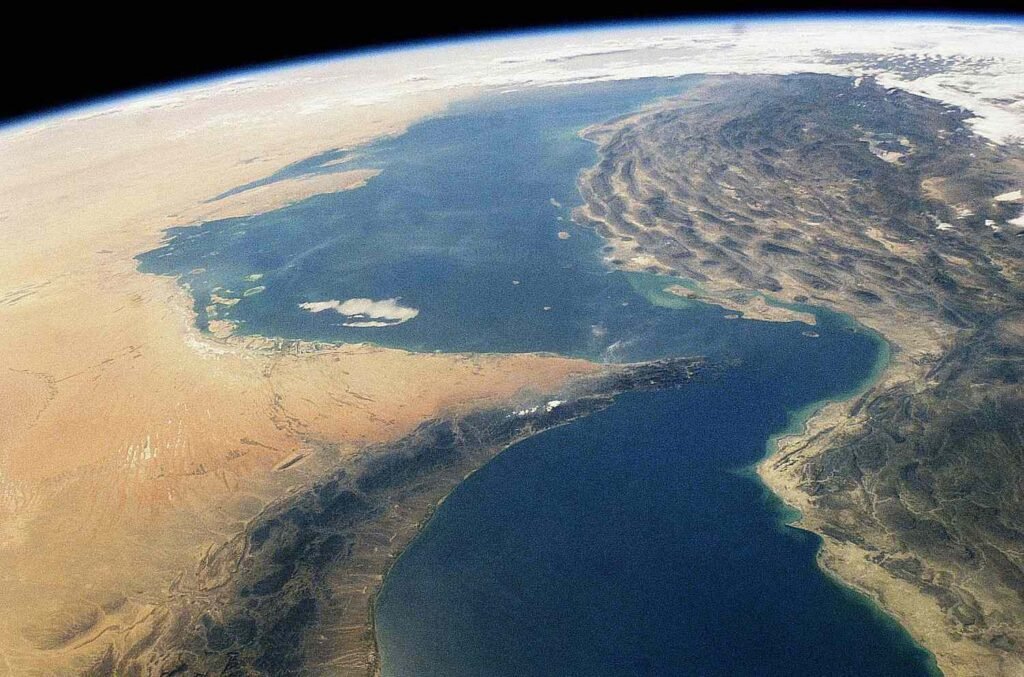
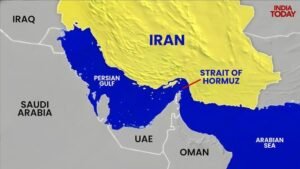
The root of the actual trouble is the passage the world calls the “Neck of Hormuz.” The Strait of Hormuz has currently turned into a complete war zone, causing oil-producing nations like Saudi Arabia, Kuwait, Iraq, and the UAE to reduce their production because they no longer have a safe route to ship their oil. Twenty percent of the world’s oil and an equal amount of Liquid Natural Gas (LNG) pass through this narrow gateway, and the hovering threats have now halted the movement of tankers. IEA Chief Fatih Birol has also warned that the risk in Hormuz is “significant and constantly increasing.” This is the most serious crisis in history because, for the first time, one-third of the world’s energy supply is directly in the crosshairs of missiles and drones, and no one currently has a shortcut to deal with it.
Common people are the wrost sufferers
Paying the price from their own pockets common people across the globe are now paying the price of this war from their own pockets. Long queues have started forming at petrol pumps, and due to the increase in Jet Fuel prices, airfares have begun to skyrocket. In history, there have been only five instances where countries had to open their emergency oil reserves, two of which occurred recently during the Russia-Ukraine war. However, the current crisis appears much larger because the main artery of the supply chain—the Gulf route—has been severed. Although some leaders, like the Finance Minister of Portugal, are offering reassurance that “we do not have a shortage of oil, the problem is only its increased price,” for a common man, expensive oil means everything from their kitchen to their office becomes more expensive.
Eyes on G-7 and the USA
Now, all eyes are on whether the G-7 and the U.S. can collectively flood the market with oil, or if Iran’s “oil move” will break the back of Western economies. France and other European nations claim that there is currently no physical shortage of oil or gas in Europe or the U.S., but they also know that if Hormuz remains closed through next month, production could come to a complete halt. In such a scenario, the coming days will be decisive for global politics and the economy. Whether Trump’s “game plan” and G-7 “unity” can douse this fire, or if this Middle East war pushes the entire world into an economic recession that will take decades to recover from, is a question causing fear in everyone’s mind today.
Analysis: The “Chokehold” Economy
This situation represents a “worst-case scenario” for global energy security. The Strait of Hormuz is the world’s most important oil transit chokepoint; its closure isn’t just a regional conflict, it is a direct severance of the global economic artery.
1. The Inflationary Domino Effect
A 29% jump in Brent crude is catastrophic for consumer price indices (CPI) globally. Beyond the “petrol pump” queues mentioned, oil is a foundational cost for:
Agriculture: Fertilizers and transport for food.
Manufacturing: Plastic production and factory power.
Logistics: Increased shipping surcharges that will eventually be passed to the consumer.
2. The Geopolitical Gamble
By closing the Strait, Iran is utilizing its most potent “asymmetric” weapon. While the U.S. and G-7 discuss releasing Strategic Petroleum Reserves (SPR), these are finite buffers. The SPR is designed for short-term supply disruptions, not a semi-permanent blockade of a route that carries 20% of the world’s oil. Trump’s “Operation Epic Fury” context suggests that military escalation is already high, leaving little room for diplomatic cooling.
3. The Limits of G-7 Unity
While the G-7 is showing a united front, the “tension” mentioned is real. Europe is historically more vulnerable to energy price shocks than the U.S., which is a net exporter of energy. If the closure persists, the “all-out” strategy of the G-7 will shift from market stabilization to a mandatory rationing or a massive military intervention to reopen the shipping lanes—both of which carry immense political risks.
4. Summary of Risk
The “root of the trouble” is that there is no immediate physical alternative to Hormuz. Pipelines bypassing the Strait exist but lack the capacity to handle the sheer volume of 20+ million barrels per day. The world is essentially holding its breath to see if this is a high-stakes bluff or the beginning of a global depression.
About the Author