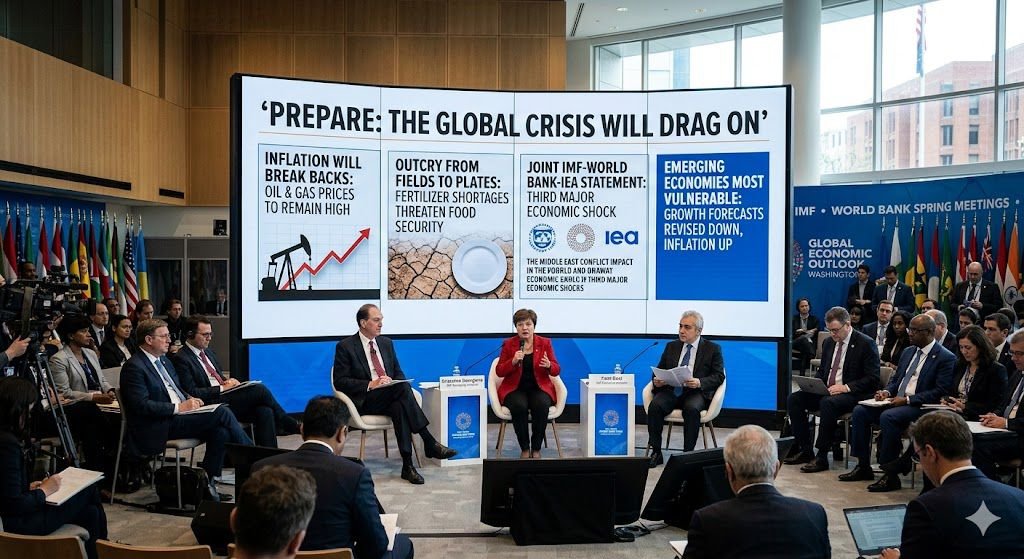
IMF and World Bank issued a joint statement today in Washington, warning that due to the ongoing war in the Middle East, fuel and fertilizer prices could remain high for a long time.
Since the US and Israel attacked Iran in February, there has been turmoil in the rest of the world as well. Although the war is being fought in West Asia, no one is untouched by its flames. People are waiting for an immediate solution so that things can get back on track. However, there is no scope for relief yet. This is not being said by us, but giants like the IMF, World Bank, and the International Energy Agency (IEA) have warned about it.
The International Monetary Fund (IMF) and the World Bank issued a joint statement today, April 14, in Washington, warning that due to the ongoing war in the Middle East, fuel and fertilizer prices may remain high for a long time. This is being considered the third major shock for the global economy. Before this, the global economy has already suffered two major shocks in the form of the Corona pandemic and the Russia-Ukraine war.
These issues were discussed during the Spring Meetings of the IMF and the World Bank. The Spring Meetings of the IMF and the World Bank are held every year in April in Washington because the headquarters of both are located there. Finance ministers and central bank governors from across the world gather here every year to discuss economic challenges. This time, discussions were held on the war between Iran and the USA and the global energy crisis arising from it.
Outcry Everywhere Due to War
In a joint statement, the three institutions said that due to the war, people were forced to be displaced, it impacted jobs, and led to a decline in tourism. It may take time to recover. The statement said, “As already stated earlier this month, the impact of the war is large, global, and highly unequal, disproportionately affecting energy-importing countries, especially low-income countries.”
The statement mentioned that this shock has caused oil, gas, and fertilizer prices to rise, increasing concerns about food security and job losses. Previously, some oil and gas producers also suffered heavy losses in export revenue.
Impact of War Will Last for Several Years
The ongoing tension in the Middle East is causing disruptions in shipping through the Strait of Hormuz. IMF Chief Kristalina Georgieva warned that the impact of this disruption in energy supply will be felt for the next several years. Due to this war, there has been a massive jump in the prices of fertilizers. In March 2026, the price of urea increased by about 46 percent. This is posing a threat to food security across the world.
Greater Threat to Emerging Economies
In view of the war, the inflation forecast for the world’s emerging economies has been increased from the previous 3 percent to 4.9 percent. In the worst-case scenario, it could go up to 6.7 percent. The World Bank has also reduced the growth rate forecast for developing economies from 4 percent to 3.65 percent. The heads of the three institutions shared their latest assessments just before the release of the IEA’s monthly Oil Market Report and the IMF’s World Economic Outlook.
The statement said, “We also discussed the situation of the countries most affected by this shock, as well as the responses taken by our institutions. Our teams are working together – including work at the country level – so that we can leverage our respective expertise and help countries by providing policy advice tailored to their needs and, in the case of the IMF and World Bank, financial assistance where needed.”
The Dreadful Shadow of War over Global Economy – A Review
…………………………………………………………………..
The ongoing unrest in West Asia is no longer limited to that region but has emerged as a major threat to the entire world. The joint statement from the IMF and the World Bank clearly illustrates the severity of this crisis. The main aspects of this crisis are –
Energy Crisis and Inflation: Due to disruptions in transportation through the Strait of Hormuz, the prices of crude oil and gas are increasing. This will not only escalate transportation costs but also cause the prices of daily essential commodities to skyrocket.
Threat to Food Security: A nearly 46% increase in the price of fertilizers like Urea is a matter of great concern for both farmers and general consumers. Its impact will be felt from “farm to plate,” which could jeopardize food security.
Pressure on Developing Nations: According to World Bank forecasts, the growth rate of developing economies is likely to decline. Inflation could rise from 4.9% to 6.7%, which will break the economic backbone of developing nations.
Conclusion:
After the Corona pandemic and the Russia-Ukraine war, this is the ‘third major blow’ to the global economy. If a solution to the war is not found soon, the general public will have to bear this economic burden for several years to come.