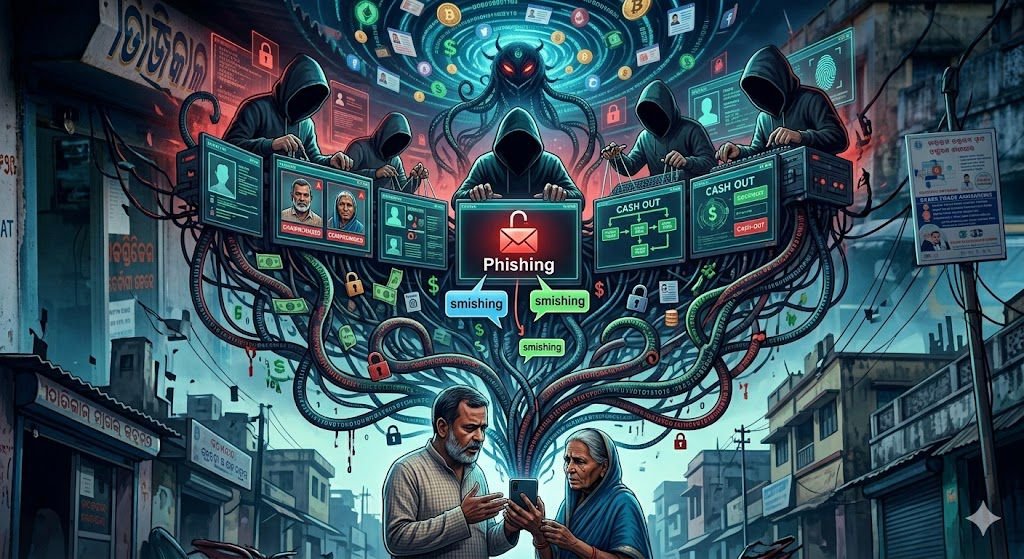
Indian consumers face losses from digital fraud that are 36 percent higher than the global average. This has been revealed in a report. Although there was a significant decline in suspected digital fraud cases last year, the losses remain much higher than the global level.
…………..
According to a TransUnion report, consumers in India who fell victim to digital fraud lost an average of 2,265 US dollars (approximately ₹2.04 lakh) over the past year, compared to the global average of 1,671 dollars. Meanwhile, the rate of suspected digital fraud in India dropped to 7.1 percent in 2025, down from 13.1 percent a year earlier. This decline is the result of government and industry efforts such as digital literacy, consumer awareness, mobile number verification, and sharing cyber intelligence. Despite this, the rate remains nearly double the global average of 3.8 percent, signaling that cyber security challenges persist.
…….
According to the report, between August and December 2025, 59 percent of Indian consumers reported being targeted by some form of digital fraud. Out of these, 13 percent actually fell victim to fraud, while the global figure stood at 10 percent. The most common types of fraud targeting Indian consumers involved scammers attempting to obtain personal and banking information through fake emails, websites, or messages. Additionally, vishing (fraud via phone calls) and smishing (fraud via fake SMS) also remained prominent.
……….
Analysis
………………………
Indian consumers face losses from digital fraud that are 36 percent higher than the global average. This has been revealed in a report. Although there was a significant decline in suspected digital fraud cases last year, the losses remain much higher than the global level.
The report highlights a paradox in India’s digital landscape: while institutional and user-led efforts—such as improved mobile verification and increased digital literacy—have successfully reduced the frequency of attempted attacks, the financial impact per victim remains alarmingly high. This suggests that while attackers are failing more often, when they do succeed, they are extracting significantly larger sums of money from their targets.
The persistent gap between India’s 7.1% suspicion rate and the global average of 3.8% indicates that India remains a high-priority target for sophisticated cyber-criminal networks. The prevalence of social engineering tactics like vishing and smishing confirms that the human element continues to be the weakest link in the security chain, necessitating a shift from basic awareness to advanced, proactive digital hygiene.
About the Author