
By – Babita Satapathi
…………………………………………………………………..
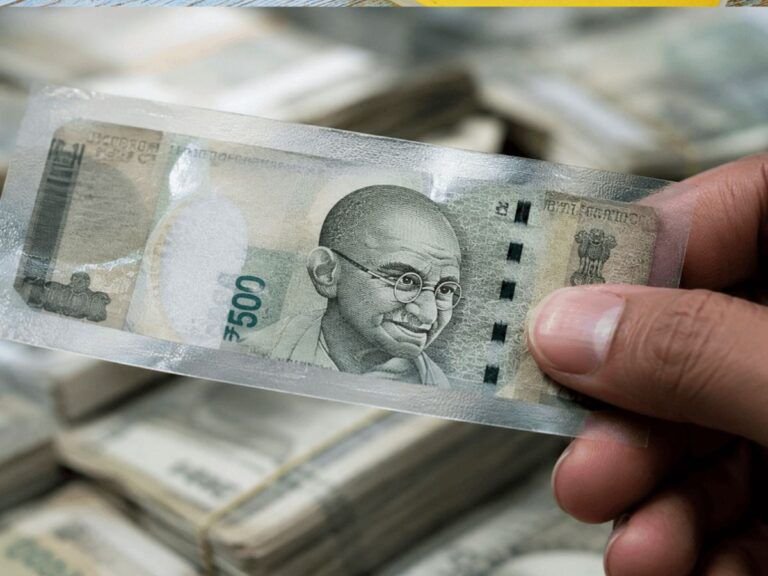
The process of introducing plastic banknotes in India has accelerated. In this article, we will learn what these notes are, what their benefits are, and RBI’s plans in this direction. At the same time, we will also see how these notes are prevalent in other countries and why they were not brought to India earlier. Will paper currency come to an end ?
……………………………………………………………..
Acceleration in the Process of Plastic Banknotes
The process of introducing plastic banknotes in India has gained momentum. However, this is not the first time that an attempt has been made to introduce such notes in the country. Earlier too, several times attempts were made to circulate these notes, but due to various reasons, they could not be successful. In this article, we will discuss the history and geography of plastic notes.
……..
What are Plastic Banknotes ?
…………………………………………………………….
Plastic banknotes, officially called polymer banknotes, are made of thin and flexible plastic. They can be folded like paper notes, but are not as rigid as credit or debit cards.
………
Benefits of Plastic Banknotes
…………………………………………………………..
Plastic banknotes are more durable and last longer compared to paper notes. They are less affected by dust, moisture, and the effects of folding. Apart from this, it is difficult to forge them because they include security features like micro-optic holograms and clear windows.
……….
RBI’s Focus on Plastic Banknotes
………………………………………………………………
The Reserve Bank of India (RBI) has been planning to introduce plastic banknotes for a long time. In recent years, the demand for currency has increased, which has also increased the cost of printing. In the financial year 2025, the cost of currency printing reached 6,372.8 crore rupees.
………
Why Were They Not Brought to India Earlier ?
……………………………………………………………..
In 2012, the central government allowed the testing of 10 rupee polymer notes in some cities, but due to technical challenges, it could not be successful. Recognizing these notes in ATMs was the biggest problem.
………..
Will Paper Currency End ?
……………………………………………………..
RBI is considering bringing polymer notes, but all notes will not be replaced at once. First, 10 rupee and 20 rupee notes will be tested.
……….
In Which Countries Are Plastic Notes Prevalent ?
…………………………………………………………
Plastic banknotes are prevalent in more than 60 countries around the world. Australia issued the first polymer banknote in 1988, followed by many other countries adopting them.
………
Why the Emphasis by RBI on Plastic Banknotes ?
……………………………………………………..
The RBI has been trying to bring plastic banknotes for a very long time. The reason for this is that the demand for currency has increased significantly in recent years. According to RBI’s annual report, in the financial year 2025, currency printing cost increased to 6,372.8 crore rupees, which was just 5,101.4 crore rupees in the previous financial year 2024. Apart from this, there has also been a huge increase in the number of damaged notes removed from circulation. In the financial year 2025 alone, 23.8 billion damaged notes were withdrawn from circulation, most of which were 500 rupee and 100 rupee notes.
……………
Why Didn’t India Bring Them Earlier ?
…………………………………………………………….
In the year 2012, the central government approved the field trial of one billion notes of 10 rupees in selected cities. These included cities with different geographies and climates like Kochi, Mysore, Jaipur, Bhubaneswar, and Shimla. However, this trial could not be successful due to technical and operational challenges. The biggest challenge was related to identifying and withdrawing these notes in ATMs.
……..
Will Paper Currency Stop ?
……………………………………………………..
The Reserve Bank of India (RBI) is considering bringing polymer notes soon. All notes will not be changed at once. The central bank will conduct a pilot project before bringing these notes into wide circulation in the market. First, field trials of 10 rupee and 20 rupee notes will be conducted, because these notes are in maximum circulation and get damaged the most. If everything goes well, higher denomination notes will be brought into the market.
………..
In Which Countries Do Plastic Notes Run ?
………………………………………………………….
Plastic banknotes are in circulation in more than 60 countries worldwide. In some countries, these notes are completely in use, while in some countries they are in circulation partially. Australia first issued polymer banknotes in the year 1988. After this, countries like Canada, Britain, Singapore, Malaysia, Thailand, Indonesia, Romania, New Zealand, and Vietnam adopted polymer notes.
About the Author