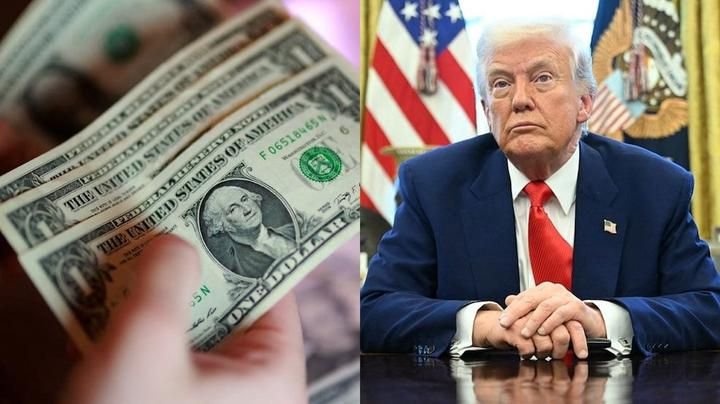
Highlights – Central banks around the world are now considering reducing their holdings of the dollar. In its place, they are including some other countries’ currencies in their portfolios.
………………………………………………………………….
Are the bad days of the dollar about to begin? Will the dollar no longer be the dominant currency in the world, or has the world found an alternative to the dollar? A report has revealed such information that these questions will start revolving in your mind as well. Citing a survey, a Reuters report states that the world is now preparing to reduce dollar reserves. This is going to happen for the first time in the world.
……….
This survey has been conducted by the Official Monetary and Financial Institutions Forum (OMFIF). The survey states that for the first time, central banks of the world are planning to reduce the share of the US dollar in their foreign exchange (Forex) reserves over the next 10 years instead of increasing it, which indicates that the world wants to keep its forex reserve portfolio diversified.
……….
Why was there talk of only increasing the dollar earlier ?
………………………………………………………………….
Actually, the dollar has been considered the most stable currency in the world, and the entire world has been trading with each other in dollars. Whether it is the import of oil or the export of any food items, transactions have been happening in dollars, but now the situation is slowly changing. Many countries have started importing and exporting in local currencies and also appear to be annoyed by America’s pressure politics. The survey revealed that this is the first time that most countries are going to reduce dollar holdings in the next 10 years.
…………
Why is there talk of reducing the dollar?
…………………………………………………………………..
According to the survey, central banks are seeing three major risks that have arisen regarding the dollar. The biggest of these is US political uncertainty, which has raised questions about the stability of the dollar. Second is the geopolitical tension of America with many countries, due to which a lot of volatility has been seen in the dollar. Especially during the Iran war, a lot of instability was seen in the dollar. The third biggest reason is the multipolar nature of the global financial system, meaning most countries are now trading with each other in different currencies instead of just the dollar. This simply means that countries around the world no longer want to be solely dependent on the dollar.
………….
Which currencies are preferred instead of the dollar ?
………………………………………………………………….
Currently, an alternative to the dollar is not clearly visible, but if this continues, the world will soon move past the dollar towards another currency. The survey states that the most preferred assets to replace the dollar include gold, the Euro, the British Pound, the Chinese Yuan, the Norwegian Krone, and the New Zealand Dollar. However, the survey also says that the Euro and the Yuan have their own limitations, which is why they have not become a complete alternative to the dollar.
……….
Gold reserves are increasing
……………………………………………………………
The Reuters report claims that prior to this survey, another survey stated that a record number of central banks are planning to increase their gold reserves. For many countries, gold is now becoming a major tool for protection against geopolitical risk and for diversifying reserves.
…………
Will the existence of the dollar be erased ?
……………………………………………………………………….
The report states that it does not appear yet that the dominance of the dollar will end globally, as the dollar is still the world’s largest reserve currency. Its role as a medium for international trade, investment, and safe-haven investment remains very strong. The change is not happening suddenly, but gradually.
………
What will be the impact on India ?
………………………………………………………………..
If dependency on the dollar decreases, then countries like India can promote their own currency and trade with the world in Rupees can increase. Also, they can increase the share of gold and other currencies in their foreign exchange reserves. However, this will not happen suddenly; rather, the dominance of the dollar may gradually decrease.
About the Author