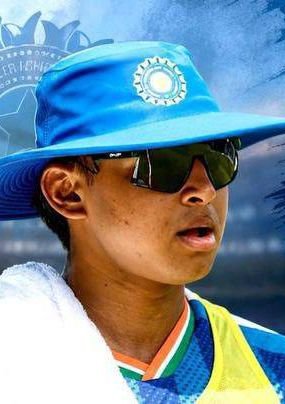
Highlights – Whether or not Vaibhav Suryavanshi gets a chance in Team India is a debate that goes beyond just one player. The real question is whether team selection should be based on ‘fairness’ or on the needs of the future.
……………………………………………………………
Indian cricket is currently grappling with a problem that most teams in the world crave. The concern here is not about who the opener will be, but rather how to exclude someone who has been scoring runs—and at the center of this debate is a 15-year-old boy: Vaibhav Suryavanshi.
……..
The speed at which Vaibhav has grabbed the attention of the cricketing world has also sparked an intense moral debate. Should someone like Sanju Samson, Abhishek Sharma, or Ishan Kishan be dropped just because an extraordinary talent is knocking at the door?
……..
At first glance, the answer would be no. But in cricket, first glances are often deceptive.
………………………………………………………….
Batting coach Sitanshu Kotak states that it would not be right to drop a batsman who is consistently scoring runs just to give a new player a chance. This sounds completely reasonable. After all, hard work should be rewarded.
………
But the selection of the Indian team is not a prize distribution ceremony. Medals are not handed out here; a team is chosen to win the next match. That is why the first rule of selection is that it can never be entirely fair.
………
Every selection involves an ‘injustice’ to some deserving player. If the sole criterion for selection were fairness, perhaps a new player would never get an opportunity. Virat Kohli might still be waiting for a senior to step aside, Jasprit Bumrah would still be sent to domestic cricket to take more wickets, and perhaps a 16-year-old Sachin Tendulkar would be playing the next Ranji match in Mumbai instead of heading to Karachi.
……….
In the national team, one earns respect for previous innings, but not a guarantee for the next spot. Every new talent here stands in front of the chair of an established player. To be honest, another name for selection is ruthlessness.
……..
This does not mean the player being dropped is bad. Even a World Cup-winning captain like Suryakumar Yadav could be dropped from the next team. That doesn’t diminish his ability; it only shows that the selectors saw more potential for the team in another player at that moment.
………..
In international cricket, the best way to secure a spot is to score runs. But sometimes, the player coming in brings not just runs, but the future.
……..
The discussion around Vaibhav Suryavanshi is different because he is not just scoring runs; he is changing perceptions. Indian cricket produces many talented players every year, but it is not said about every talent that they can face the fastest bowlers in the world at the age of 15.
……..
Jofra Archer is impressed in the nets. Bowlers like Pat Cummins and Mitchell Starc do not take him lightly. Such signs are not seen every day. In cricket history, such talents are not born by looking at a calendar.
……
This does not mean Vaibhav must be played in the next match at any cost. The team management is watching him every day. They are the best judges to assess his preparation, mentality, and technique. But one thing must be decided—the criterion for the decision cannot be ‘who will be treated unfairly ?’
………
Yes, the other side of this debate is equally strong…
……………………………………………………………
If a batsman is consistently playing fearlessly for the team, taking risks, and scoring runs, and yet his spot is not secure, a dangerous message is sent to the dressing room. Players start playing less for the team and more to save their own spots. If a player feels that his place is not guaranteed even after scoring runs, then next time he will not play for the team, but for his own survival. The fearless batting culture that India has adopted in T20 cricket in the last few years has its greatest strength in the fact that players play free from the fear of failure. It is also the responsibility of the team management not to let that trust break.
…………..
This is where the real test of the captain and the coach lies. They have to not only choose the right team but also maintain the confidence of the players sitting outside.
………
Still, one question remains…
………………………………………………………………
If the Indian team truly believes that Vaibhav Suryavanshi can be a part of the 2027 ODI World Cup plan, then the preparation will not begin in 2027, but in 2026. International cricket is not learned by reading books. It requires stepping onto the field, making mistakes, and learning from them.
……..
That is why the biggest mistake in Vaibhav’s case might not be haste, but rather excessive caution. The biggest mistake in history is not choosing the wrong player. The biggest mistake is failing to recognize the right player in time. Today, the real question before Indian cricket is not when Vaibhav Suryavanshi will debut.
……….
… The question is whether the selectors will wait for history to arrive or recognize history while there is still time. Because some players demand a spot in the team. And then there are those players for whom the team needs to create a spot.
About the Author