The politics of New Delhi these days looks no less than a battlefield. Political parties are busy making accusations and pointing fingers at each other. A strange mixture of public morality and pragmatic politics is being witnessed, where party-switching and breaking loyalties are becoming the new identity of politics. Reaching the pinnacle of power is the only goal, regardless of the path taken.
………………
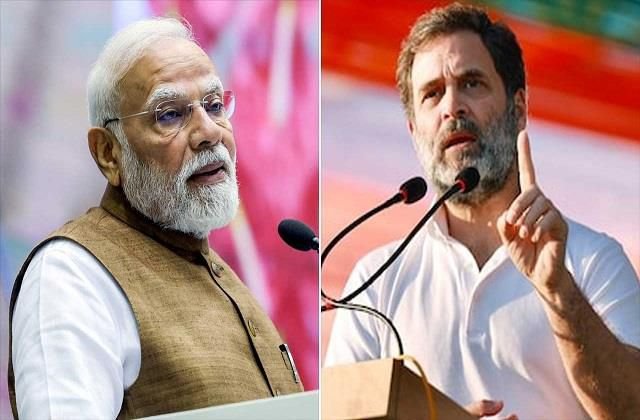
Recent assembly election results and the splits within the Trinamool Congress, Shiv Sena, and the Aam Aadmi Party have given the Bharatiya Janata Party (BJP) an opportunity to further weaken its main rival, the Congress. The BJP is now working on a strategy to corner the Congress again, which had shown signs of revival in the 2024 Lok Sabha elections. The goal of a ‘Congress-mukt Bharat’ (Congress-free India) remains an important part of the BJP’s political agenda. Prime Minister Narendra Modi recently described the Congress as a ‘parasitic party,’ alleging that it can betray even its own allies.
…………….
The BJP’s aggressiveness is also being attributed to circumstances such as a lower-than-expected performance in the 2024 elections and the lack of sufficient support for the Constitution Amendment (131st) Bill in April 2026, which aimed to link women’s reservation in the Lok Sabha with delimitation. These events have motivated the BJP to further increase its parliamentary strength. As part of this strategy, the BJP appears engaged in efforts to bring MPs from dissatisfied regional parties into its fold, promote divisions within opposition parties, and politically isolate the Congress. Along with this, attempts are also being made to limit the political acceptability of opposition leader Rahul Gandhi and weaken the traditional support base of the Congress.
……………
Undoubtedly, the current position of the Congress is better than it was a decade ago. By winning 99 seats in the 2024 Lok Sabha elections, it achieved its best performance since 2014. It remains the largest opposition party at the national level and the main axis of the INDIA bloc, although tension within the coalition has increased following developments related to the Trinamool Congress and the DMK. Supporters of Rahul Gandhi believe that under his leadership, the Congress has re-established its political identity and activism. They argue that despite constant criticism and social media campaigns, Rahul Gandhi has remained firm on his ideological stance.
…………….
Demands for leadership change within the Congress have also been raised from time to time. Critics argue that the party needs to move out of its excessive dependence on the Gandhi family. They state that the party’s functioning is still influenced by a nomination-based culture and the politics of loyalty, where dissent is often viewed as betrayal. Another major challenge for the Congress is internal factionalism. Party-switching and a weak organizational structure in several states have harmed the party. Tension has also been seen in relationships with allies, the latest example being the dispute with the DMK. However, leadership change alone will not solve the problem. The party must develop strong leadership in the states and bring forward new political faces to attract young voters and regional allies. Congress’s ability to challenge the BJP at the national level also depends on the strength and unity of regional parties. If regional parties continue to weaken or their influential leaders join the BJP-led National Democratic Alliance (NDA), many difficulties could arise for the Congress.
………………
When different parties prioritize state-level interests over national strategy, it becomes difficult to maintain a joint opposition front. This is why the INDIA bloc has faced tension from time to time. If the fragmentation of regional parties continues and they lean towards the BJP, the path for the Congress’s return to national power could become even more difficult.
…………….
Regarding Rahul Gandhi’s leadership, critics also argue that his guidance has not yet succeeded in bringing about a decisive resurgence for the Congress at the national level. The party has failed to increase its voter base in many states. History shows that successful political parties revitalize themselves from time to time through leadership changes, organizational reforms, and the rise of strong regional leadership. The Congress is still relevant and appears to be in a process of revival, but it cannot yet be said to be in a state of renaissance. The party must understand that the basis of a healthy political system is regular, free, and fair internal elections. In the long run, dynastic politics can prove detrimental to the party. Now is the time for self-reflection for the Congress.
About the Author