The U.S. government has demanded a war budget of over $80 billion, or more than ₹7.50 lakh crore, from Parliament (Congress). A key point is that this war budget could be equivalent to a year’s worth of rations for about 2.5 billion poor people worldwide. In India, the annual budget for the Pradhan Mantri Garib Kalyan Anna Yojana is ₹2.27 lakh crore, under which 5 kg of free rations are distributed to more than 80 crore people.
…………………….
On one hand, U.S. and Iranian officials are engaged in peace talks and are adopting a conversational approach to reach a conclusion. On the other hand, the U.S. Department of Defense has made a demand to the U.S. Congress that has left the entire world surprised. Yes, the Pentagon has informed senators that it needs approximately $80 billion, or ₹7.50 lakh crore, the majority of which would be used to cover the costs of the U.S. war against Iran.
……………..
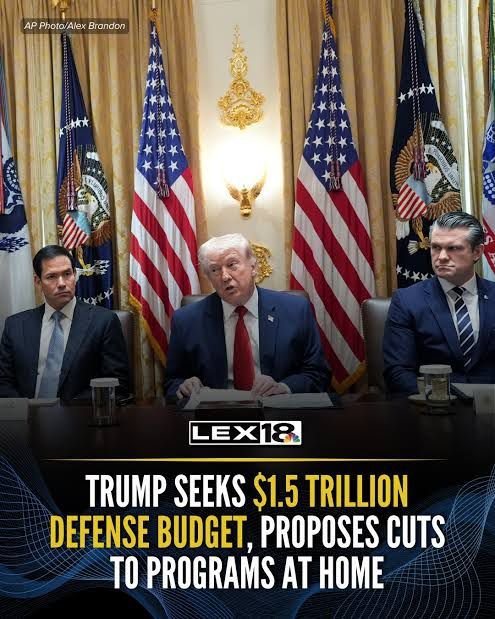
This would add to the massive military spending already being requested by President Donald Trump. The White House Office of Management and Budget has not yet made a formal request to Congress. However, Secretary of Defense Pete Hegseth has been continuously meeting with people on Capitol Hill, including meetings on Monday evening.
…………………
Media reports, citing two people familiar with the situation who spoke on the condition of anonymity, stated that a senior deputy secretary of the Department of Defense had briefed senators last week about the funding request for Iran. This development was first reported by The Wall Street Journal.
………………
A notable aspect is that this budget is more than three times the total budget of India’s Pradhan Mantri Garib Kalyan Anna Yojana, under which free rations are distributed to over 80 crore people in the country. It can also be understood this way: the budget requested by the Pentagon could erase the hunger of about 2.5 billion people worldwide for a year.
…………………..
Lawmakers Skeptical of Pentagon’s Funding Request
…………………………………………………………………………………………………………..
The request for billions of dollars in funding for the Iran war comes at a time when the political climate is tense. Lawmakers are skeptical about the deal Trump has made with Iran to end the war and are cautious about further steps. The White House has requested a massive $1.5 trillion for the Pentagon – about 50 percent more than the current fiscal year’s funding level.
…………………..
Senate Majority Leader John Thune said he expects an additional spending request from the administration for the war, and when it arrives, “we’ll work through it and see where the votes are.” Thune added that we must ensure we do everything possible to replenish and supply the many weapons and ammunition that have been depleted – not only with what is happening with Iran, but even before that.
……………….
Deputy Secretary of Defense Stephen Feinberg spoke to several senators by phone last week about the proposal and informed congressional committees that the $80 billion request had been sent to the Office of Management and Budget. The Pentagon has not issued an official statement on the matter.
……………..
However, this funding package will certainly face opposition from lawmakers who refuse to support Trump’s decision to go to war and are reluctant to give more money to the Pentagon at a time when the cost of living for Americans is very high.
…………..
Democratic Senator Patty Murray told Hegseth in a hearing last month that you are spending hardworking taxpayers’ money on a war that many people strongly oppose.
………………..
Trump Demanded a Record $1.5 Trillion for Defense
…………………………………………………………………………………………………………..
In addition to funding for Iran, Republicans hope to secure about $1.1 trillion through the regular budget process, which typically requires bipartisan support for approval. After that, they hope to secure an additional $350 billion later this summer through mostly party-line votes.
……..
The amount the Pentagon is requesting is much higher than the $29 billion estimate for war costs that Hegseth gave during his testimony before Congress last month. Most of that amount was related to replacing ammunition and repairing equipment, but it also included operational costs to keep the military deployed. That estimate did not include the cost of repairing or rebuilding U.S. military bases damaged in the region.
……………..
This is far less than the initial $200 billion estimated by the Pentagon at the start of the war. An early estimate put the cost of the first week of the war at $11.3 billion. A member of the Democratic leadership, Senator Brian Schatz of Hawaii, said he expects the actual costs could be much higher than the proposed $80 billion.
……………
About the Author