By- Jawahar Mishra
………………………………………………………………….
Highlights – The FIFA World Cup is the biggest sports event in the world. However, along with this sporting event, a business game worth billions of dollars is also played, which is why there is a rush among various countries to host it.
……………………………………………………………….
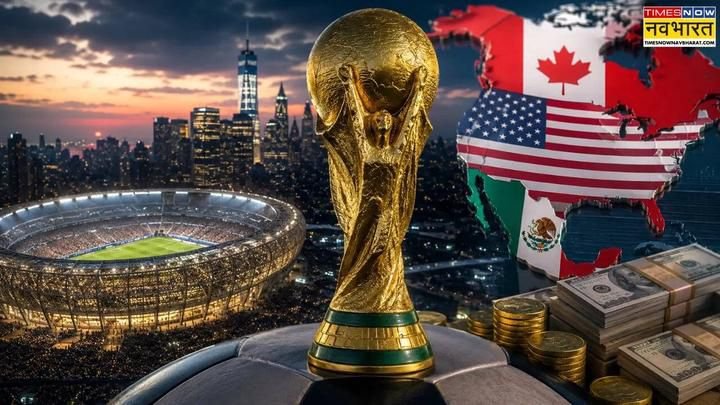
There are economic dynamics behind every activity in the world. The FIFA World Cup is the best way to understand this game. On one hand, it is a popular sport among billions of people. On the other hand, it is also a global business model worth billions of dollars. The FIFA World Cup 2026, being co-hosted by the USA, Canada, and Mexico, is historic in many ways. For the first time, 48 teams will participate in this event, and the number of matches has been increased from 64 to 104. This expansion is creating possibilities for record earnings for FIFA. Learn how FIFA becomes a money-printing event for the host countries.
……………………………………………………………….
FIFA Has Become a ‘Money Machine’
……………………………………………………………….
The 2023-2026 commercial cycle of FIFA is considered the most profitable period in history. The organization had earlier estimated earnings of $11 billion, but now this figure is expected to reach $13 billion. Of this, about $8.9 billion will come from the 2026 World Cup alone. FIFA has four major sources of income: broadcasting rights, ticket sales, sponsorship, and licensing. The largest share comes from TV and digital broadcasting rights. Due to 104 matches, broadcasters have received more advertisement slots, which has led to a tremendous jump in FIFA’s earnings. Ticketing is also no longer limited to just selling seats. FIFA has started an official resale platform, through which it also gets a commission on sales made in the secondary market. Tickets for many high-profile matches are being sold for thousands of dollars, and the price of some seats for the final has reached $33,000.
……………………………………………………………….
The Dream of Hosting
……………………………………………………………….
Hosting the Football World Cup is a dream for any country. On one hand, this event gives prestige to the host country. On the other hand, the economy also gets a big boom from such events. However, along with earnings, countries also have to spend heavily on hosting. Security, transportation, infrastructure, and administrative expenses are incurred at the local level. Often, the cost of hosting the World Cup is higher than expected. However, the 2026 model is slightly different. The US, Canada, and Mexico have decided to use existing stadiums instead of building new ones. This has significantly reduced construction costs. Still, security and administrative costs are very high. Canada is having to spend more than one billion Canadian dollars just to host 13 matches, while the US government has set a budget of hundreds of millions of dollars for security.
……………………………………………………………….
‘Jackpot’ for Private Businesses
……………………………………………………………….
While governments get limited direct financial benefits, the World Cup is nothing less than a jackpot for the private sector. Hotels, airlines, restaurants, bars, event management companies, and security agencies earn record profits during this time. The arrival of millions of tourists, media personnel, and corporate guests leads to a sharp rise in hotel bookings and airfares. Businesses around the stadiums also get direct benefits. Despite this, economists believe that its long-term impact on the national economy remains limited. It is estimated that the World Cup will contribute only 0.05% to the US GDP and 0.1% to 0.2% to Mexico’s GDP.
……………………………………………………………….
A Billion-Dollar Business in India Without Playing
……………………………………………………………….
Interestingly, the tournament is not taking place in India, but its economic impact is clearly visible on the Indian market as well. India has become the world’s second-largest consumer market for digital content related to the FIFA World Cup. The biggest bet in India is on the broadcasting business. Zee has acquired the FIFA broadcasting rights until 2034 and is offering this tournament through its digital platform on a subscription-based model. This could lead to a major change in the business model of sports content in the Indian media industry. At the same time, electronics companies are also taking advantage of this opportunity. The demand for large-screen TVs has increased in football-loving states like Kerala and West Bengal. Sports bars, food chains, and merchandise companies are also running special offers and promotional campaigns.
……………………………………………………………….
Why Is There So Much Competition for Hosting ?
……………………………………………………………….
If the direct economic benefit is limited, then why do countries compete so much to host the FIFA World Cup? The answer lies in ‘soft power’ and global branding. Qatar is the biggest example of this. After the 2022 World Cup, a tremendous increase in tourism was recorded there, and the country’s global identity was strengthened. Many governments consider the World Cup not just a sports event, but a platform to showcase their image and capability to the world.
……………………………………………………………….
The FIFA World Cup 2026 is not just a mega-event of football, but also the biggest platform for the global economy, media, tourism, and branding. While host countries have to take on heavy investments and risks, local businesses get short-term benefits. But in the whole game, the biggest and safest winner appears to be one organization—FIFA, which registers billions of dollars in its account without building stadiums and without bearing government expenses.
……………………………………………………………….