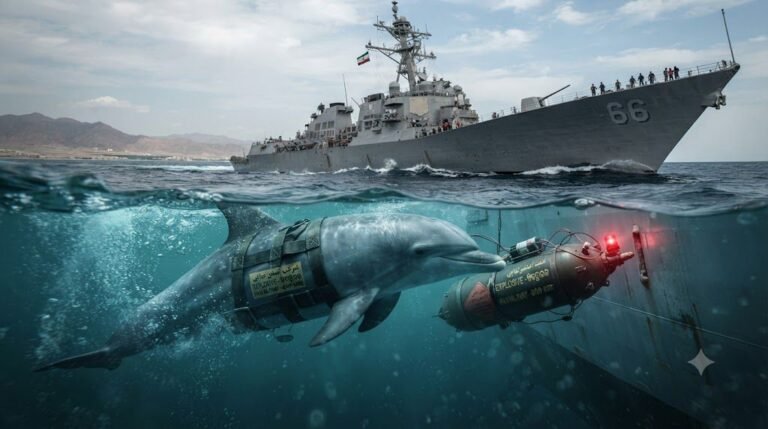

For Donald Trump, Iran has become a puzzle that is not merely a matter of political will, but rather akin to untangling a complex web of geopolitics, economics, and strategy. Trump often adopts an aggressive stance, but in the case of Iran, there are barriers standing like walls in his path that make immediately bottling up the ‘genie of war’ impossible.
………………..
1. The Illusionary Web of Iranian Proxy Networks
………………..
Iran does not rely solely on its own military strength. Its proxies spread across several Middle Eastern countries (such as Hezbollah in Lebanon, Houthis in Yemen, and militias active in Iraq/Syria) act as Iran’s security shield. If the US exerts direct pressure on Iran, these groups react immediately. Trump cannot overlook these shadow organizations even if he wants to, because they remain an unending threat to American interests and its allies (especially Israel) across the region.
………………..
2. The ‘Point of No Return’ of the Nuclear Program
………………..
During Trump’s previous term, the US withdrawal from the JCPOA (Nuclear Deal) reached a major turning point. Today, Iran is very close to a point in terms of its nuclear capability and enrichment known as the ‘point of no return.’ For Iran, this has become an issue of ‘existential security.’ It will not give up this power under any circumstances, and no American president can force Iran into nuclear disarmament overnight.
………………..
3. The ‘Security Shield’ of Russia and China
………………..
Geopolitical equations have now changed more than ever before. Iran is no longer alone. Its strategic and economic alliance with Russia and China has become quite strong. If the US thinks of imposing strict sanctions or military action on Iran, it has to face opposition from Russia and China. These countries continue to provide oxygen to Iran through oil exports and military technology, which often causes the US’s ‘Maximum Pressure’ policy to fail.
………………..
4. Expectations of Israel and Regional Allies
………………..
How Israel and certain Gulf countries (such as Saudi Arabia) view Trump’s Iran policy is very important. If Trump adopts a soft stance toward Iran, he will face tension with his closest ally, Israel. At the same time, Iran views itself as a ‘regional superpower’ and could lose its grip on domestic politics if it bows to any foreign pressure. Therefore, the Iranian leadership also cannot portray any agreement as a ‘surrender.’
………………..
5. Complexities of Domestic Politics
………………..
Even within the US, there is a lack of consensus regarding Iran. On one hand, there are hardliners who want military action, and on the other, there are those who want the US to exit Middle Eastern wars and focus on its own economy. It is difficult for Trump to resolve the Iran issue quickly because any concrete solution requires long-term diplomatic patience and risk-taking, whereas the pressure for immediate results always persists in politics.
About the Author