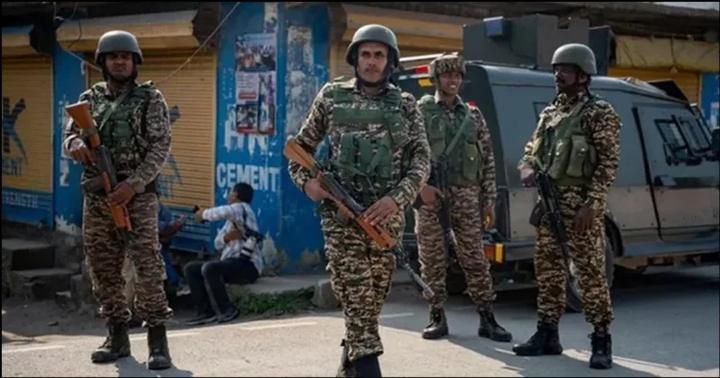
Pakistan’s intelligence agency, the ISI, has now devised a new plan to infiltrate Indian politics. Security agencies have exposed this conspiracy, stating that a desperate ISI has failed to spread the tentacles of terror in Jammu and Kashmir.
Now, it has issued directives to Over Ground Workers (OGWs) active in Jammu and Kashmir to become part of India’s mainstream national political parties to continue their activities.
The objective is to evade security force operations, influence internal politics, conceal terror funding, and give violence a “local” appearance.
The responsibility for this has been assigned to old and dormant terrorist organizations. Meanwhile, agencies are keeping a close watch.
According to security agency officials, questioning of recently arrested terror sympathizers by Srinagar police revealed that some of them were associated with mainstream national political parties.
Surrounded by pressure from security forces and a lack of local support in Kashmir, the ISI’s network is cornered. The ISI is attempting to reactivate terrorist organizations established in the early 1990s so that terrorist violence can be given a local character.
Used Political Party Cards to Evade
According to officials, when a terror sympathizer is cornered during a siege and search operation, they attempt to use a political party card as a desperate measure to escape.
In the 1990s, suspects used voter identity cards to evade the police. In later years, they used Aadhaar cards. In no instance does any party intervene to try and save individuals involved in such cases.
Monitoring Terror Groups
Security agencies are monitoring the re-emergence of names of terror groups that defined the era of bloodshed in the 1990s and early 2000s. These include Al-Umar Mujahideen, Al-Badr, and Tehreek-ul-Mujahideen.
Through this conspiracy, the ISI wants to project that the terrorist violence in Jammu and Kashmir is not a proxy war operated from across the border, but is internally directed. The top leadership of these terrorist organizations in Pakistan and Pakistan-occupied Jammu and Kashmir are attempting to restructure activities related to fundraising and the propagation of radicalism.