A.I.’ s analysis is given below
…………………………………………………………………..
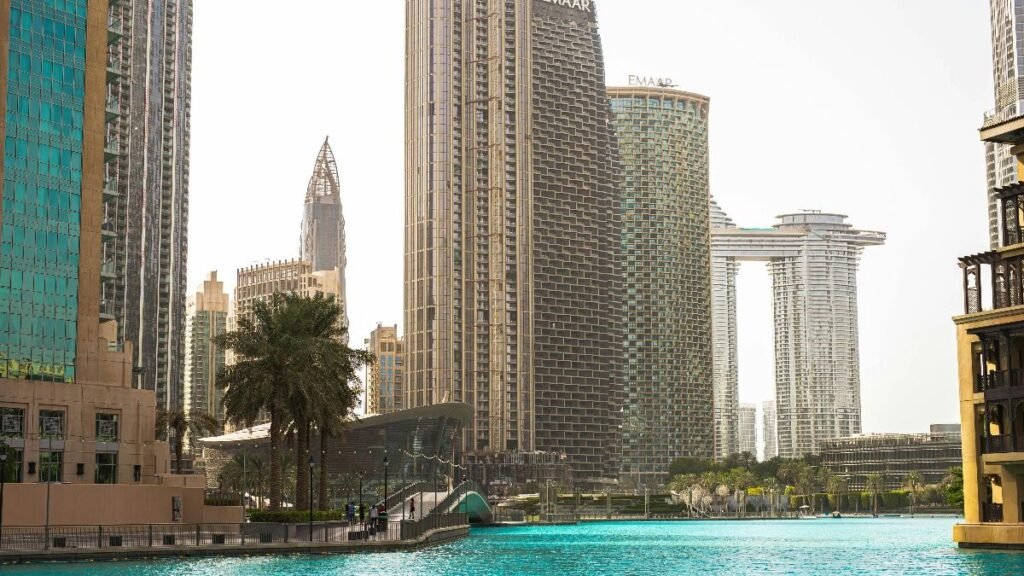
Highlights – Due to rising tensions in the Middle East, investors’ confidence in markets like Dubai has shaken, after which wealthy individuals and NRIs across the globe are now turning towards Indian real estate for secure returns.
……………………………
Amidst the deepening geopolitical crisis in the Middle East and ongoing uncertainty in global markets, the definition of safe investment has completely changed. Due to rising international risks, investors are now looking for long-term stability and security rather than just high returns, and on this benchmark, India’s real estate sector has emerged as a strong ‘safe haven’ in the eyes of the world.
Wealthy individuals across the globe who were investing in Dubai’s real estate market are now looking towards India with hope. On the back of better connectivity, expansion of IT-corporate hubs, and an excellent lifestyle, cities like Gurugram, Noida, Bengaluru, and Pune have not only become the first choice for Non-Resident Indians (NRIs) but are also proving to be the most reliable means of capital security for domestic investors.
Experts believe that due to rapid urbanization, infrastructure transformation, and genuine demand for homes, the inflow of foreign capital into the Indian property market will accelerate even further in the coming times. However, amidst this positive atmosphere prevailing in the market and unprecedented confidence growing in the luxury and premium segments, there is also another side to the coin. In this period of global turmoil, developers and investors will also have to keep a close watch on domestic economic factors such as rising construction costs, inflation, crude oil prices, and home loan interest rates.
What do the Experts Say ?
Gaurav K. Singh, Founder and Chairman of Womeki Group, says— ‘The current crisis in the Middle East has changed the definition of “safe investment” at an international level. Investors are no longer just chasing high returns, but want long-term stability. This is the reason why India’s real estate market is in the world’s spotlight today. Due to better connectivity, development of IT-corporate hubs, and modern lifestyle, Gurugram, Noida, Bengaluru, and Pune have become the first choice of the NRI community. This foreign capital inflow will not remain limited to home sales alone in the coming times, but it is going to develop infrastructure and generate employment.’
Pawan Agarwal, MD of NK Realtors, says— ‘Due to uncertainties, investors’ inclination has now increased towards asset classes that can provide stability in the long run. This is why domestic real estate is establishing itself as an excellent “wealth preservation” tool today.
A transparent system, government policies, and infrastructure transformation have created unprecedented confidence in the luxury and premium residential market. The signal for the future is clear: as global markets become volatile, Indian investors’ trust in their domestic land and real estate will grow even stronger.’
Pakshal Sanghvi, Director of Sanghvi Realty, says— ‘On the strength of a surge in domestic demand, rapid pace of urbanization, and infrastructure development, the Indian real estate sector stands strong even amidst global uncertainties. This is the reason why Non-Resident Indians are increasing their investments here on a large scale in pursuit of safe and stable returns connected to their homeland. However, despite this positivity prevailing in the market, there is another side to the coin. Developers and investors will have to be cautious about factors like inflation, rising construction costs, oil prices, and home loan interest rates in the coming times.
Ultimately, political turmoil happening around the world directly impacts our economy and market sentiment.’ Ankita Luharuka, CEO of Alliance City Developers, states— ‘Even if there is some volatility in economic markets due to global tensions, the demand for homes in India is not going to decrease. The reason for this is rapid urbanization, infrastructure development, and the presence of genuine buyers. Whenever the global environment deteriorates, investors place their trust in real estate as a solid and safe alternative.
For Indian families, the property market is emerging as an excellent and sustainable option to secure their capital and grow their wealth.’
Mohit Mittal, CEO of MORES, says— ‘For a long time, Gulf countries were considered safe for investment, but situations like the current tension have weakened this trust.
In 2025, Indians bought properties worth ₹85,000–95,000 crore in Dubai, but amidst rising uncertainty, investors are now prioritizing the safety of their wealth. Its direct benefit is going to the Indian real estate sector.’
The impact of this shift is now clearly visible in well-connected cities like Lucknow, Ahmedabad, Pune, Jaipur, NCR, and coastal cities. Earlier, buying a home was an emotional decision; today, it has become the wisest investment.
Analysis –
This news highlights a significant shift in global wealth movement and investment patterns, triggered primarily by geopolitical vulnerabilities in traditional economic strongholds like the Middle East. For years, Dubai has been the go-to destination for high-net-worth individuals (HNWIs) and NRIs due to its tax-friendly policies, luxurious lifestyle, and historically stable environment.
However, the escalating geopolitical friction in the region has introduced a layer of risk that wealthy investors are looking to avoid, prompting a massive capital reallocation.
India is uniquely positioned to absorb this capital flight. The shift from seeking “high yields” to prioritizing “capital preservation and stability” plays directly into the strengths of the current Indian economic landscape. Driven by strong domestic demand, tangible infrastructural upgrades, and transparency brought in by regulatory frameworks like RERA, Indian real estate—particularly in tier-1 hubs and emerging tier-2 cities—is no longer viewed merely as a speculative market but as a resilient asset class.
The data shared by experts underscores this magnitude; with tens of thousands of crores previously flowing from India to Dubai, a reversal of this trend could inject unprecedented liquidity into the Indian luxury and premium housing segments. While this brings immense growth, employment opportunities, and infrastructure development, the text rightly sounds a note of caution. The broader global turmoil brings secondary macroeconomic challenges like fluctuating crude oil prices and inflationary pressures on raw materials.
For developers and investors, navigating this influx of capital while managing rising domestic construction costs and interest rates will be the key to sustaining this real estate boom.
About the Author