(Economic analysis is given below)
……………………………………………………………………
Summary:- Tensions between Iran, Israel, and the United States are increasing the risk of World War III. This conflict could devastate the global economy, and many countries could vanish from the map due to nuclear attacks. No one, from Europe to Asia, will remain safe.
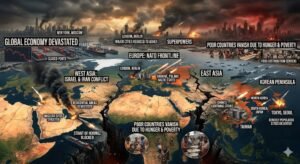
The dangerous conflict ongoing between Iran, Israel, and the United States has brought the world to the doorstep of World War III. Iran has threatened to stop oil supplies and block the Strait of Hormuz, which is having a severe impact on the global economy. However, the real fear is not about rising oil prices, but rather that if this tension turns into a major war, parts of the world map will be erased forever. Experts have warned that destruction will begin with those countries that are directly in the crosshairs of these superpowers.
In the current situation, the dispute between Iran, Israel, and the United States is no longer just a border dispute. It is pushing the entire world toward a ‘Great Reset’—that is, a mass destruction. If this battle for oil politics and supremacy takes a terrifying turn, there is a fear that some countries will disappear from the global map forever.
Israel and Iran Face-to-Face
The fire of World War III could ignite right from West Asia. The main players in this war will be Israel and Iran, who will attempt to erase each other’s existence. Israel, with the help of its advanced technology, will target Iran’s nuclear centers; similarly, Iran is prepared to turn Israel’s residential areas into graveyards through its proxy groups. If the oil wells in this region catch fire, the sky here will remain covered in black smoke for decades, making it impossible for humans to survive.
The European Battlefield: Crisis for Ukraine, Poland, and NATO
As the Russia-Ukraine conflict turns into a world war, its impact will not remain limited to Kyiv. As soon as NATO enters, Poland and the Baltic countries will be the first victims of Russian missiles. There is also a risk of Russian nuclear attacks on military bases in countries like Germany. Overall, a large and developed part of Europe will be devastated by the clutches of this modern warfare.
Taiwan and Korea
Seeing the United States preoccupied in the West, China might take advantage of this opportunity and launch a lightning strike on Taiwan. Given Taiwan’s small size and China’s massive military power, it could lose its existence within just a few hours. Meanwhile, the dictator of North Korea could rain missiles down on South Korea and Japan. Densely populated cities like Tokyo and Seoul could turn into deserts in the blink of an eye.
The End of Superpowers: From Washington to Moscow
The final stage of the world war will directly affect superpowers like the United States and Russia. Long-range missiles could turn London, New York, and Washington into graveyards; in return, major Russian cities like Moscow and Saint Petersburg will also be reduced to ashes. Even if death is not immediate, the spreading nuclear radiation will ruin future generations. No bunker or pit will be able to protect against this radiation.
Poor Countries Will Be the First Victims in a Great War
War does not kill people only with bombs; it finishes entire nations through hunger. If Iran closes the ‘Strait of Hormuz’, global oil supplies will stop. This will directly impact the poor countries of Africa and Asia that depend on imports. When the transportation system comes to a standstill, the supply of food items will also stop. Consequently, countries far from the battlefield will also be the first to be destroyed due to hunger and poverty.
A World War III scenario involving major powers would trigger a catastrophic “Great Reset” of the global economy. Here is a detailed summary of the potential economic impacts:
1. Energy Crisis and the “Oil Weapon”
The most immediate economic threat identified is the disruption of energy supplies.
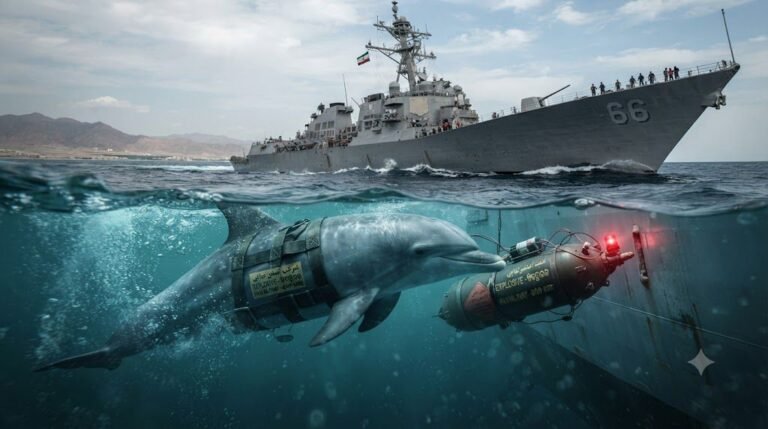
Blockade of the Strait of Hormuz: If Iran blocks this vital maritime chokepoint, a significant portion of the world’s oil supply would be cut off instantly.
Destruction of Infrastructure: Targeting oil wells in West Asia would not only stop production but cause long-term environmental and industrial damage, making recovery nearly impossible for decades.
Hyper-inflation: While the text notes that “oil becoming expensive” is a secondary fear to total war, the resulting energy vacuum would lead to an unprecedented surge in global prices.
2. Collapse of Global Logistics and Trade
The transition from localized conflicts to a global war would paralyze the movement of goods.
Transportation Halt: A lack of fuel and the risks of moving through war zones would bring global shipping and aviation to a standstill.
Supply Chain Disintegration: With manufacturing hubs like Germany and technology centers like Taiwan, South Korea, and Japan being primary targets, the production of electronics, machinery, and automobiles would cease.
3. Disproportionate Impact on Developing Nations
The text emphasizes that nations far from the actual battlefield would still face existential economic threats.
Import Dependency: Poor countries in Africa and Asia that rely on imported food and fuel would be the first to collapse.
Famine as an Economic Consequence: As transportation stops, the supply of basic food items would end, leading to mass starvation and the total breakdown of these nations’ internal economies.
4. Total Destruction of Wealth Centers
The targeting of “Superpower” cities would result in the physical annihilation of the world’s financial capitals.
Financial Erasure: Nuclear or conventional strikes on New York, London, Washington, Moscow, and Tokyo would destroy the central nervous system of global finance, including banking records, stock exchanges, and corporate headquarters.
Long-term Radioactive Liability: Even if some infrastructure remains, nuclear radiation would render these economic hubs uninhabitable, preventing any form of economic reboot for generations.
Summary Table of Economic Risks
About the Author