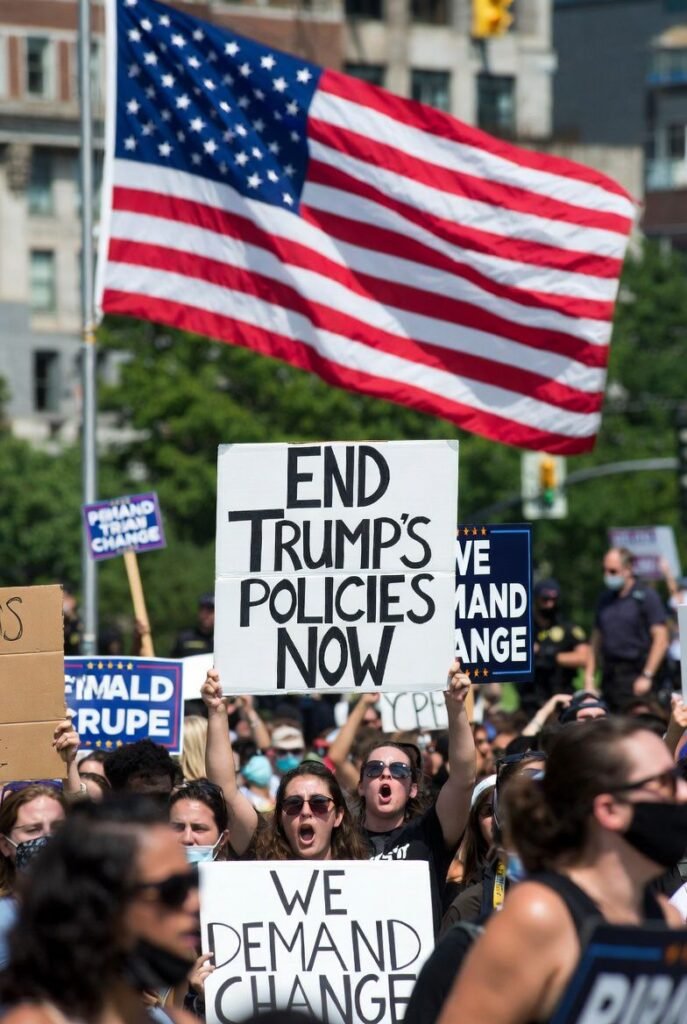
Most U.S. citizens are dissatisfied with President Donald Trump’s way of running the country. Public resentment has surfaced clearly, especially on everyday issues like inflation, jobs, tariffs, and foreign policy. This survey of more than 2,500 American citizens presents a picture of deepening discontent and political division in the country.
The survey by ABC News/Washington Post/Ipsos was conducted at a time when the Supreme Court had overturned the global tariffs previously imposed by Trump. The American public is not only angry with the leadership but is also feeling uncertainty and anxiety about the future.
Highest Dissatisfaction over Inflation and Tariffs: According to the survey, nearly two-thirds of Americans rejected Trump’s handling of inflation. Meanwhile, 6 out of 10 people appeared to disagree with the tariffs imposed on imported goods. Regarding the conduct of foreign policy, 62% of participants expressed dissatisfaction. Furthermore, 58% of people opposed the Trump administration’s stance on immigration policy, while 57% believed the economy could have been handled better. The survey revealed that President Trump failed to gain clear public support on any major issue.
No Full Trust in Democrats Either: However, the survey also showed that public trust is not solely lacking in Trump, but also not fully present for Democrats in Congress. When asked who they trust more to solve the country’s biggest problems, 33% said Trump, 31% said Democrats, and 31% trusted neither. This makes it clear that a large number of Americans are dissatisfied with both sides.
Support Divided Across Political Camps: According to the report, Trump’s ratings were weakest among Democrats and independent voters. These groups rejected his performance on almost every issue. Meanwhile, differences were also seen within the Republican Party. Republican voters who associate themselves with the “Make America Great Again” (MAGA) movement mostly supported Trump’s decisions. Conversely, Republicans who do not associate with MAGA were more critical on issues like inflation and foreign policy.
Disappointment Regarding the Economy:
Overall, President Trump’s disapproval rating was recorded at approximately 60%, one of the highest levels during his second term so far. This figure is almost the same as seen when he left office in 2021. Opinions about the economy were also bleak; nearly half of Americans said that conditions have worsened since Trump became President. Only one in three individuals believed the economy has improved. Merely 22% of people said their financial situation has improved, while the majority reported that conditions are either the same or have worsened.
Questions over Health and Mental Capacity:
The survey also raised concerns about President Trump’s suitability for the office. More than half of the people believe he lacks the mental capacity necessary for the presidency. Meanwhile, about half of the participants questioned his physical health. Regarding trust, nearly 7 out of 10 Americans said they do not consider Trump honest or trustworthy. Many also believe he is using the presidency for personal gain, and a majority felt he has made decisions that exceeded his legal limits.
Detailed Analytical Editorial
…………………………………………………………………..
Most U.S. citizens are unhappy with the way President Donald Trump is running the country. Public resentment has surfaced clearly, especially regarding everyday issues like inflation, jobs, tariffs, and foreign policy. This survey of more than 2,500 American citizens paints a picture of deepening discontent and political division in the country.
Analysis: A Crisis of Governance and the Erosion of Public Trust
This survey is more than just a disapproval rating for a sitting president; it is a diagnostic report of a fractured American democracy. Analyzing the data points leads to several profound conclusions:
The Economic Disconnect: Trump’s core promise has always been economic prosperity through “America First” policies. However, with nearly two-thirds of the population rejecting his handling of inflation, there is a clear disconnect between populist rhetoric and the actual cost of living. The Supreme Court’s intervention in overturning tariffs underscores the volatility of his policy-making, which is now facing pushback from both the judiciary and the treasury of the common man.
Bipartisan Disillusionment: The fact that over 30% of the electorate trusts neither the MAGA-led Republicans nor the Congressional Democrats is a startling revelation. This indicates a growing “political vacuum” in the United States, where a significant portion of the population feels unrepresented by the binary choice of the two-party system. This cynicism could lead to decreased voter turnout or a desperate search for unconventional alternatives.
Character and Competency Concerns: A leadership crisis becomes acute when 7 out of 10 citizens question the honesty of their Commander-in-Chief. Furthermore, concerns regarding mental and physical fitness are no longer just partisan talking points but have become a broader public anxiety. When the majority feels that the highest office is being used for personal gain, the moral authority of the government diminishes.
Conclusion:
President Trump’s second term is currently standing on a shaky foundation of polarized support. While the MAGA base remains loyal, the alienation of independents and moderate Republicans suggests that “identity politics” has reached its limit of effectiveness against economic hardship. For the administration, the challenge is no longer just winning arguments on social media, but delivering stability in the market and integrity in the Oval Office. Failure to address these core grievances may result in a historical shift in the American political landscape.
About the Author