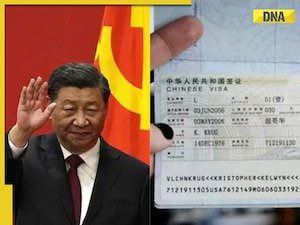
Highlights – China has introduced a new visa that aims to attract foreign talent, unlike the US, which has made it harder for non-Americans to work in the country even after holding its H-1B visa. The new Chinese visa has various benefits and potential to turn China into a tech hub.
……………………………………………………………………
China is moving in the opposite direction of the United States by introducing a new visa that aims to attract foreign talent, unlike the US, which has made it harder for non-Americans to work in the country even after holding its H-1B visa. China will launch its new K visa from October 1, 2025, to provide high-level job offers to foreign professionals in science, technology, engineering, and mathematics (STEM) fields. Beijing’s move is aimed at raising its global appeal and taking it on a path to become a tech superpower by 2035.
How is China’s K visa different from the US H-1B visa?
China’s State Council made the announcement in an overhaul of its immigration rules, which is starkly different from the US H-1B process. Firstly, while the latter is expensive and restrictive, China’s K visa for foreign professionals has no restrictions, no requirement of local work, and entry is easier with flexible stays. The announcement came a day after United States President Donald Trump proposed a USD 100,000 fee for new H-1B applications. This has made it harder for the candidates who want to work in the country, as they would now have to pay a hefty amount as fee.
Currently, China’s visa rules consist of twelve categories of standard visas, including work, study, business and family reunions. With the launch of K visa, an addition in this category will take place, which would become its thirteenth category. However, a must for applicants is adhering to the country’s rules and furnishing all required documents.
Who can apply for the K visa?
The K visa is especially designed for youth working or studying science and technology and related fields. A graduation in STEM fields from recognised universities or research institutions is a crucial eligibility requirement. The timing for the visa has been apt, as those who are unable to apply or afford the fee of the US H1B visa can potentially now turn to China as an alternative.
About the Author