Now that a two-week ceasefire has been reached regarding the Iran war, questions have begun to arise: what did Trump achieve from this conflict ? There is a popular proverb in Odia—”Expected a mango, but got a wild mango”—which means instead of gaining anything, one ended up facing a loss. This is exactly what has been observed with Trump over the past month.
The tension that persisted in the Middle East for over a month subsided when an agreement on a ceasefire was reached between the US and Iran, just before Donald Trump’s deadline expired. On February 28, the US and Israel launched joint airstrikes on Iran, resulting in the deaths of several leaders and military commanders, including their Supreme Leader Ali Khamenei. Following this, a full-scale war broke out in the region.
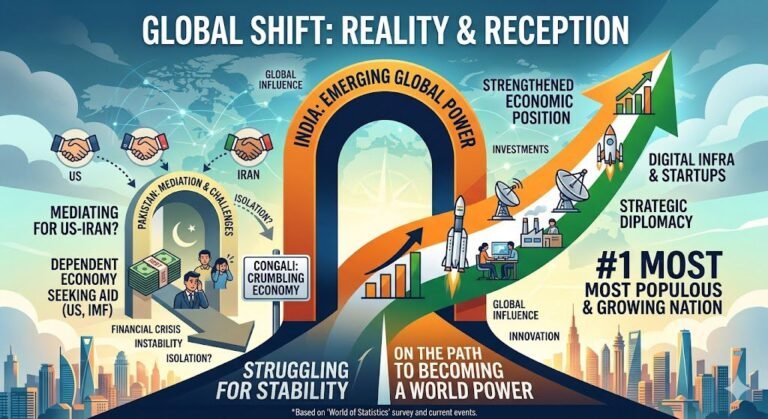
Now, as a two-week ceasefire has been established through Pakistan’s mediation, the question stands: what did US President Donald Trump gain from all this ?
Trump miscalculated regarding Iran
At the onset of the war, most people believed that the US would achieve victory within a few days. It was thought to be a matter of just a few days, but the war dragged on for more than a month. Despite being economically much weaker than the US, Iran put up a strong resistance against the American and Israeli forces and caused significant damage by launching retaliatory airstrikes in the Gulf countries and Israel.
According to experts, the US President made the same miscalculation regarding Iran as Russia did in the Russia-Ukraine war that began four years ago. At that time, Vladimir Putin also had no inkling that Ukraine would receive so much help from Western nations and that a war intended to last a few days would continue for years.
Why couldn’t Trump bring about a regime change in Iran ?
By attacking Iran, Trump wanted to bring an end to Ali Khamenei’s long-standing rule. Additionally, preventing Iran from becoming a nuclear power was another of his objectives. However, Trump could not achieve regime change in Iran. Although he killed Ali Khamenei through airstrikes, within a few days, the reins of power were handed over to his son, Mojtaba Khamenei.
There were several claims regarding Mojtaba as well. At times, it was said that he too was seriously injured in the attack and therefore was not appearing in public; however, Iran attempted to prove these claims wrong by releasing messages from time to time. At one point, Trump had clearly stated that whoever took command in place of Ali Khamenei without his (Trump’s) consent would also face action. Mojtaba was not only made the Supreme Leader but has also been taking on the US for many days. According to experts, changing the power center in Iran is not that simple because such goals cannot be achieved through airstrikes alone. As long as the US military does not engage in ground operations, the power center cannot be changed merely by dropping bombs or launching missiles. In such a large country, a war cannot be won easily by deploying just a few thousand soldiers.
The war united the whole of Iran !
At the beginning of the year, massive protests against Ali Khamenei took place in Tehran and several other cities. Millions of people demanded Khamenei’s removal, but the Supreme Leader alleged the US’s hand behind all this. Due to these long-running protests, Trump also began to feel that if he supported the Iranian protesters, regime change could be achieved without military action. But this did not yield any significant benefit; rather, this move backfired.
After the protests subsided and Trump killed Khamenei in airstrikes at the end of February, the entire country instead became completely united. The people who were once opposing Khamenei were also angered by the American attack and stood united against it. When Trump threatened to blow up bridges and power projects, a massive number of people stood there forming human chains.
In this way, the Iran that once seemed to be standing against a decades-old power center showed its unity against the war.
Trump ended up imposing a toll on the Strait of Hormuz
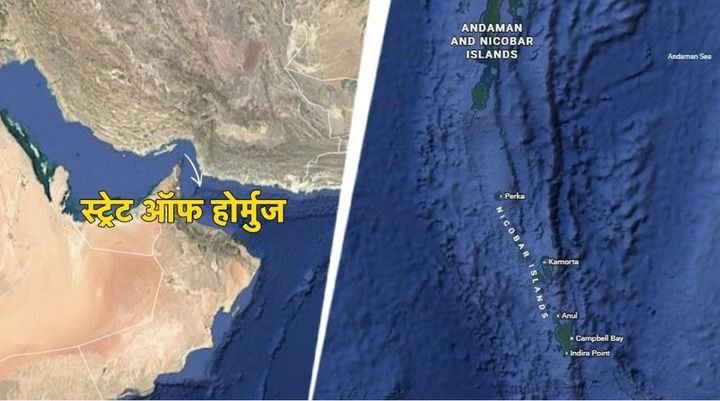
The Strait of Hormuz proved to be a trump card for Iran. Iran blocked this narrow waterway, through which 20 percent of the world’s oil is transported, within a few days of the war. The Iranian military sank several passing ships deep into the sea through airstrikes, resulting in hundreds of ships being stranded at anchor across the region.
Now that a ceasefire agreement has been reached, Iran is preparing to collect a toll from the ships passing through Hormuz. It is planning to collect this in cryptocurrency. If this happens, the situation will not remain as it was before the war stopped, and the imposition of the toll will impact the price of crude oil. In such a case, the Hormuz, which was previously free for ships, may now require ships to pay a toll.