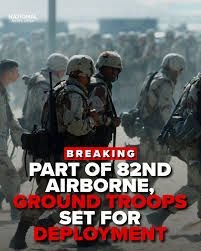
The biggest news from Washington is emerging at this moment. The Pentagon has officially confirmed that approximately 1,000 brave soldiers of the ’82nd Airborne Division’—considered the US Army’s most dangerous and lethal unit—have been dispatched to the Middle East. This single decision by President Donald Trump has caused a stir across the globe, as this step is remarkably similar to the preparations made in 1979, though history took a different turn back then.
Jimmy Carter’s ‘Historic Mistake’ That Trump Seeks to Rectify
During the 1979 Iranian Revolution, when American citizens were taken hostage, then-President Jimmy Carter had the option to send in ground forces. At that time, this same ’82nd Airborne’ unit was on alert, but Carter hesitated at the last moment. Instead of a ground assault, he chose ‘Operation Eagle Claw’ (a helicopter rescue mission), which proved to be a major tragedy and failure. Now, in 2026, Trump has moved past that old hesitation and given the green light for the deployment of paratroopers.
Why Does the Enemy Tremble at the Name of the ’82nd Airborne Division’?
Based at Fort Bragg, North Carolina, this unit is the US Army’s ‘Rapid Response’ team. Its most formidable characteristic is that it can deploy to any corner of the world within just 18 hours. These soldiers drop directly into enemy territory via parachute from aircraft to seize control of critical locations. A notable aspect of this deployment is that it is not just soldiers; the entire unit’s headquarters staff and the Commanding General are also going. This clearly indicates that this is not a deployment just for show, but preparation for a major ground operation.
Will a Ground War Begin After the Airstrikes ?
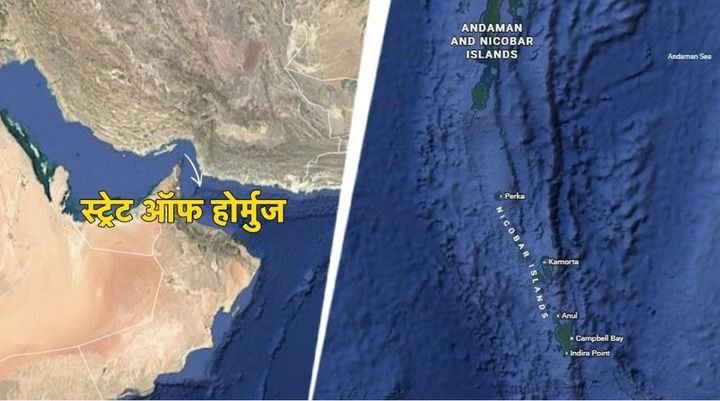
Until now, the fight against Iran was being conducted only from the skies. Missile sites were being targeted using fighter jets and drones. However, experts believe that airstrikes have their limits. If the US intends to seize control of the ‘Strait of Hormuz’ or Iran’s major oil facilities like ‘Kharg Island,’ it will have to land on the ground. The presence of airborne troops means that Tehran will no longer just have to look at the sky but will also have to fight to protect its land.
Will History Change in 2026 ?
History bears witness that this unit has often worked to prevent war, whether against Russia in Poland or during the evacuation from Afghanistan in 2021. But the circumstances of 2026 are entirely different. According to media reports, the Pentagon has already prepared maps and plans for operations inside Iran. In 1979, this unit was left waiting; but this time, the paratroopers flying on Trump’s orders are signaling that the story is going to be different.
Strategic Significance of the 82nd Airborne Division
……………………………………………………………………
The 82nd Airborne Division, known as “All American,” serves as the tip of the spear for the United States military. Its historical significance is defined by its ability to bypass traditional front lines and strike deep into enemy territory.
1. World War II: The Birth of Vertical Envelopement
The division’s legendary status was cemented during WWII. They executed the first large-scale airborne operations in U.S. history.
Operation Husky (Sicily): Proved that paratroopers could cause chaos behind enemy lines, even when scattered.
D-Day (Normandy): On June 6, 1944, they jumped into darkness to seize bridges and causeways, preventing German reinforcements from reaching the beaches. This was critical to the success of the Allied invasion.
2. The Cold War and “Rapid Deployment”
Throughout the Cold War, the 82nd became the primary tool for the Immediate Response Force (IRF).
Dominican Republic (1965): Operation Power Pack saw the division deploy within hours to prevent a perceived communist takeover, showcasing their speed in the Western Hemisphere.
Grenada (1983): In Operation Urgent Fury, they secured the island and rescued American medical students, validating the concept of a “joint” rapid intervention.
3. Panama and the Gulf War: Modern Parachute Assaults
Operation Just Cause (1989): This featured the first combat jump since WWII for many units. They seized Torrijos International Airport, effectively decapitating the Panamanian defense’s ability to respond.
Desert Shield (1990): They were the “Thin Blue Line,” the first ground troops to arrive in Saudi Arabia to deter an Iraqi invasion after Kuwait fell. Their presence provided the shield behind which the rest of the coalition built its strength.
4. 21st Century: From Deterrence to Evacuation
Iraq and Afghanistan: While often used as elite light infantry in these conflicts, their core strength remained their readiness.
Kabul Evacuation (2021): The division was the last unit on the ground during the withdrawal from Afghanistan. They secured Hamid Karzai International Airport under extreme duress, managing one of the largest aerial evacuations in history.