Trump’ s another jump
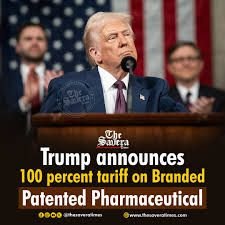
News Wave Desk – US President Donald Trump has issued an order imposing a 100% tariff on drug imports. This decision, which will come into effect on October 1, has caused a major upheaval in the global pharmaceutical industry. However, the Indian pharmaceutical industry claims that it will not have a significant impact on India.
India’s Response
The Pharma Export Promotion Council of India (Pharmexcil) has clearly stated that this tariff will not be a hindrance to Indian companies. It should be noted that Indian generic drugs provide the US with approximately $200 billion in cost savings each year. Consequently, demand for Indian medicines will remain strong there.
Industry Voice
Pharmexcil Chairman Namit Joshi said, “India supplies approximately 47 percent of America’s pharmaceutical needs. Our strength lies in generic drugs, and this tariff will not hinder them.” Sudarshan Jain, Secretary General of the Indian Pharmaceutical Alliance, added, “The executive order only applies to patented or branded drugs. Generic exports will remain completely unaffected.”
The US has been dependent on Indian generic drugs for the past 10 years. Many Indian companies already have manufacturing and repackaging units there. However, Trump has warned that companies that do not have US units by October 1 will face tariffs.
The Way Forward for India
Nikhil Masurkar, CEO of Entode Pharmaceuticals, says, “India’s strength lies not in patented drugs, but in the supply of affordable generics. This is what will keep us afloat in the US market.” However, experts caution that India will need to further strengthen its cost-efficiency in bulk drugs and APIs and explore new markets.
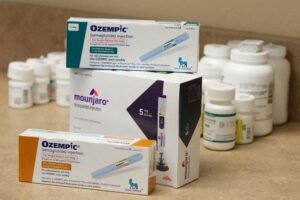
On Friday, Trump declared that branded and patented pharmaceutical imports into the US would attract a 100 per cent tariff from October 1, 2025. The only exemption will be for companies that are already building manufacturing plants in America.
Why Did Trump Take This Step?
Donald Trump has long argued that tariffs are the best way to revive American industry and reduce reliance on foreign supply chains. His latest move is framed as a push to bring back drug manufacturing to US soil, forcing multinational companies to prove they are building factories in the US if they want to avoid penalties.
The decision also follows a Trump administration investigation into the pharmaceutical sector launched in April 2025, which, according to Times Now, gave the White House scope to adjust imports on national security grounds. Trump himself linked the tariff to “National Security and other reasons” in his Truth Social post. He has also claimed that tariffs will help reduce the US budget deficit and generate domestic manufacturing jobs.
But industry watchers point to risks for the American healthcare system. American consumers depend heavily on low-cost generics manufactured in India, and that higher tariffs could fuel price hikes, shortages, and inflation.
In 2024, America imported nearly $233 billion in pharmaceutical and medicinal products, according to Census Bureau figures cited by the Associated Press. Inflation is also edging higher: the consumer price index rose 2.9 per cent over the past 12 months, up from an annual pace of 2.3 per cent in April, when Trump first launched a sweeping set of import taxes.
According to sources, India supplies over 45 per cent of generic drugs and 15 per cent of biosimilars used in the US. Analytics firm IQVIA estimated that Indian generics saved the US healthcare system $219 billion in 2022 and $1.3 trillion between 2013 and 2022. Indian manufacturers also provide nearly half of the generic medicines covered under Medicare and commercial insurance plans.
If tariffs are applied strictly to branded and patented drugs, the immediate impact may fall more heavily on multinational giants rather than low-cost generic makers. However, there is growing uncertainty over whether complex generics and specialty drugs, areas where Indian