US President Donald Trump has taken a major U-turn within 8 hours regarding the Iran war. Trump, who had previously announced achieving peace through the use of force, has now declared not to use force for peace. According to Trump, discussions regarding a ceasefire with Iran are ongoing. These talks will continue for an entire week. Therefore, no power centers of Iran will be attacked. Iran has termed this as Trump’s defeat. According to state media, Donald Trump has stepped back from the war.
In the 24-day war, Iran has brought America to its knees by using drones, missiles, and the Strait of Hormuz. For this reason, Trump, who was talking about escalating the war until Monday morning, started talking about a ceasefire just 8 hours later. The question arises—how did all this happen in the end ?
America retreated as the war progressed
At the beginning of the war, Mossad had given a presentation to the US President. It stated that after initial airstrikes, the people of Iran would take to the streets. If the public took to the streets, the government of the Islamic Republic would be ousted from power on its own.
Proceeding according to this plan, Israel and America killed Supreme Leader Khamenei on the very first day of the war. America also killed Iran’s Ali Larijani. Despite this, the people of Iran did not take to the streets. According to ‘The New York Times’, this assessment by Mossad proved to be completely wrong.
In the current situation, Trump had only one option—to move forward in the war. For this, America would have had to send troops onto Iranian soil. Taking this decision was not easy for America. If soldiers had lost their lives in Iran, it would have brought infamy to Trump across the world. Additionally, it was not certain whether sending troops would lead to a regime change in Iran.
There was pressure from Gulf countries on America
There was pressure on America from Gulf countries, especially Oman, Qatar, and Saudi Arabia. These countries maintained that while the benefit of the war was going to Israel, they were the ones bearing the losses. The Gulf nations had also signaled that they might review their relations with America.
Notably, America and Trump personally have massive investments in the Gulf region.
According to Britain’s ‘The Telegraph’, if America had attacked any of Iran’s power centers, Tehran had already planned to paralyze the Gulf countries. Under this, Iran had prepared to attack the oil and gas establishments of Bahrain, Jordan, Saudi Arabia, Qatar, and Kuwait. Qatar had recently expressed its displeasure with America. The Gulf countries did not want their establishments to be attacked.
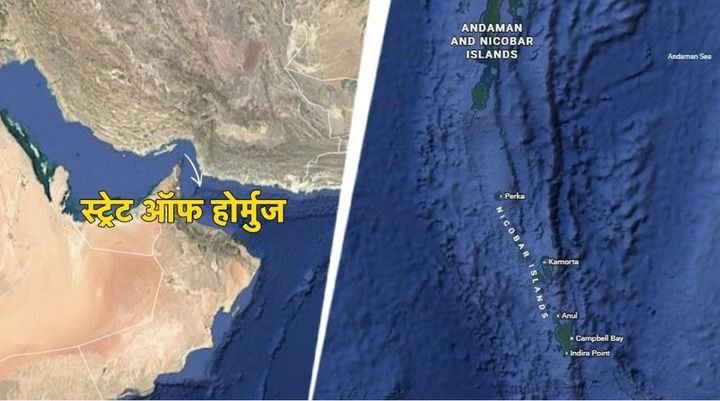
No alternative to opening Hormuz
According to ‘The Washington Post’, Donald Trump held a meeting with his security advisor Dan Kane regarding the Strait of Hormuz. In this meeting, Trump asked Kane—why aren’t you finally sending warships to Hormuz ? In response, Kane said that the solution to Hormuz would not be achieved through warships.
According to Kane, Hormuz is an extremely narrow passage. If warships are sent here, it could remain closed for a long time, which could cause an outcry across the world. Kane stated that even a simple Iranian boat could cause damage to American warships here. This could lead to America’s humiliation.
No support from NATO and the world
From the beginning, Trump hoped that he would receive help from NATO or other countries of the world in the war against Iran. But when the time came to help, all NATO member countries backed out. Not a single country supported America in the Hormuz fight. Initially, Trump was angry with NATO and Europe, but eventually, he had to change his decision.
Analysis: Mossad’s Failure and the Shift in Trump’s Strategy
Introductory Context : Mossad and American intelligence agencies had estimated that following the fall of the top leadership, a massive civil war or public uprising would erupt within Iran. However, the reality turned out to be exactly the opposite.
Full Analysis
1. Awakening of Nationalism:
After the assassination of prominent leaders like Khamenei, instead of turning against the government, the Iranian public united for the sake of the country’s honor and dignity.
2. Drone and Missile Prowess:
Iran’s advanced drone technology has posed a significant challenge to the US defense system. Specifically, Iran’s dominance in the Strait of Hormuz region holds the potential to disrupt the global oil market.
Why did Trump step back? (Key Reasons) Economic Pressure: If the war had been prolonged, global oil prices would have skyrocketed, which would have had a devastating impact on the American economy.
The Hormuz Issue: Iran threatened to shut down the ‘Hormuz’ waterway. This route accounts for the transportation of one-third of the world’s oil.
Military Casualties: During this 24-day conflict, the US realized that defeating Iran solely through airstrikes was not possible. It would require ground troops, which would lead to horrific bloodshed.
Iran’s Stance:
Iran views this as a major diplomatic and military victory. In their perspective, they have forced the world’s most powerful military to back down through their limited resources and ‘Drone Warfare’.