( Written by an AI)
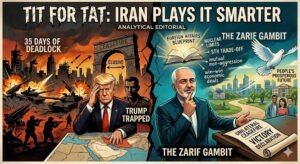
It has been 35 days since the conflict between Iran and the US-Israel alliance erupted, and there are no signs of the hostilities de-escalating. Trump reportedly feels trapped in this situation as a ceasefire remains elusive, while Iran continues to target American military bases and Gulf allies across the Middle East.
Amidst this deadlock, a strategic suggestion has emerged for Iran to counter Trump in his own “Trumpian style.” Former Iranian Foreign Minister Javad Zarif has advised the Iranian leadership that if Trump is unable to halt the war, Iran should take the initiative to end it themselves. He suggested that Iran should declare itself the victor, strike a deal, and unilaterally announce a ceasefire.
Editorial Analysis: The Zarif Gambit
The proposal put forward by Javad Zarif is more than a diplomatic olive branch; it is a calculated attempt to hijack the “Art of the Deal” narrative that Donald Trump has spent decades cultivating. By suggesting that Tehran unilaterally declare victory and dictate the terms of a ceasefire, Zarif is pivoting from a war of attrition to a war of perception—one where Iran seizes the moral and strategic high ground while leaving the White House scrambling for a response.
Out-Trumping Trump
The brilliance of this “Trumpian” approach lies in its audacity. Donald Trump’s political brand is built on winning and decisive action. If Iran moves first to end the hostilities, they effectively cast Trump as the “trapped” protagonist in a conflict he couldn’t resolve, while Tehran emerges as the adult in the room. By declaring victory, Iran fulfills its internal propaganda requirements, satisfying hardliners at home while simultaneously offering the international community the stability it craves.
The Blueprint: Leverage as Currency
Zarif’s roadmap, outlined in Foreign Affairs, identifies the three most painful pressure points for the U.S. and the global economy:
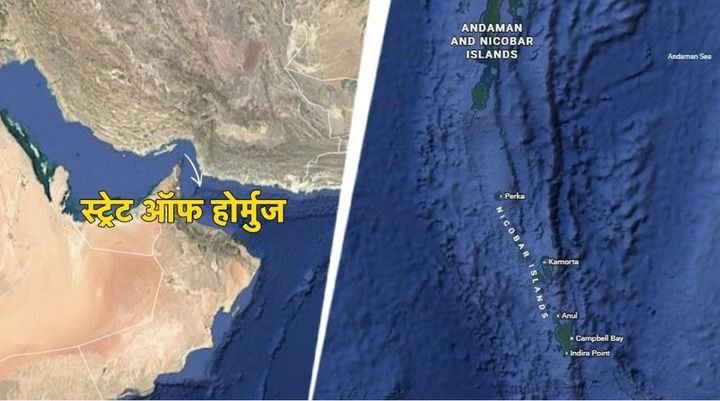
The Nuclear/Maritime Exchange: Offering to limit nuclear enrichment and reopen the Strait of Hormuz is a masterstroke. The Strait is a global energy jugular; by holding it hostage and then offering to release it in exchange for the lifting of sanctions, Iran transforms a military blockade into a potent bargaining chip.
The Non-Aggression Pact: This proposal is designed to appeal to Trump’s isolationist “America First” base. A bilateral treaty promising no future attacks offers Trump a way to bring troops home—a campaign promise he is often desperate to keep—without the appearance of a total retreat.
Economic Integration: Reframing the relationship through “win-win” economic cooperation is the ultimate bait. It moves the conversation from ballistic missiles to trade deals, a transition that aligns perfectly with Trump’s preference for transactional diplomacy over ideological warfare.
The Domestic Pivot
Perhaps the most significant aspect of Zarif’s counsel is the shift toward domestic stability. By framing the end of the conflict as a means to “secure a prosperous future” for the Iranian people, the leadership can pivot away from the high costs of regional proxy wars. If Tehran can successfully trade its “adversary” status for “sanction-free trade,” it would be the most significant Iranian diplomatic victory since the 1979 Revolution.
Final Assessment
The ball is currently in Tehran’s court. If the Iranian leadership adopts Zarif’s blueprint, they won’t just be ending a 35-day conflict; they will be fundamentally altering the geopolitical architecture of the Middle East. For a President who prides himself on being the ultimate closer, Trump may find himself in the rare position of being “closed” by the very opponent he sought to pressure. In the game of high-stakes diplomacy, the winner isn’t always the one with the biggest hammer—it’s the one who knows when to stop swinging it.