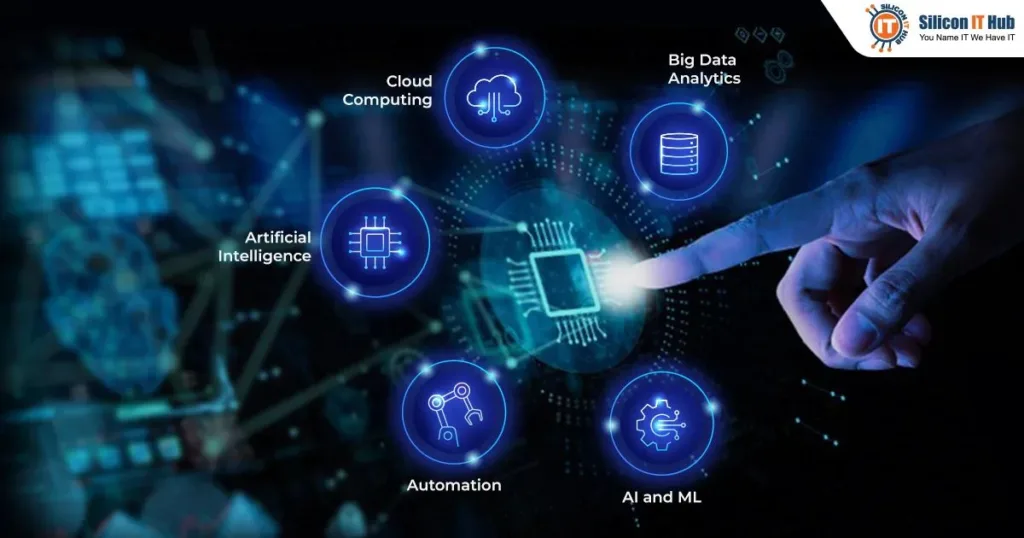
Technology is advancing so rapidly that traditional human roles are being questioned. Technologies like artificial intelligence (AI), robotics, automation, quantum computing, genetic engineering, and the metaverse could completely transform the way we work, think, and live. Recently, when asked what the future holds for AI, the answer was surprising: by 2030, technologies will be available that will significantly reduce the need for humans in many fields. Let’s understand which five key technologies could bring the biggest changes in the future.
Artificial Intelligence (AI) (Beyond the Human Brain)
AI has already become a part of our lives. Be it Google Maps, chatbots, or online shopping suggestions. But by 2030, AI will become so smart that it will be able to make faster and more accurate decisions than humans.
In the healthcare sector: AI will be able to treat patients and diagnose diseases, replacing doctors.
In law and education: AI will analyze case studies, and children will learn from AI tutors.
Impact on employment: mmo Machines will take over millions of jobs. Humans will have to learn new types of work.
Robotics and Automation (From Home to Office): Today, robots work mostly in factories, but by 2030, they will be present in our homes as well.
Household chore : Robots will perform tasks like cooking, cleaning, and caring for the elderly.
Large industries and offices: Machines will replace humans and work 24 hours a day.
Transportation and logistics: Self-driving trucks and delivery drones will become commonplace. The question arises: when machines do everything, what will be the true role of humans?
Quantum computing (computers millions of times faster): Quantum computing is being called the most revolutionary technology of the future. These computers will be millions of times faster than today’s fastest supercomputers.
Creation of new drugs: Medicines for cancer and rare diseases will be developed more quickly.
Space and meteorology: Space exploration and accurate weather forecasting will become easier.
Risks will also increase : Such powerful technology could pose a threat to cybersecurity. Hackers could access confidential information from around the world.
Genetic Engineering and Biotechnology (Modification of Human Genes): In the future, we may be able to prevent diseases before they occur by editing our DNA.
Disease Prevention: It will be possible to eliminate diseases like diabetes and cancer from birth.
Plants and Animals: Gene editing will be used to make crops more fertile and animals healthier.
Ethical Questions: Designer babies may become a trend, allowing parents to choose their child’s color, height, and characteristics. This will also increase debate and controversy in society.
Metaverse and Virtual Reality (Combining the Digital and Real World)
Metaverse and Virtual Reality (VR) could become a major part of our lives by 2030.
Work and Study: People will work from home in virtual offices, and children will study in virtual classrooms.
Shopping and Entertainment: Traveling, shopping, and meeting friends will become commonplace in the metaverse.
Challenges: The distance between the real and digital worlds will blur. People may become disconnected from reality, and social life may be affected.
By 2030, technology will make our lives much easier, but it will also bring many new challenges. The nature of employment will change, ethical questions will arise, and humans will have to redefine their roles. The question is: Are we ready for this change ?