( The analysis is given below)

Highlights – The Iran war began on February 28, when the United States and Israel launched a joint attack on the Shia nation. Looking at America’s military power, it was expected that Iran might not last long, but even after more than 15 days, Iran continues to retaliate. In this conflict, while Iran, the U.S., and Israel are facing losses, Russia and China are gaining advantages in their respective sectors.
Following the attacks by the United States and Israel on Iran on February 28, various claims regarding the ongoing conflict have surfaced. While America describes this military action as a success, Iran claims to have caused heavy losses to the coalition in retaliatory strikes. So far, more than 1,300 deaths have been reported in Iran, while in Israel, the death toll exceeds 11, including 6 soldiers. However, a section of geopolitical analysts believes that the real strategic gain in this entire confrontation has gone to China and Russia.
How is Russia Benefiting ?
Since Donald Trump became the U.S. President again last year, the U.S. has been consistently working on a strategy to weaken Russia’s energy business. Washington believed that earnings from oil and gas were sustaining Moscow’s military strength. For this reason, the U.S. tried to distance Russia’s two major buyers, India and China, from Russian oil.
Under this plan, heavy tariffs were imposed on Indian exports, and sanctions were placed on two major Russian oil companies. Initially, this strategy appeared successful, but the situation changed when the Trump administration initiated military action against Iran. Due to this conflict, oil supplies from the critical Middle East energy region were affected, leading to increased uncertainty in the global market.
This changing environment brought unexpected benefits to Vladimir Putin-led Russia. Last week, the U.S. granted a 30-day temporary waiver to Indian refineries to purchase Russian oil stranded at sea. U.S. Treasury Secretary Scott Bessent stated that this decision was taken to maintain oil supply in the global market. He also hinted that, if necessary, some Ukraine-related sanctions on Russian oil could be further eased to ensure international market supply remains uninterrupted.
At the beginning of 2026, Putin faced a difficult situation. The expenses of the ongoing war in Ukraine were putting pressure on the Russian economy. The average price of Urals crude in the national budget was estimated at around $59 per barrel, but due to Western sanctions, high interest rates, and labor shortages, energy revenue in January reached its lowest level since 2020. Consequently, Russia’s tax income was lower than expected.
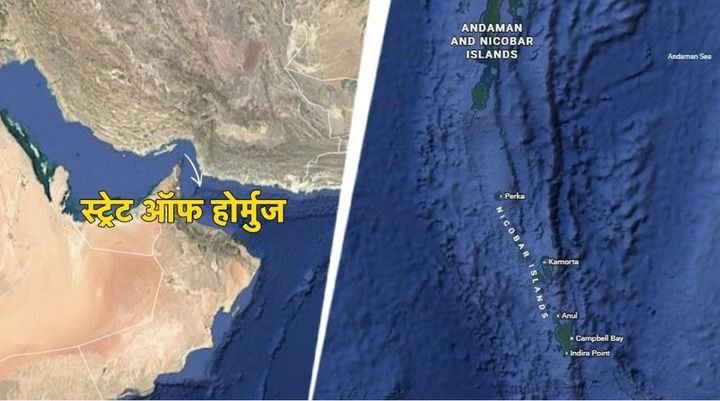
However, the situation shifted when the U.S. and Israel attacked Iranian targets. Due to retaliatory actions and regional tensions, shipping routes through the Strait of Hormuz were affected, causing crude oil prices to skyrocket. Prices crossed $100 per barrel, the highest level since 2022. This provided significant economic relief to Russia.
According to experts, amidst the global oil crisis, Russian crude no longer needs to be sold at heavy discounts as before. India and China, who were previously receiving discounted oil, are now focused on securing their supplies after the disruptions in Hormuz. Russia is now selling its oil at premium rates.
According to a report by the Financial Times, in the current scenario, Russia is earning an additional daily income of approximately $150 million (about ₹1,389 crore) from its oil business.
In the first 12 days since the conflict began, Russia earned an additional $1.3 billion to $1.9 billion through oil exports. The report further suggests that if international oil prices remain high, Moscow’s additional income could reach between $3.3 billion and $5 billion by the end of the month.
China Wins by Outpacing in Technology !
For a long time, the United States and its allies held a near-monopoly on satellite imagery. However, China now appears to be building a rapid alternative system.
Several key satellite images related to the Iran war have emerged through Chinese commercial networks. These images showed signs of damage to U.S. military bases in the Gulf region and resources in Israel. Meanwhile, a major American commercial satellite imaging company had temporarily halted the release of certain sensitive images.
This has drawn global attention to China’s rapidly expanding commercial earth-observation sector. This sector operates with relatively fewer political and regulatory restrictions compared to Western companies.
Most images related to the war have come from China’s growing satellite network, primarily the Jilin-1 satellite constellation operated by Chang Guang Satellite Technology. This group includes over 100 satellites capable of taking sub-meter high-resolution images and can frequently monitor any strategic area.
Experts believe this development is a significant sign for future warfare. For decades, American companies like Maxar Technologies and Planet Labs have been the primary global suppliers of satellite imagery. However, China’s rapidly growing network has begun to challenge this dominance.
According to analysts, China had also assisted Pakistan during the India-Pakistan conflict. However, despite this, Pakistan could not defend itself. It was only after pleading with India that ‘Operation Sindoor’ was halted. While that is an old conflict, in this new war, the U.S. and Israel are bent on destroying Iran, while Russia and China are focusing on strengthening themselves. These two countries are the biggest beneficiaries of this war so far. While China has certainly faced losses regarding its dependence on Iran for oil and gas, it is winning the race in future satellite technology.
Analysis: Impact on Global Oil Prices (March – June 2026)
…………………………………………………………………..
The current geopolitical climate suggests that oil prices will remain high and volatile over the next few months, driven by three primary factors:
1. The “Hormuz Premium” and Supply Chokepoints
The effective closure of the Strait of Hormuz—through which approximately 20% of global oil and LNG flows—has removed nearly 8 to 10 million barrels per day (mb/d) from the market.
Price Surge: Brent crude has already spiked from $70 to over $120 per barrel in early March.
Double Chokepoint Risk: With Yemen’s Houthi movement aligning with Iran and declaring “Hour Zero” for a blockade in the Bab el-Mandeb, the world faces a unprecedented “double chokepoint” scenario. This could disrupt up to 30% of seaborne oil, potentially pushing prices toward $150 per barrel if the naval blockade persists through the second quarter of 2026.
2. Russia’s “War Windfall”
Russia is emerging as the primary economic beneficiary of the chaos in the Middle East.
Revenue Jump: Following the February 28 attacks, Russia’s fossil fuel export revenue surged by 14-17%, earning Moscow an additional $150 million to $550 million daily.
Sanctions Easing: To prevent a global economic collapse, the U.S. has been forced to issue 30-day waivers for stranded Russian oil. This has allowed Russia to sell its “Urals” crude at a premium, narrowing the previous “sanctions discount” almost overnight.
Pivot to Asia: With Middle Eastern supplies blocked, India and China have aggressively increased their intake of Russian crude, effectively neutralizing the Western strategy to “starve” the Kremlin of energy revenue.
3. China’s Strategic Dominance and Technology
While China faces short-term costs due to its reliance on Iranian energy, it is winning the long-term “shadow war” through technology.
Satellite Edge: China’s Jilin-1 and BeiDou-3 networks are now providing the primary intelligence and navigation for the region. By transitioning Iran’s military and shipping from GPS to BeiDou, China has made these assets resistant to Western jamming.
Market Stability: China holds over 1.2 billion barrels in reserves (approx. 108 days of cover), allowing it to weather the current price spike better than many Western-aligned economies.
Note: For every $10 increase in oil prices, global inflation is estimated to rise by 0.2% to 0.4%, complicating the interest rate outlook for major central banks through mid-2026.