Highlights- ‘6,000 per year…’ Why are Americans renouncing citizenship in droves?
While millions are pursuing US citizenship, many expatriates are renouncing their citizenship. A 2025 survey shows that 49% of expatriates are considering renouncing, with 51% citing political frustration.
………………………………………………………………………………….
US Citizenship: While people around the world dream of becoming American, a growing number of US citizens living abroad are considering renouncing their citizenship. They are making this decision not only for tax or legal reasons, but also due to disappointment with the country’s political stance.
Reasons revealed in survey
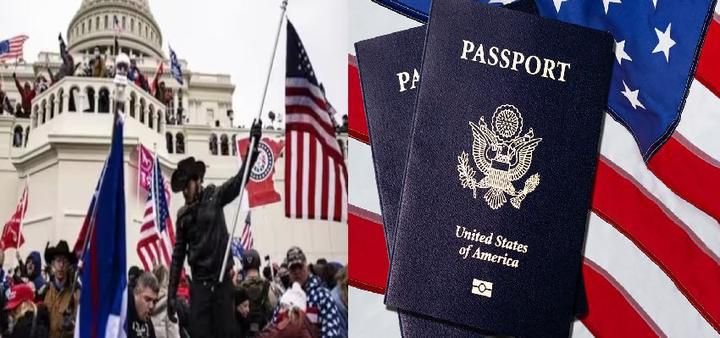
Immigration lawyers say that political discontent, once a rare factor in such decisions, has now become a major factor. A 2025 survey found that nearly half of US immigrants are considering renouncing their citizenship, with many citing the January 6 Capitol riots, gun violence, and voting rights violations as reasons.
What does the report say?
According to a report in The Washington Post, 5,000 to 6,000 Americans renounce their citizenship each year. Historically, these decisions have been driven by onerous tax reporting requirements and logistical problems related to America’s unique tax laws. Now, lawyers and expatriates say politics is the primary reason.
Is the Trump administration the reason?
One American expatriate reported beginning the process of renouncing citizenship the day after learning of Donald Trump’s re-election. Other Americans living abroad also agree. Citing rising political extremism, threats to voting rights, mass shootings, and deepening cultural divisions, many say they no longer recognize the country they left behind. For some, the January 6 Capitol riot was a necessary turning point.
What do citizens say?
An American expatriate living in London, speaking on condition of anonymity, said he began the process of renouncing his citizenship the day after learning of Donald Trump’s re-election.
Other Americans living abroad echo this sentiment. Citing rising political extremism, threats to voting rights, mass shootings, and deepening cultural divisions, many say they no longer recognize the country they left behind. For some, the January 6 Capitol riot was a turning point.
The United States is one of the few countries that taxes its citizens regardless of their place of residence. This means that Americans living abroad must file annual tax returns and face potential penalties or double taxation. These financial and bureaucratic hassles have long frustrated expatriates.
Some foreign banks even refuse loans to American customers due to strict US reporting laws. According to reports, some banks, fearing the stringent reporting requirements imposed by Washington, refuse to allow US citizens to open accounts or charge them extra fees.
Recent renunciations include participants in online forums such as the nearly 3,000-member Facebook group “Relinquish US Citizenship – Why and How.” They cite dissatisfaction with US politics and policies as part of their motivation.
The 2025 Greenback Survey found that nearly half of US citizens abroad are considering renouncing their citizenship. More than half cite political dissatisfaction. According to the report, 61% cited “taxes” as their reason, and 51% cited “dissatisfaction with the US government or political direction.”
What is anti-Americanism? Will its label permanently close the path to American citizenship?
Donald Trump had promised to launch the largest deportation campaign in the country’s history, hunting down and expelling intruders. Following this, alleged illegal immigrants are being deported in installments. But now, even legal entry into the US has become difficult. Candidates’ social media will be scrutinized, and any hint of anti-Americanism will result in their application being rejected.
President Donald Trump has consistently advocated for America First. Every effort is being made to maintain the superpower’s position as a superpower. Meanwhile, a new development has emerged: the Trump administration will no longer allow people with anti-American views into the country. But what is anti-Americanism, and does it mean being against the US? How will the immigration service investigate and verify it?
What is anti-Americanism?
Before understanding this, let’s first understand Americanism. It is an ideology associated with America that transcends patriotism. According to it, the US is unique and special, its lifestyle, its laws, and its rules and regulations are the most advanced and democratic. And the dream of America is the dream that every capable person should have. This thinking pushes Americans beyond national pride and emphasizes themselves as global leaders.
In the early 19th century, when millions of people began arriving in America from Europe and Asia, they were urged to learn English and adopt local culture. This is where anti-Americanism began.
This simply means thinking against America and its ways. Rejecting anything that even smells of American culture, or doing something that would destroy that culture or thinking. Take North Korea, for example, where anti-American sentiment is evident. Its leadership believes that everything in the US is wrong and deserves to be destroyed.
Donald Trump is increasingly making it difficult for those coming to America.
This opposition manifested itself in various ways. For example, during the Soviet Union era, communist countries considered America an enemy. Some countries believed that American pop culture was corrupting the culture of others. Interference in the internal affairs of countries also fueled anti-American sentiment. For example, America’s interference in places like Iran, Saudi Arabia, and Iraq. The politics of oil and war incited people there against America. Many countries began to believe that America imposes wars for its own greed.
Being anti-American is not necessarily being unpatriotic, but to ensure that this sentiment does not turn into ideology, the Trump administration has taken action. It will scrutinize the social media accounts of all those who wish to come to America, and any hint of alleged anti-Americanism will result in rejection of the application.
Trump’s policy, however, does not clearly state what anti-Americanism is. But it was certainly stated that this includes those who support anti-Semitic terrorism, anti-Semitic terrorist organizations, and anti-Semitic ideologies. This means that the US is emphasizing protecting itself as well as Israel.
People are being deported regularly in accordance with Trump’s policies.
The policy also cites the Immigration and Nationality Act of 1952 (INA). Under this, certain individuals cannot obtain US citizenship under any circumstances, such as those with communist views or those who routinely oppose the US government.
In addition, many people may be deported before they even arrive.
– USCIS will check whether the applicant has supported any terror group.
– Whether they have supported any ideology that is against the US.
– Whether they have anti-Semitic views or similar activity.
– Whether they have a criminal record or whose application has been rejected multiple times.
Why is the new policy being opposed?
Activists believe that denying entry based on what someone has written or said on their social media account is wrong. In fact, like other democratic countries, the US First Amendment allows people to freely speak and write. But there’s a catch. This constitutional right only applies to US citizens. Non-citizens—immigrants or those simply applying—don’t have the same freedom.