Highlights: Scientists believe that the large-scale use of DME will not only enable India to reduce its dependence on LPG imports but also take a strong step toward a clean and sustainable energy system.
,……………………………………………………………………
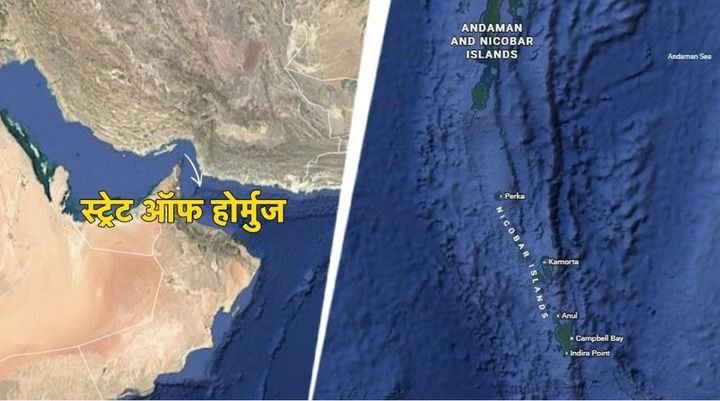
There is an old saying—Necessity is the mother of invention. That is, whenever humans felt a need, they invented something. From fire in the Stone Age to the invention of the wheel, everything happened this way. Once again, India has done the same. After Iran closed the world’s most important energy shipping route, the Strait of Hormuz, India has found a new alternative to LPG gas. This will reduce India’s dependence on LPG imports in the coming days and save the government lakhs of crores of rupees. Let’s find out what India has achieved.
Indigenous Technology Developed
Scientists at CSIR-National Chemical Laboratory (CSIR-NCL) have developed an indigenous technology to produce Dimethyl Ether (DME). It is a clean-burning fuel that can be blended with Liquefied Petroleum Gas (LPG). According to the institute, DME is a clean-burning synthetic fuel that significantly reduces emissions of soot, nitrogen oxides (NOx), sulfur oxides (SOx), and particulate matter compared to traditional fuels, while its thermal efficiency remains equal to conventional fuels. The Bureau of Indian Standards (BIS) has already issued standard IS 18698:2024, which allows blending up to 20 percent DME with LPG for domestic, commercial, and industrial uses.
Savings of ₹9,500 Crore
Experts say that up to 8 percent DME can be blended with LPG without making any changes to existing infrastructure (such as cylinders, regulators, hoses, and burners). India imported approximately 21 million tons of LPG in 2024. Scientists estimate that replacing just 8 percent of LPG with DME could save about ₹9,500 crore in foreign exchange every year. For the 10.5 crore LPG connections under the Ujjwala Yojana, such a transition would require a production capacity of approximately 1,300 tons of DME per day. Apart from cooking fuel, DME can also be used as an automotive fuel and as a propellant in aerosol products, replacing ozone-depleting chlorofluorocarbons (CFCs). It can also serve as a chemical intermediate for the production of low olefins, dimethyl sulfate, and methyl acetate.
Preparation for Commercial Production Soon
Now, CSIR-NCL, along with a processing engineering partner, is ready to scale up this technology to an industrial-level demo plant producing 2.5 tons per day within 6-9 months. This demo plant will pave the way for setting up commercial plants with a capacity of 500-1,000 tons per day. Dr. Ashish Lele, Director of CSIR-NCL, said in a media conference today, “CSIR-NCL is keen to partner with major oil PSUs and bioenergy companies for commercial-level production.”