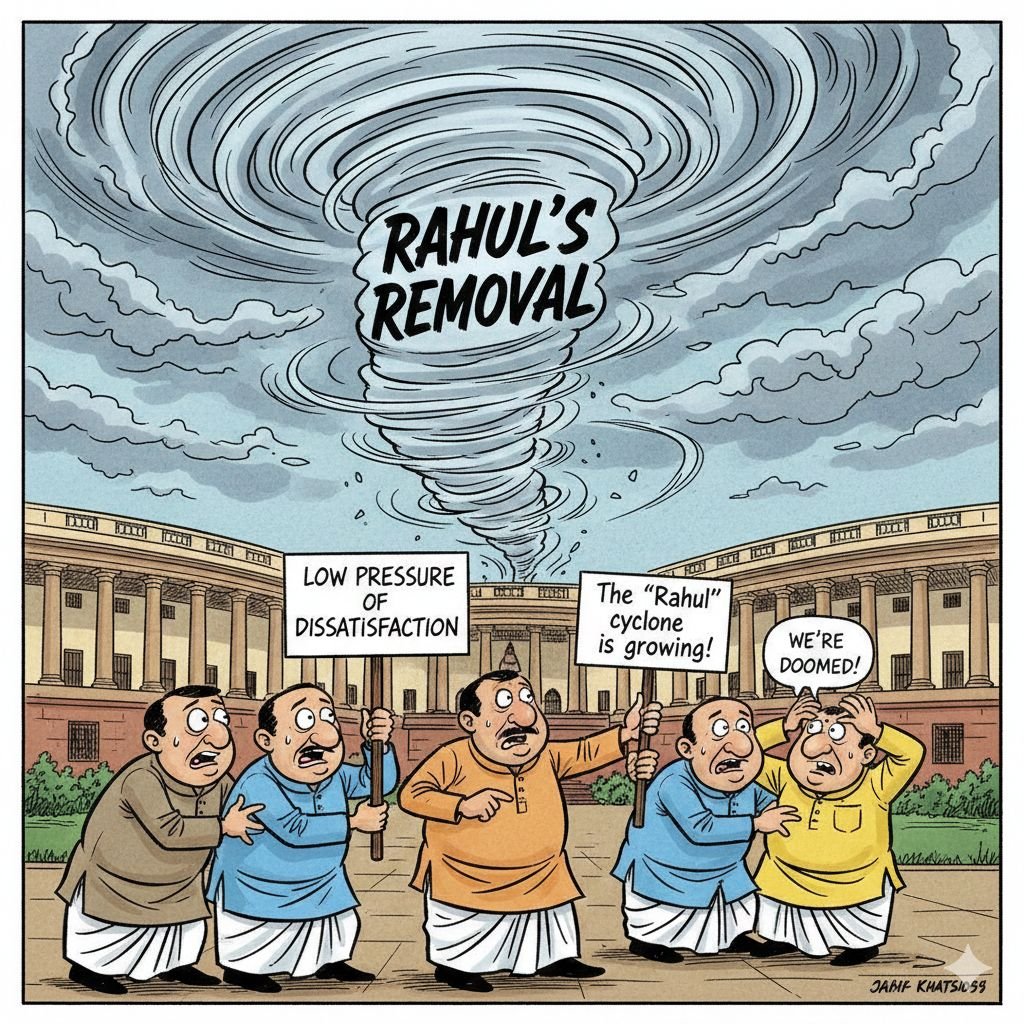
Amidst the defeat in the Bihar Assembly elections and the turmoil within the Karnataka Congress, voices of protest against Rahul Gandhi have begun to rise. Senior Congress leader Rashid Alvi has questioned the party’s situation. He stated that the party’s position is weak. He stated that the Congress’s condition has deteriorated, and that the Congress leadership is directly responsible for this.
According to Alvi, Congress is unable to compete, let alone compete, in terms of hard work and preparation in the elections. He said that the BJP works on the ground, but the Congress’s efforts are nowhere to be seen.
Demand for Priyanka Gandhi to be given the reins
Rashid Alvi said that it is not easy for Congress leaders to meet the Congress high command and Rahul Gandhi, whereas meeting Indira Gandhi was easy. Alvi suggested that Priyanka Gandhi should take over the reins of the party, as Priyanka Gandhi embodies Indira Gandhi’s image. Rashid Alvi said that senior Congress leaders are marginalized today, and the party leadership is responsible for this.
Senior leaders have been sidelined.
During an interview, he stated that senior leaders within the Congress party feel they are not being given responsibility. They feel they can strengthen the Congress party. He stated that the most pressing need is to address the resentment of those who have been sidelined. Furthermore, he appealed for an end to the ongoing tussle over the Chief Minister’s position in Karnataka. He cited the example of BJP leader and former Rajasthan Chief Minister Vasundhara Raje.
This news raises questions about the internal situation and leadership of the Congress Party.
📰 Analysis of the news and opinion
This news highlights the current crisis and leadership challenges within the Congress Party. A senior leader like Rashid Alvi publicly stating that the party is in a dire state and that the leadership is directly responsible for this shows that there is deep discontent within the party.
Here are opinions on the key points:
1. 📉 The party’s weak position and questions about the leadership
Admission of truth: Alvi’s statement that the Congress party is failing to live up to its election hard work and preparation and is not doing ground work reiterates the questions often raised after the party’s defeat. The results/turmoil in Bihar and Karnataka are further fueling this discontent.
Leadership accountability: The top leadership is responsible for the success or failure of any organization. Alvi’s direct criticism of Rahul Gandhi and the high command indicates that a section of the party has lost faith in the current working style and decisions.
2. 🚪 Lack of contact with the high command
Distance from the public: Alvi’s claim that even Congress leaders find it difficult to meet the high command (Rahul Gandhi) exposes a major organizational flaw. If internal communication is so difficult, it could prevent proper feedback and coordination within the party, preventing information about ground realities from reaching the leadership.
Comparison with Indira Gandhi: The ease of meeting during Indira Gandhi’s time raises questions about the current leadership’s accessibility and availability.
3. 👩 Demand for Priyanka Gandhi to take charge
Search for a solution: The demand for Priyanka Gandhi to take over the party reflects a search for alternative leadership among a section of workers and senior leaders.
‘Indira Gandhi’s image’: Alvi sees Priyanka as an image of Indira Gandhi, perhaps a search for a past charisma in her political style, aggressiveness, or ability to connect with the public, which he feels is lacking in the current leadership.
4. 👴 Sidelining senior leaders
Disrespect for experience: The marginalization of senior leaders suggests that the party is unable to utilize the knowledge and grassroots influence of its experienced and long-time workers. This weakens the organization, as disgruntled senior leaders either remain silent or raise their voices of protest.
Lack of unity: Alvi’s use of the Karnataka and Vasundhara Raje examples underscores the importance of keeping the organization united and appeasing old/disgruntled leaders (as he cited in the case of Vasundhara Raje).
Conclusion: This news story clearly demonstrates that the Congress party is facing a deep internal crisis, raising serious questions about the leadership’s style of functioning, lack of grassroots engagement, and respect for senior leaders. If the party is to revive itself, it must address these internal problems as quickly as possible and establish a clear, accessible, and united leadership.