The escalating military conflict between Israel and Iran has heightened India’s economic concerns. Rising crude oil prices and disruptions in the supply chain could usher in a new phase of inflation in India. Similarly, diplomatic circles are buzzing with talk that instability in Iran could indirectly benefit Pakistan. The joint attack by the US and Israel has pushed the Middle East into the fires of war, directly impacting the strategic interests of both India and Pakistan.
Latest Developments (February 28, 2026):
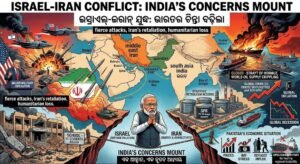
Fierce Attacks: Today, the US and Israel jointly launched extensive attacks on various cities in Iran. US President Donald Trump has termed this a “major military operation.”
Iran’s Retaliation: Iran’s ‘Islamic Revolutionary Guard Corps’ (IRGC) has launched missile strikes on US military bases in Bahrain, Kuwait, and Qatar.
Humanitarian Loss: Reports indicate that approximately 51 students were killed in an attack on a school in southern Iran. Israel has also intercepted and destroyed several Iranian missiles in its airspace.
Analytical Report: Impact on India and Pakistan
1. Economic Crisis for India:
Rise in Oil Prices: India imports more than 80% of its crude oil. If the ‘Strait of Hormuz’ is closed, oil prices could exceed $100 per barrel, causing inflation to rise in the Indian economy.
Future of Chabahar Port: The strategically important Chabahar Port for India is now at risk. It is India’s only alternative route to Central Asia and Afghanistan, which could become non-functional due to the war.
2. ‘Double Whammy’ or Gain for Pakistan?
Some analysts believe that if Iran becomes unstable, competition for the China-Pakistan Economic Corridor (CPEC) will decrease, which could benefit Pakistan.
However, on the other hand, Pakistan is in a two-fold crisis. Conflict with Afghanistan in the east and now a war-like situation on the Iran border in the west could weaken Pakistan’s security apparatus.
3. India’s Diplomatic Dilemma:
India has a strong defense relationship with Israel (India imports about 34% of its weapons from Israel).
Conversely, Iran is indispensable for India’s energy security and connectivity. Maintaining a balance between these two rival nations is like an “ordeal by fire” for Indian foreign policy.
Conclusion:
The Israel-Iran war is not just a fight between two countries; it is a major conflict of global powers. India must quickly find alternative energy sources and secure trade routes to protect its economic interests.
War Increases India’s Economic Concerns
The growing military conflict between Israel and Iran has increased India’s economic worries. Rising crude oil prices and supply chain disruptions could bring a new wave of inflation to India. Similarly, diplomatic circles discuss that Iran’s instability might indirectly benefit Pakistan.
The joint attack by the US and Israel has pushed the Middle East into war, directly impacting the strategic interests of India and Pakistan. Based on today’s events, a detailed analysis of India’s upcoming diplomatic steps and the impact on Pakistan’s economic situation is provided below:
1. India’s Next Diplomatic Steps
Maintaining good relations with two opposing powers like Israel and Iran has always been a difficult task for India. In the current war situation, India may take the following steps:
Call for Neutrality and Peace: India will maintain “Strategic Autonomy” without taking any side. India will strive for a solution through dialogue in forums like G20 or BRICS.
Search for Energy Security Alternatives: To reduce dependence on Iran, India may sign new oil import deals with Russia, Saudi Arabia, and the UAE.
Security of Chabahar Port: This port is India’s gateway to Central Asia. To ensure it doesn’t shut down completely due to war, India will engage in diplomatic talks with the US to keep Chabahar “Sanction-free.”
Defense Balance: India will review its defense deals to ensure that the supply of weapons from Israel is not hindered.
2. Impact on Pakistan’s Economic Situation
This war could be a major economic blow for Pakistan:
Oil Prices and Inflation: Pakistan is already going through an economic crisis. If oil prices rise in the global market, transport and electricity rates in Pakistan will skyrocket, increasing public discontent.
IMF Conditions: Pakistan depends on the IMF for financial assistance. If the economy deteriorates further due to war, it will become impossible for them to repay loans.
Refugee Problem: If war breaks out in Iran, a large number of people could infiltrate through the Pakistan border. This will put additional pressure on Pakistan’s limited resources.
Impact on CPEC: While some think Gwadar Port (CPEC) will benefit if Chabahar closes, regional instability will make foreign investors afraid to invest capital in Pakistan.
Summary: For India, this is a diplomatic and economic test where it must balance national interest and global peace. On the other hand, for Pakistan, this war could push its declining economy into an even deeper pit.
The Closure of the ‘Strait of Hormuz’
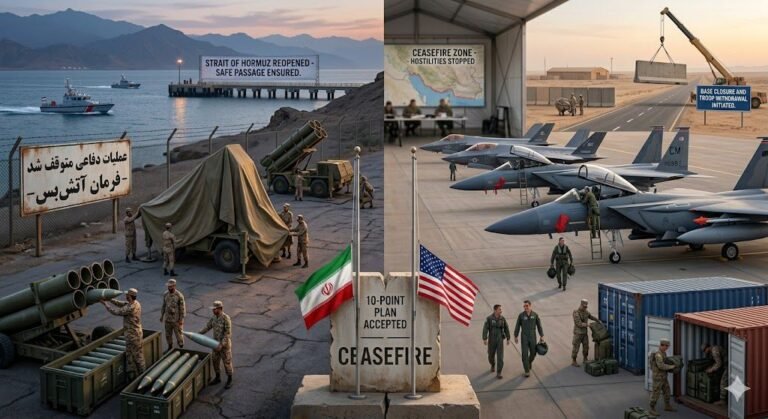
The ‘Strait of Hormuz’ is one of the world’s most important waterways. Iran has closed this route. It is estimated that this will have a catastrophic impact on the global economy and trade. A comparative picture is provided below:
1. Impact on Global Energy Market
Oil Supply: About 20% to 30% of the world’s crude oil travels through this narrow waterway. Exports from Saudi Arabia, UAE, Kuwait, and Iraq depend on it.
Price Hike: Due to the closure of this route, analysts believe international crude oil prices could cross $150 to $200 per barrel.
2. LNG (Gas) Crisis
Role of Qatar: Qatar is the world’s largest LNG exporter. All its gas shipments go through the Strait of Hormuz. Its closure will create an energy crisis in Europe and Asia.
3. Impact on India and China (Asia’s Economy)
Countries like India and China are highly dependent on West Asia for their energy needs.
4. Lack of Alternative Routes
There is no easy alternative to the Strait of Hormuz. Although Saudi Arabia and the UAE have some pipelines, they are capable of transporting only 20-30% of the oil. For the remaining portion, the sea route is the only reliance.
5. Global Trade and Recession
Not just oil, but the transportation costs (freight costs) of other commodities will also increase. This will lead to ‘Hyper-inflation’ on a global scale, which could push the world towards a major Global Recession.
Conclusion: The closure of the Strait of Hormuz means the closure of the “windpipe” of the global economy. This will disrupt the commercial balance not only of the Middle East but of the entire world.
The growing military conflict between Israel and Iran has become a matter of economic concern for India. Rising crude oil prices and disruptions in the supply chain could bring a new phase of inflation to India. Similarly, there is discussion in diplomatic circles that instability in Iran could indirectly benefit Pakistan.
The joint attack by the US and Israel has pushed the Middle East into the fires of war, the direct impact of which is falling on the strategic interests of India and Pakistan.
If critical waterways like the Strait of Hormuz are closed or oil supply is interrupted due to war, India’s Strategic Petroleum Reserve (SPR) acts as a safety shield. Detailed information about these underground oil reserves is given below:
1. India’s Current Capacity (Phase I)
India currently maintains its strategic oil reserves in three major locations:
Visakhapatnam (Andhra Pradesh): 1.33 Million Metric Tonnes (MMT)
Mangalore (Karnataka): 1.50 MMT
Padur (避Karnataka): 2.50 MMT
Together, India has approximately 5.33 MMT of crude oil stored in these three locations, which can meet India’s requirements for about 9.5 days.
2. Total Oil Security (SPR + Refinery Stocks)
India does not rely on SPR alone. Indian oil companies (Refineries) also maintain oil stocks for approximately 64-65 days of use.
SPR: 9.5 days
Oil Companies: ~65 days
Total Security: Approximately 74-75 days
In other words, even if oil imports from West Asia are completely stopped, India has enough oil to sustain itself for about 2.5 months.
3. Future Plans (Phase II)
India is working on the second phase to increase its SPR capacity:
Chandikhole (Odisha): 4 MMT (Proposed)
Padur (Karnataka – Expansion): 2.5 MMT (Proposed)
Once completed, India will have an additional 12 days of oil stock.
4. Challenges During Crisis
Although there is oil for 75 days, if the war continues for a longer period, the following problems will arise:
Rationing: The government may impose restrictions on oil usage (such as stopping non-essential transport).
Economic Burden: Even if oil from the SPR is used, India will have to spend more foreign exchange (Forex) to purchase new oil.
Conclusion: India has a “buffer stock” for at least more than two months, which can provide security to the country for a few months in any emergency situation.