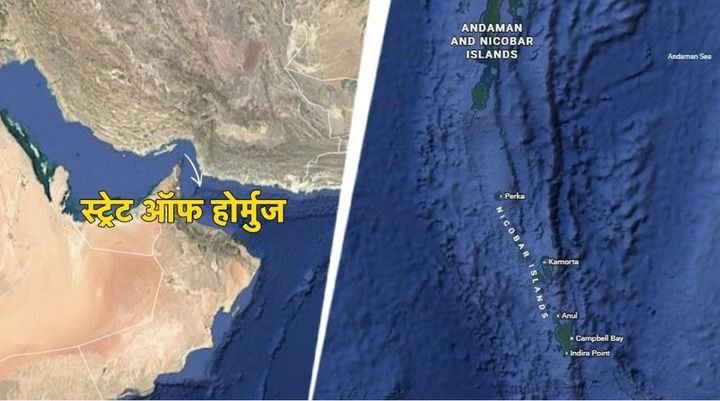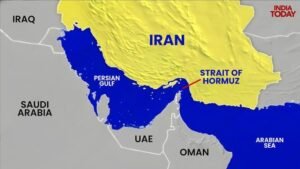
Every fifth oil tanker in the world passes through a narrow strait where Iran has now placed its stakes. This is the Strait of Hormuz, through which about 20 million barrels of crude oil and gas pass daily; now, it is no longer just a path. Iran has made this its biggest strength and is now preparing to collect a ‘toll’ on it.
Demand of $2 Million per Ship
Recently, an Iranian leader added a new point to the list of conditions for ending the ongoing war with the United States and Israel, which was never there before: the recognition of Iran’s sovereignty over Hormuz. This means Iran now wants the world to accept that this route belongs to it.
Furthermore, a law is being considered in the Iranian Parliament to collect money from every ship passing through this route.
According to a report by shipping intelligence firm Lloyd’s List, more than 20 ships have taken a new route, and at least two ships have paid approximately $2 million per ship.
Dreaming of Earnings Larger than Egypt’s Suez Canal
According to CNN data, if Iran implements this toll system, it could earn about $600 million per month from oil tankers alone. If gas ships are added, this could reach $800 million per month.
For comparison, Egypt used to earn about $700 to $800 million per month from its Suez Canal. The difference is that the Suez is a man-made canal, while Hormuz is a natural passage where ownership by a single country is not recognized under international law.
US and G7 Say It Is Illegal
However, the US has flatly rejected Iran’s proposal. US Secretary of State Marco Rubio, after the G7 meeting in France, made it clear that this is not only illegal but also dangerous for the whole world.
G7 countries also said in one voice that the movement of ships without tolls must remain essential. Meanwhile, James Kraska, a professor at the US Naval War College and an expert on international maritime law, said that Hormuz is an international waterway.
No coastal country can collect tolls here. This is against the principle of maritime law that most countries in the world follow.
Iran is Surprised by Its Own Power
Dina Esfandiary, a Middle East expert at Bloomberg Economics, says that Iran itself is a bit surprised by how much impact this strategy has had. Shaking the entire world economy at such a low cost was something they had not anticipated.
She says that Iran has now realized this power and wants to convert it into money. Iran, facing a long brunt of US and international sanctions, is the most sanctioned country in the world after Russia. In such a situation, toll collection seems like a cheap and effective way for it to compensate for the losses caused by sanctions.
19 Ships Attacked, Shipping Industry ‘Stalled’
Since the start of the war, Iran has attacked at least 19 ships. This has almost stopped the movement of ships through this route and has caused a stir in the energy markets worldwide. However, Iran has said that ships that move with its approval and contact its officials will not be stopped. The Iranian military has also created a registry of approved ships.
No Precedent in History
It has rarely happened in history that a country has successfully collected tolls on an international waterway. In the nineteenth century, Denmark also made such an attempt, but after opposition from several countries in 1857, it had to stop. Now the question is whether Iran will be able to do what Denmark could not, and whether the world will remain silent this time.