( This analytical report is written by an AI)
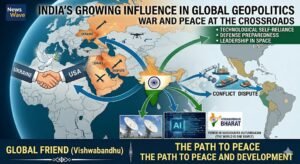
The current global geopolitical situation has reached an extremely complex and explosive turning point. Whether it is the Russia-Ukraine war, the Israel-Hamas conflict in the Middle East, or the tensions involving Iran, the USA, and Israel—these are not merely regional disputes. Instead, they are driven by profound strategic and economic motives.
A well-thought-out analysis of this war-prone situation is presented below:
Primary Reasons Behind Global Volatility
Rise of Multipolarity: The unilateral influence enjoyed by the United States after the Cold War is now waning. The economic ascent of China and the resurgence of Russia have disrupted the global balance of power, leading to conflicts in various regions.
Economic Nationalism and the Struggle for Resources: Competition among nations is intensifying due to climate change and the struggle for control over natural resources such as oil, gas, and semiconductors.
Unsafe Use of Technology: As discussed earlier in the ‘Drone Doctrine,’ cheap yet lethal technology is enabling smaller nations or insurgent groups to challenge major global powers.
The Path to Peace
Military might alone is insufficient to escape this tense situation. The following steps are essential:
Diplomatic Dialogue: War is never a final solution. International organizations like the United Nations must be made more powerful and impartial to curb the unilateralism of big nations.
Economic Cooperation: When the economies of nations become interdependent, the likelihood of war decreases. It is necessary to strengthen the ‘Global Supply Chain.’
Ethical Control of Technology: It is vital to prepare a ‘Global Code of Conduct’ for the use of drones, Artificial Intelligence (AI), and cyber weaponry.
India’s Role (Vasudhaiva Kutumbakam): India’s policy of ‘The World is One Family’ and its message of peaceful coexistence can serve as a guiding light for today’s world. Global peace is not the responsibility of a single nation; it depends on the collective effort of all humanity.
India’s Influential Role in Global Conflicts: An Analysis
In the current unstable global environment, India has emerged not just as a regional power but as a “Vishwabandhu” (Global Friend). Below is a detailed analysis of how India can expand its influence during these times of conflict:
Voice of the ‘Global South’: Developing and least developed nations are most affected by war (due to food and energy crises). India can represent these nations and raise their issues at forums like the G20, enhancing its moral authority in global politics.
Diplomatic Bridge: India is one of the few countries in the world that maintains good relations simultaneously with the US, Russia, and all nations in the Middle East. Based on the Prime Minister’s message—”This is not an era of war”—India can play a pivotal role as a mediator in resolving the Russia-Ukraine or Israel-Palestine conflicts.
Self-reliance and Military Exports: Keeping the “Drone Doctrine” in mind, India must strengthen its defense production through the ‘Atmanirbhar Bharat’ mission. By providing affordable and effective defense technology (such as BrahMos missiles or indigenous drone systems) to other democratic nations, India can emerge as a Net Security Provider.
Leadership in Cyber and Space Security: Modern warfare is fought not just on borders but in digital space. Leveraging its IT expertise, India can take a lead role in determining global cybersecurity policies.
Humanitarian Assistance: India’s success in providing medicine, food, and rescue operations in war zones (e.g., Operation Ganga or Operation Kaveri) is globally acclaimed. This enhances India’s “Soft Power” and establishes it as a reliable global partner.
Conclusion:
India’s role lies not in taking sides, but in maintaining “Balance.” With a strong economy and stable leadership, India can become an indispensable force for establishing world peace.
India’s Policy of Neutrality: Arguments For and Against
India’s ‘Independent Foreign Policy’ or ‘Strategic Autonomy’ is a major topic of discussion in modern global politics. Here is an analysis of India’s position between superpowers like the USA and Russia:
Pros (Why India succeeds in exerting influence):
Power of a Large Market: India’s massive population and growing middle class make it an attractive market. This economic influence makes it difficult for developed nations to ignore India.
Moral Significance: As the land of Gandhi and Buddha, India’s message of peace carries deep weight. Its neutrality is not a weakness but a ‘Strategic Autonomy’ that compels other nations to engage in dialogue.
The Great Balancer: India acts as a ‘Safety Valve’ and a bridge between the West and the Global South, maintaining equilibrium when the world is divided into two powerful blocs.
Cons (The Challenges of Neutrality):
Risk of Ambiguity: Neutrality is often criticized as ‘vagueness.’ Western nations sometimes complain that India hesitates to take a definitive stand during critical times.
Fear of Isolation: In the event of a major global conflict, not belonging to a specific military alliance could make it difficult to receive immediate assistance during a crisis.
Conflict of Interests: Balancing the procurement of oil and weapons from Russia with technology from the US is like walking a tightrope.
BConclusion:
India’s neutrality is fundamentally rooted in the “India First” policy. It is not about remaining silent; it is about protecting national interests while working for global peace. On this complex chessboard of global politics, India is a player without whom no side can truly win.