Highlights – If foreign investors continue to withdraw their investments, domestic institutions can support the markets, but they cannot fully compensate for the lost external confidence. India has faced external shocks before and still possesses several safeguards, including reserves, administrative control over fuel pricing, and a broad domestic investor base.
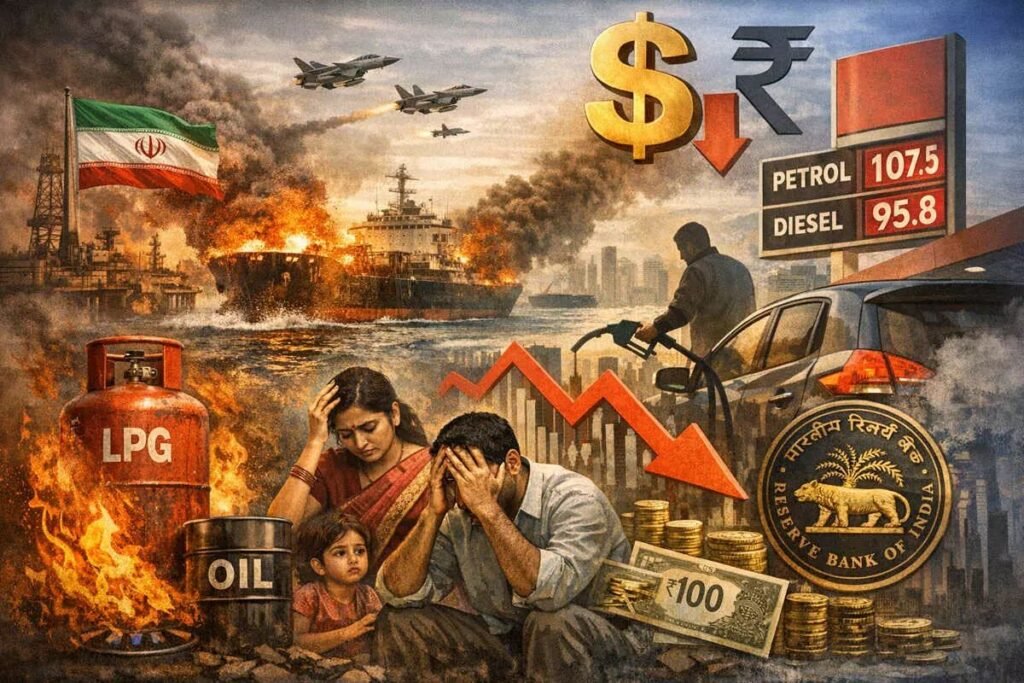
India’s deepest economic concerns regarding the Iran war are no longer hypothetical. They are gradually unfolding in the sequence that policymakers had feared from the beginning. What started as a geopolitical conflict in a remote but energy-critical region has now reached Indian kitchens, factories, airline balance sheets, and currency markets. The first warning sign has always been disruptions in fuel and gas supply chains. This disruption has now arrived in full force, creating what officials and market participants describe as the most severe gas crisis in decades. On April 1, commercial LPG prices were increased again, domestic supplies were secured by restricting industrial use, and the search for alternatives has already begun impacting production costs across all sectors.
This is significant because LPG in India is not just a consumer fuel. It stands at the crossroads of domestic welfare, the viability of small businesses, and political sensitivity. A shortage or sudden price hike does not remain confined to energy traders alone. It spreads rapidly to restaurants, food processing units, ceramic units, metal workshops, and other clusters that rely on commercial cylinders or gas-based inputs. Once industrial and commercial users are forced to compete for limited supply, they either pay a much higher price or turn to expensive alternatives like diesel. This substitution then deepens the pressure elsewhere in the energy chain. In other words, the LPG crisis is not a collateral effect of the war; it is the first clear crack in the broad inflation transmission mechanism. India can ration, phase, and divert supply, but these are emergency management tools, not permanent solutions.
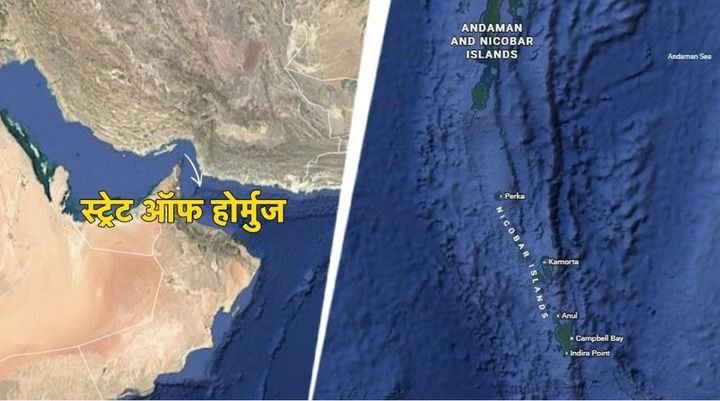
The second fear was regarding crude oil, and it was always a more predictable shock. India’s heavy reliance on imported oil makes it highly vulnerable in the event of instability in the Gulf countries. Once the war escalated and the Strait of Hormuz became a real strategic risk, a rise in petroleum prices was only a matter of time. Brent crude has crossed the $100 per barrel mark following an unprecedented surge in March, while forecasters have heavily revised their oil estimates for this year.
For India, this is not just an import bill problem. High crude oil prices simultaneously impact transportation, fertilizers, aviation, manufacturing, logistics, and inflation expectations. New Delhi has cut fuel excise duties to cushion the shock, but such moves only redistribute the pain among consumers, oil companies, and the government treasury; they do not eliminate it.
This is where the focus turns specifically to the Rupee. The currency has become the most visible market expression of India’s vulnerability to the war. High oil prices worsen the current account outlook. Already cautious foreign investors are pulling money out of equities and bonds. The global risk-aversion trend is pushing capital toward the Dollar. Each of these factors is unsettling in its own right; combined, they create immense external pressure. The Rupee has plunged to record lows below 94 against the Dollar and has been counted among Asia’s weakest currencies this fiscal year, with its depreciation being around 10 percent or more by many calculations. This largely validates the user’s perspective: the currency is under heavy pressure from the combined effects of the oil crisis, portfolio outflows, and geopolitical uncertainty, rather than isolated impacts.
Yet, the question of the Rupee crossing the 100 per Dollar level requires more careful analysis. It is no longer an unforeseen scenario, but it is not an immediate certainty either. Markets view round numbers as psychological thresholds because they can change behavior even before they are actually reached. Importers rush for hedging, exporters delay currency conversion, households pay attention to the news, and speculation intensifies.
Analysts have already suggested 98 Rupees per Dollar as a potential point in a medium-stress scenario, while far more severe consequences are being discussed in the event of a prolonged conflict and permanent energy disruption. This means the 100 level is no longer unthinkable. However, in currency terms, the distance from the current level to 100 is still significant and would likely require either another surge in oil prices, greater capital flight, or a deliberate decision by authorities to endure further adjustment rather than spending reserves more aggressively.
The Reserve Bank of India, on its part, has not been passive, but its challenge is structural. Intervention can reduce volatility; it cannot permanently end a trade crisis. The RBI pressured banks to liquidate their currency positions and imposed strict limits on the foreign exchange market, providing temporary relief but also straining banks’ trading income without significantly changing the direction of the broader pressure. This is often misunderstood in public debate. When a currency weakens despite repeated central bank actions, it does not always mean those actions failed completely.
It simply means that the underlying pressure is not alleviated by short-term interventions. Without those steps, the Rupee might have fallen even faster. But if oil prices remain high and foreign investment continues to exit, the cost of defense becomes expensive and remains only partially effective.
Therefore, the biggest concern is not a single large number like 100 Rupees against a Dollar, but the cumulative erosion of policy space. If LPG prices remain high, the government will have to prioritize domestic supply. If crude oil prices stay elevated, the risk of inflation increases despite partially absorbing petrol pump prices. If the Rupee continues to lose value, imported inflation worsens. If foreign investors continue to withdraw their investments, domestic institutions can support the markets, but they cannot fully compensate for the lost external confidence. India has faced external shocks before and still possesses several safeguards, including reserves, administrative control over fuel pricing, and a broad domestic investor base. But these safeguards are being tested simultaneously. India’s worst fears regarding the Iran war are coming true, not because of a single catastrophic event, but because all potential sources of contagion are being activated one after another, narrowing the gap between manageable stress and a more severe macroeconomic crisis.