…………………………………………………………………..
Economic analysis given below
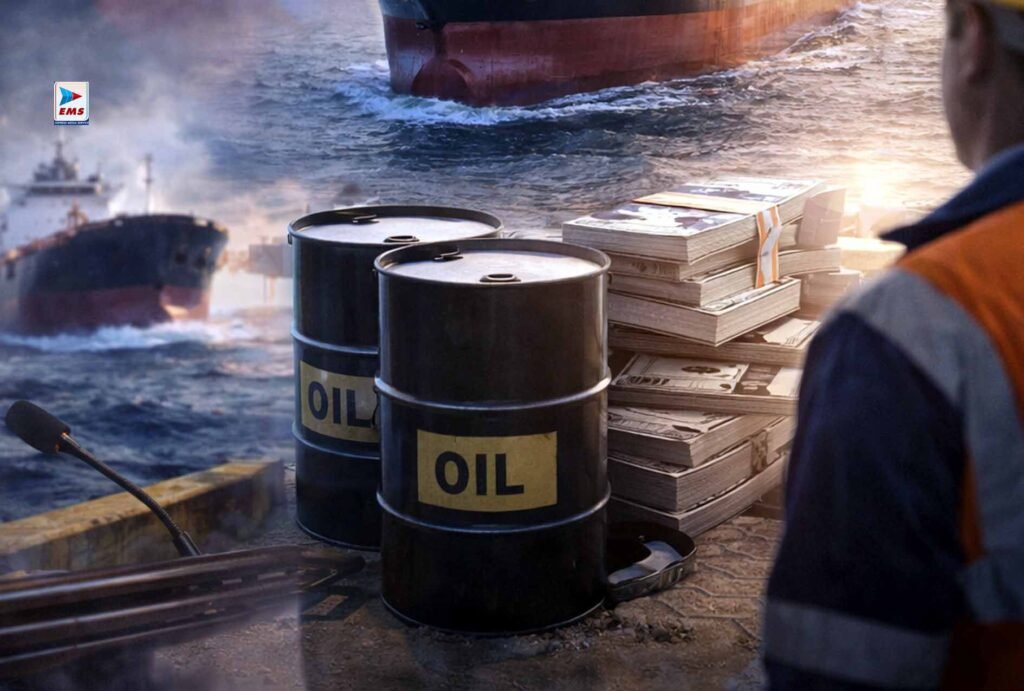
“. While the fire of war intensifies on one side of the world’s political map, the pulse of the European economy is slowing down on the other. In this context, a recent statement by Hungarian Foreign Minister Péter Szijjártó has brought the instability of entire Europe to the forefront. In this whole matter, India’s position remains like that of a savior (Sankatmochak).”
“For the past two years, the Russian oil that European countries were consuming through Indian refineries is now surrounded by dark clouds of crisis. The escalating conflict between Iran and Israel in the Middle East has shaken the strategists in Brussels.”
Geopolitics and the Reality of Energy
In the current global situation, realism has become more important than idealism. The sanctions imposed by Western countries on Russia after the Ukraine war were, in reality, a ‘hypocritical stance.’ To maintain its moral high ground, Europe ostensibly stopped buying oil directly from Russia, but to save its own economy, it continued to accept that same Russian oil through India.
The Hungarian Foreign Minister’s statement has exposed the truth that political ideology is meaningless without energy security. If Europe does not abandon its ego, there is a risk that its industries and public life will come to a complete standstill in the coming days due to the energy crisis.
India’s Strategic Autonomy
During this crisis, India’s foreign policy has emerged as a model. India has proven that:
National Interest is Paramount: India’s success lies in ensuring a supply of affordable energy for its people without succumbing to pressure from any side.
Global Refinery Hub: Leveraging its advanced technology, India has refined Russian crude oil and helped stabilize oil prices in the global market.
The Middle Path: By maintaining relations with both Western countries and Russia, India has established itself as a ‘Vishwabandhu’ (friend of the world) and a problem solver.
Impact on the Indian Economy
The rising tension in the Middle East (the Iran-Israel conflict) has created both opportunities and challenges for India:
1. Negative Impact (Challenges):
Increase in Freight and Insurance Costs: If the Red Sea or the Strait of Hormuz remains turbulent, shipping will be disrupted. This will increase transport costs and insurance premiums, raising the price of goods imported into India.
Inflation: A rise in oil prices leads to increased transportation costs, which hikes the prices of essential consumer goods. This will make it difficult for the Reserve Bank of India (RBI) to control interest rates.
2. Positive Impact (Opportunities):
Growth in Exports: If an energy crisis arises in Europe, the demand for refined oil (Diesel/Jet Fuel) from India will increase. This will boost India’s export earnings.
Success of ‘Make in India’: As the efficiency of Indian refineries is proven globally, there is a high possibility of increased Foreign Direct Investment (FDI) in this sector.
Conclusion
The current geopolitical situation makes it clear that the global economy is tied in a complex web. If Europe does not abandon its ego and accept reality, it will suffer the consequences itself. On the other hand, during this crisis, India has been able to build itself up as a responsible and powerful economic force. India’s success lies within its ‘Strategic Autonomy.’
Economic Analysis: The “Sankatmochak” Strategy and Global Ripples
The text highlights a fascinating paradox: Europe’s reliance on Indian-refined Russian oil to bypass its own sanctions. This “shadow trade” has turned India into a vital shock absorber for the global economy. Below is a deeper look at the economic implications of this shift and the brewing Middle East crisis.
1. The “Refinery Arbitrage” and India’s Export Surge
India’s role as a “Global Refinery Hub” is not just a title; it is a massive revenue driver. By purchasing Russian Urals at a discount (often below the G7 price cap) and exporting the refined products (diesel and jet fuel) at global market prices, India captures a significant crack spread (the profit margin between crude oil and refined products).
Trade Balance: This has helped India manage its trade deficit despite high global commodity prices.
European Dependency: If Europe were to strictly enforce sanctions without Indian mediation, diesel prices in the EU would likely skyrocket, fueling runaway inflation in their transport and manufacturing sectors.
2. The “Middle East Risk” to India’s Macro-Stability
The report rightly identifies the Iran-Israel conflict as the “dark cloud.” Unlike the Ukraine war, which provided a discounted supply, a Middle East conflict threatens the logistics of supply.
The Strait of Hormuz Factor: Nearly 30% of the world’s sea-borne oil passes through this strait. Any closure would lead to a vertical spike in crude prices.
Inflationary Pressure: For every $10 increase in the price of a barrel of oil, India’s Consumer Price Index (CPI) inflation typically rises by roughly 20-30 basis points. This limits the RBI’s ability to cut interest rates, potentially slowing down domestic borrowing and industrial expansion.
3. Freight, Insurance, and the “War Risk” Premium
When the Red Sea or the Middle East becomes turbulent, the economic cost isn’t just the oil price—it’s the cost of moving it.
Re-routing: Ships avoiding the Red Sea must travel around the Cape of Good Hope, adding 10–15 days to the journey.
Insurance: “War risk” premiums can increase by 500% to 1,000% in a matter of weeks during active conflict, adding a hidden tax on every imported item in India, from electronic components to fertilizers.
4. Strategic Autonomy as an Economic Asset
The concept of “Strategic Autonomy” has shifted from a political slogan to a financial safeguard.
Currency Diversification: India has been exploring settling trade in Rupees or Dirhams to bypass the volatility of the US Dollar during geopolitical shocks.
FDI Magnet: As the efficiency of Indian refineries (like Jamnagar) is proven under stress, global investors see India as a “safer” bet for energy infrastructure compared to more volatile regions.
Summary Table: The Economic Balancing Act
Factor Impact on India Impact on Europe
Russian Crude Access High margins, lower trade deficit. Lower energy inflation, but “hypocritical” cost.
Middle East Conflict Higher logistics costs & domestic inflation. Extreme energy insecurity & industrial slowdown.
Refining Capacity Boosts “Make in India” & FDI.
The reality is that India has successfully decoupled its economic growth from Western ideological constraints. However, the sustainability of this “savior” status depends heavily on keeping the maritime lanes of the Middle East open.