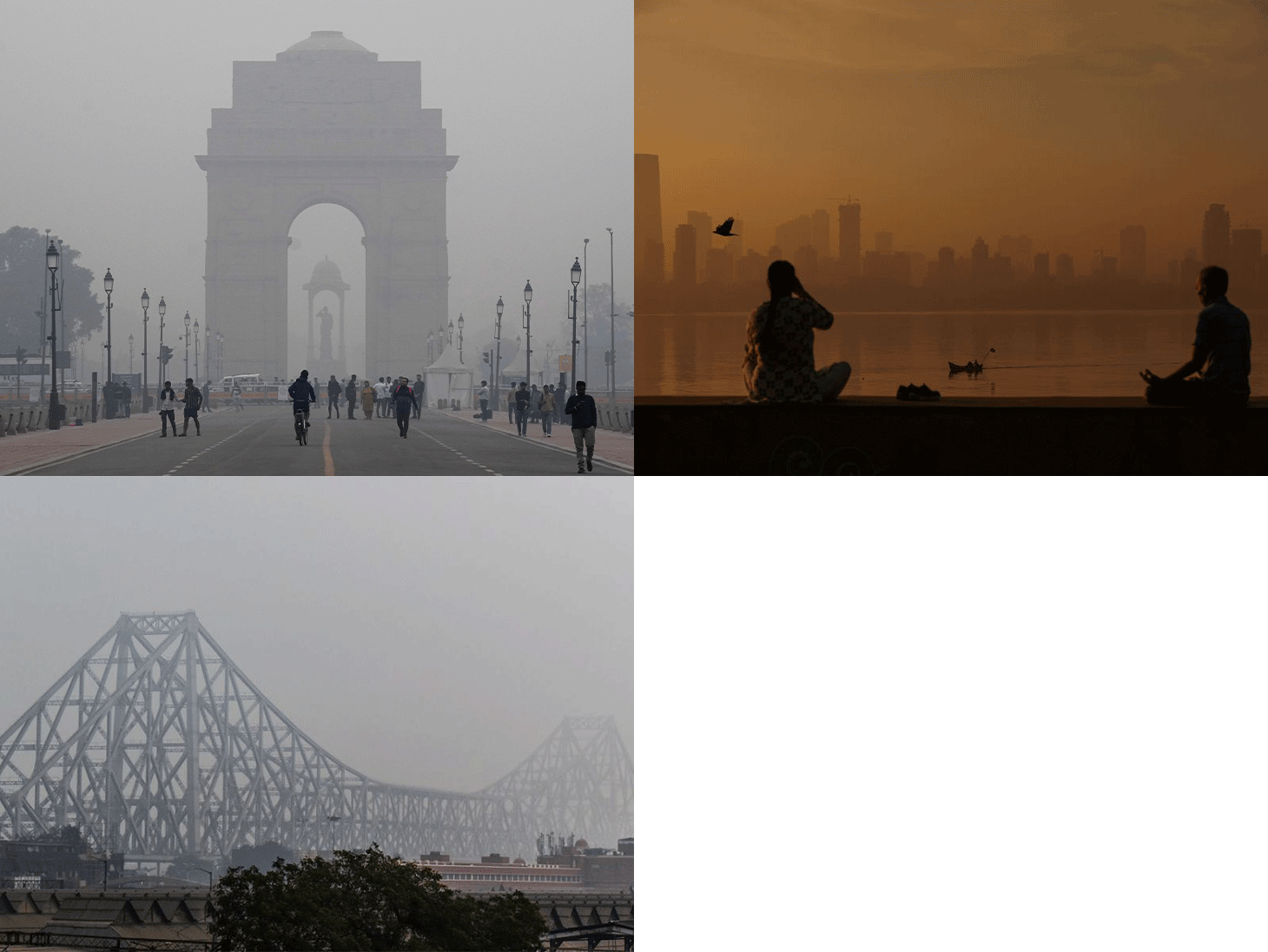
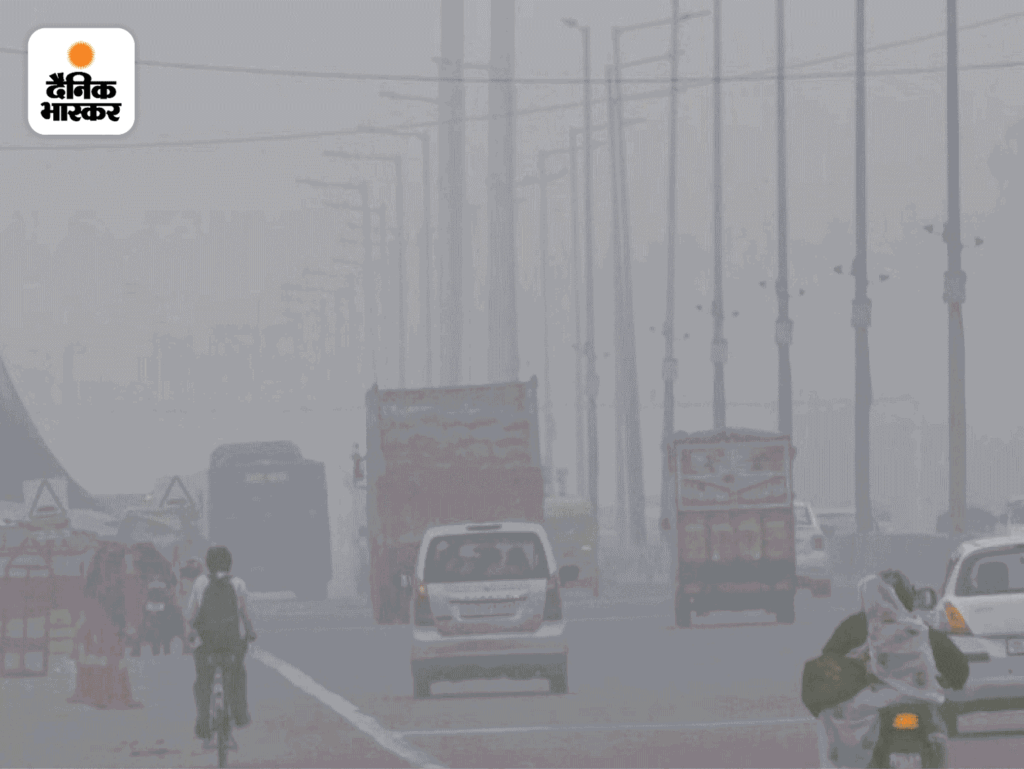
Delhi’s air is filled with toxicity these days. Pollution is entering people’s lungs with every breath. It was hoped that cloud seeding, or artificial rain, would help clear the haze. However, questions are now being raised about the timeliness and scientific rationale behind this experiment. Meteorologists had already clearly warned that Delhi’s skies were devoid of clouds and moisture—meaning the likelihood of rain was virtually zero. Despite this, this expensive experiment was carried out.
According to climate expert Manjari Sharma (Climate Trends), this entire endeavor was “scientifically ill-timed.” She said that the India Meteorological Department (IMD) had already made it clear to IIT Delhi that the humidity in the atmosphere was extremely low and that at least 60-70 percent humidity was necessary for cloud seeding to be successful.
No clouds, no moisture – why it hasn’t rained
The air in Delhi-NCR currently has extremely low humidity levels. The sky is clear, but the dust content is high. In such a situation, the rain-inducing technique was bound to fail. A Climate Trends report states that cloud seeding can only be successful if there are sufficient clouds, but the atmosphere was “dry” at this time, so the entire experiment proved futile.
Doctors warn – “Now even children’s lungs are black”
Delhi’s toxic air not only reveals the failure of experiments but also presents a picture of devastation within the human body. Dr. Arvind Kumar, a lung specialist at Medanta Hospital in Gurugram, explained that over the past 30 years, he has observed frightening changes in patients’ lungs. “Earlier, patients’ lungs were slightly pink, a mark of those who breathed clean air. Today, those same lungs have turned completely black—filled with dust, soot, and toxic particles.” Dr. Kumar says that while this condition used to be seen only in smokers or factory workers, now even children and women’s lungs are starting to look as black as coal.
Experts’ Opinion—We Need Policy, Not Rain
Manjari Sharma says that simply creating artificial rain or sprinkling water on roads in Delhi won’t make much of a difference. “People should demand clean air, not rely on temporary relief like cloud seeding. If possible, it’s better to move away from Delhi to escape this toxic air.”
Air pollution is no longer just a breathing problem – it is rapidly becoming the leading cause of death. According to a recent report, the percentage of deaths due to air-related diseases has reached alarming levels. According to statistics –
36% of deaths are due to stroke, which is the result of the impact of polluted air on the brain.
33% of deaths are linked to lung cancer, which is caused by long-term exposure to dust, smoke, and toxic particles.
31% of people die from heart disease.
20% of deaths are due to lung diseases like chronic obstructive pulmonary disease (COPD).
Experts say that in polluted areas of Delhi-NCR and North India, the lungs of children and young people are also rapidly weakening.
Fine particles (PM 2.5) in the air not only damage the lungs but can also cause conditions like hypertension, diabetes, anemia, and multi-system organ failure.
Doctors warn:
Lung specialists at Medanta Hospital in Gurugram say that “pollution is gradually affecting every organ—the heart, brain, lungs, kidneys, and even nerve function.