Highlights: Iran has devised a dangerous strategy to target key oil facilities in Gulf countries in response to a potential US ground operation.
……………………………………………………………………
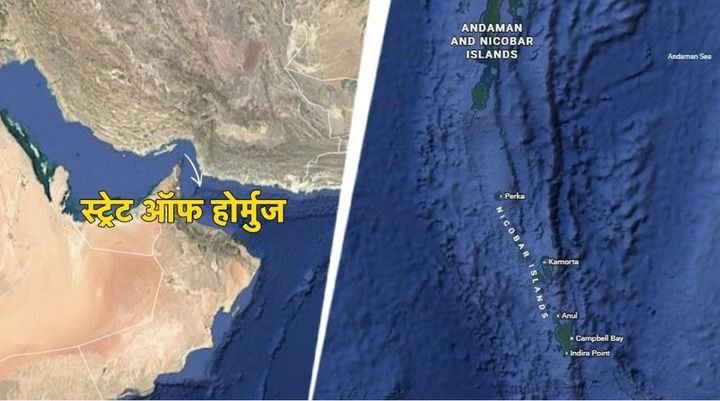
The Supreme Leader has warned that if the US intrudes into Hormuz, major Arab oil plants and refineries will be destroyed, which could cripple the global economy. Iranian missile strikes have already targeted US bases and commercial centers.
War Between America and Iran
The war on the Iranian front is becoming increasingly fierce. While the US has announced the launch of a ground operation to exert pressure, Iran has also formulated a highly dangerous strategy to stop the American advance. This strategy is not a secret; rather, it was revealed by the Supreme Leader of Iran himself as a warning.
The question now is – what is the target in Iran’s strategy ? And how will this strategy succeed ? Let’s find out the answers to these questions.
The newest and most terrifying chapter of the Middle East has opened. Mujtaba Khamenei’s ultimatum has arrived. Iran has looked America in the eye and given the final warning that has left the world holding its breath. The warning is clear: if America intrudes into Hormuz, the entire Arab region will turn into a heap of ashes.
And this is not just an empty threat. As soon as Trump greenlit “Plan-G” (the ground operation), Iran began the process of “Burning the Arab World.”
Iranian Attacks Begin in Arab Countries
From Saudi Arabia, UAE, Bahrain, and Kuwait to Oman and Jordan, Iranian missiles and drones have turned the skies of the entire Arab region into a battlefield. Challenging American supremacy, Iran has launched a direct strike on the heart of the Gulf countries.
In fact, Iran’s first targets are those Arab countries that are providing refuge to the US military. Consequently, Iran rained ballistic missiles and drones on the ‘Prince Sultan Air Base’ in Al-Kharj, Saudi Arabia, which shook the United States. Several American ‘Boeing KC-135 Stratotankers’ stationed at the base were destroyed.
Not only this, it is also claimed that Iran fired missiles at Bubiyan Island in Kuwait. Iran also destroyed Camp Victoria in Baghdad, Iraq, and riddled the Muwaffaq Salti Air Base in Jordan with ballistic missiles. This havoc was not limited to military bases where US troops were stationed; Iran left no stone unturned in destroying the commercial hubs of the Gulf countries as well.
Drone Attacks on Kuwait International Airport
Drone attacks took place at Kuwait International Airport, destroying a US radar system stationed there. Additionally, Shuwaikh Port and Mubarak Port began to blaze under Iranian bombardment. Similarly, an attempt was made to target the Khalifa Economic Zone in Abu Dhabi, UAE, although Iranian ballistic missiles were intercepted there.
However, drones raining down on Oman’s Salalah Port succeeded in hitting their targets, while attacks in Bahrain caused sirens to wail incessantly, and Saudi’s Riyadh was shaken by 6 ballistic missile strikes. This means the entire Arab world is currently confined to bunkers, but the fear does not end there.
Warning of Attacks on the Economic Backbone of Arab Countries
If America starts an operation in the Strait of Hormuz, Iran will not hesitate for a second to incinerate the oil and gas facilities of the Arab world. But which countries will those be ? And what will be Iran’s primary targets ?
Iran has prepared a very lethal plan in view of the US ground operation plan. In this plan, as soon as American soldiers land on Iranian soil—that is, on Iranian islands—and try to take control, Iran will retaliate. For this, Iran has readied its missiles. Based on their capacity, these missiles have already locked onto their targets, focusing on Gulf countries where US interests lie and which are within Iranian missile range.
Iran’s Attacks on Oil Facilities
The first attack will be on Saudi Arabia’s Abqaiq plant, the world’s largest oil processing plant. 70% of Saudi Arabia’s crude oil reaches here, with a capacity of 7 million barrels per day.
The Ras Tanura refinery in Saudi Arabia is also a target, being one of the world’s largest offshore oil terminals with a capacity of 6.5 million barrels per day.
The third target will be Kuwait’s Al-Ahmadi Port, a primary oil export hub with a capacity of 2 million barrels per day.
Additionally, the UAE’s Das Island is a target, as it is a major oil and gas export center with a capacity of 1.5 million barrels per day.
Furthermore, the UAE’s Ruwais Refinery, the fourth largest in the world with a capacity of 830,000 barrels per day, is on the hit list.
The sixth target could be Iraq’s Basra Oil Terminal, from where a large volume of Iraqi oil is exported, with a capacity of 3.4 million barrels per day.
The Ahmadi Refinery in Kuwait is also a target, as this region is known for both oil and gas production.
7 Largest Oil Hubs in Iran’s Crosshairs
If the US begins operations in Hormuz, these 7 largest oil hubs in the Middle East will be on the radar of Iranian missiles. An attack on these would signify the beginning of economic destruction for Arab countries, which would shake the entire world.
This means that the direction in which Iran has pointed its missiles could bring the global economy to its knees within hours. But the question is: how will Iran do it? Has Iran already destroyed the high-tech Patriot and other air defense systems deployed in Arab countries ? The answer to this question lies in the success of the Iranian attacks so far.
Iran’s destructive arsenal currently holds a massive stockpile of Shahed-136 drones. These drones are successful because they are cheap and attack in swarms, allowing them to deceive air defense systems.
The second such weapon is the Hoveyzeh cruise missile, of which Iran has a large inventory. These missiles fly at very low altitudes, making them nearly impossible to track.
Iran’s Response to America
In addition, Iran’s “ultimate weapon” is the Fattah hypersonic missile, many of which are launch-ready. These missiles strike targets at speeds several times the speed of sound, and their velocity can neutralize any expensive air defense system.
Iran has prepared an aggressive strategy, but will America remain silent amidst Iran’s “Arab-burning” program? The Pentagon has deployed its powerful warship, USS Tripoli, to the Gulf, carrying 2,500 US Marine Commandos for ground operations. Moreover, the fleet of F-35B fighter jets and Osprey aircraft stationed on the ship are ready to strike Iran.
This suggests that US Secretary of State Marco Rubio did not say without reason that this war would end in weeks, not months. This statement is based on the level of preparation—plans to deploy 10,000 ground troops on Kharg Island while keeping backdoor channels open. However, ground realities suggest that the time for diplomacy has perhaps passed. Therefore, Mujtaba Khamenei has issued an ultimatum, an ultimatum that signals the formation of a battle array in Hormuz for a Third World War.
AI’ s analysis
…………………………………
The price of oil and natural gas jumped as escalating attacks in the Persian Gulf caused long-term damage to major energy facilities. European gas futures surged as much as 35% to more than double their pre-war level, while Brent crude touched $119 a barrel, close to its highest since 2022.
The potential for Iran to target the specific oil hubs mentioned would have a devastating and immediate impact on the global economy.
Here is a brief analysis of the consequences:
1. Exponential Price Surges
If the targeted facilities—specifically the Abqaiq plant (processing 7 million barrels per day) and Ras Tanura—are taken offline, analysts from Rystad Energy suggest oil prices could skyrocket past $150 per barrel. Since Abqaiq alone handles roughly 7% of the world’s daily oil supply, its destruction would create a supply vacuum that no other producer could fill.
2. Global Supply Chain Paralysis
The loss of Kuwait’s Al-Ahmadi and the UAE’s Ruwais refinery would not just affect crude, but refined products like diesel and jet fuel.
Aviation: Global flight costs would spike as “crack spreads” (the difference between crude and refined product prices) widen.
Shipping: Fuel costs for cargo ships would lead to a “second wave” of inflation for consumer goods globally.
3. Long-Term Infrastructure Damage
Unlike a temporary blockade of the Strait of Hormuz, which can be cleared, physical strikes on refineries and LNG terminals like Ras Laffan in Qatar cause “long-term damage.” Current estimates suggest repairs to such sophisticated high-tech facilities could take 3 to 5 years, meaning high energy prices would become a multi-year “new normal” rather than a temporary spike.
4. Economic Recession and Inflation
A sustained price of $120–$150 per barrel would likely trigger a global recession.
Developing Nations: Countries like India and various Southeast Asian nations, which are heavily dependent on Middle Eastern oil, would face severe currency devaluation and a surge in domestic inflation.
Western Economies: While the US has domestic production, it cannot insulate itself from global price parity, leading to significantly higher costs at the pump and for heating.