. A recent NASA report has shocked the world. It claims that China’s actions have caused a dangerous shift in the Earth’s axis. According to scientists, this tampering could pose a major threat to all of humanity.
1. What is China’s Three Gorges Dam?
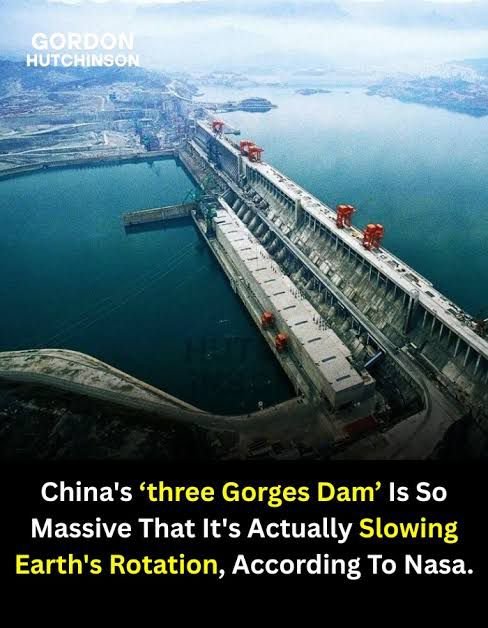
China’s Three Gorges Dam is the world’s largest hydroelectric project, built on the Yangtze River. Located in Sandoping, near the city of Yichang in Hubei Province, it was constructed between 1994 and 2012. It stores 393 billion cubic meters of water, equivalent to 10 trillion gallons. This dam prevents floods, improves navigation, and generates 22,500 megawatts of electricity.
3. How did the Earth’s axis shift?
The accumulation of billions of tons of water in the dam disrupted the Earth’s mass balance. If the water had spread out into the ocean, it would have been different, but the reservoir’s elevated position caused mass redistribution. This affects the axis of rotation, similar to an ice skater slowing down their rotation by spreading their arms. Scientists say this is a small but measurable change.
4. What effect did it have on the length of the day?
The dam slowed the Earth’s rotation slightly, making the day 0.06 microseconds longer. This change is so small that no one could notice it, but precise measurements revealed it. The principle of moment of inertia states that mass shifting toward the equator slows rotation. The 2004 tsunami also shortened the day by 2.68 microseconds, but this is the opposite effect.
5. What was the purpose of building the dam?
The primary purpose of the Three Gorges Dam was to control floods on the Yangtze River, which affected millions of people. It facilitates navigation for ships and provides lift for larger vessels. Additionally, it is a renewable energy source that generates as much power as 15 nuclear reactors. This project is a core part of China’s energy strategy.
6. How much impact will it have on the Earth’s rotation?
The Earth’s rotation is controlled by conservation of angular momentum, and this is altered by mass shifts. The dam pushed mass toward the equator, slowing the spin. Scientists say this change poses no risk to everyday life, but it helps understand the geophysical impact of large projects.
7. Is this change dangerous?
According to NASA, this shift is very small and poses no threat to the global system. The general public may not even notice it, but scientific monitoring is essential. Projects like large dams and groundwater extraction can impact sea level and latitude. Experts say environmental forecasting is essential for future projects.
8. How does it compare to natural events?
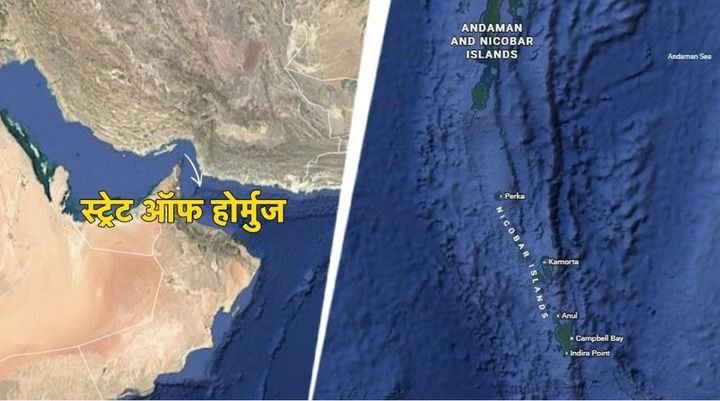
The 2004 Indian Ocean tsunami shifted the axis by 2.5 centimeters and shortened the day. The Three Gorges effect is similar, but human-induced, matching nature. Earthquakes and tectonic movements also cause such changes. This shows that human activity can be as powerful as natural disasters.
9. What is the dam’s capacity?
The dam is 185 meters high and 2.3 kilometers long, made of concrete and steel. It has 32 turbines generating 700 megawatts each. It can power 5.4 million homes per month. However, environmental impacts, such as the extinction of the Chinese paddlefish, are also associated with it.
10. What are the future lessons?
This discovery suggests that large infrastructure projects can affect planetary dynamics. NASA states that human engineering is altering the global balance. Geophysical studies are essential for such projects in the future. This is a reminder that with our power comes greater responsibility.