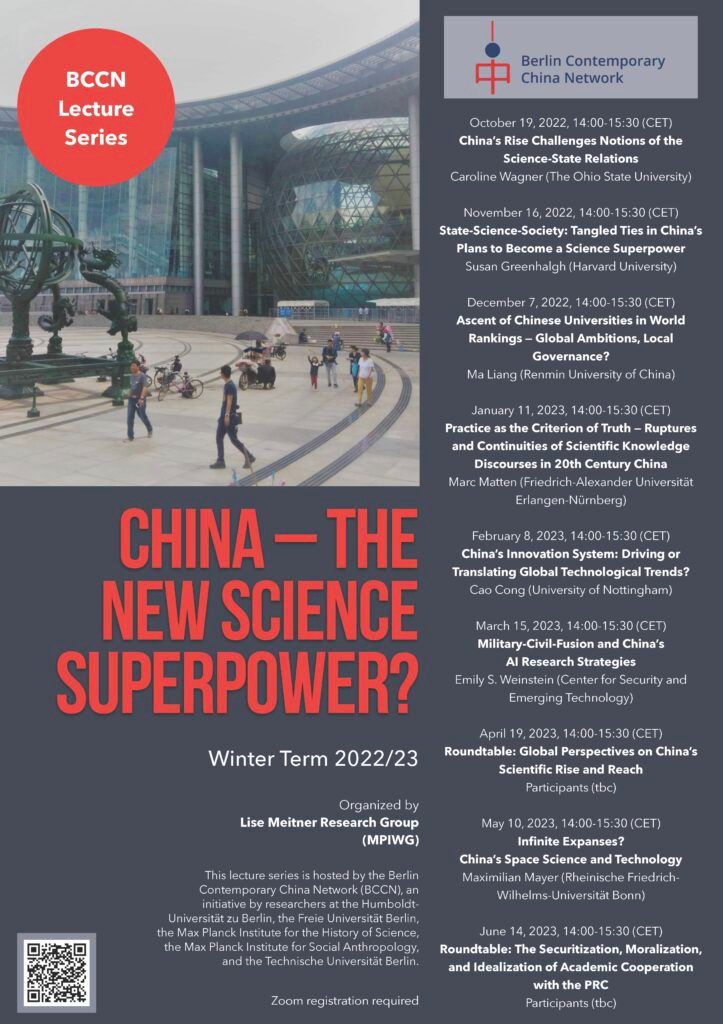
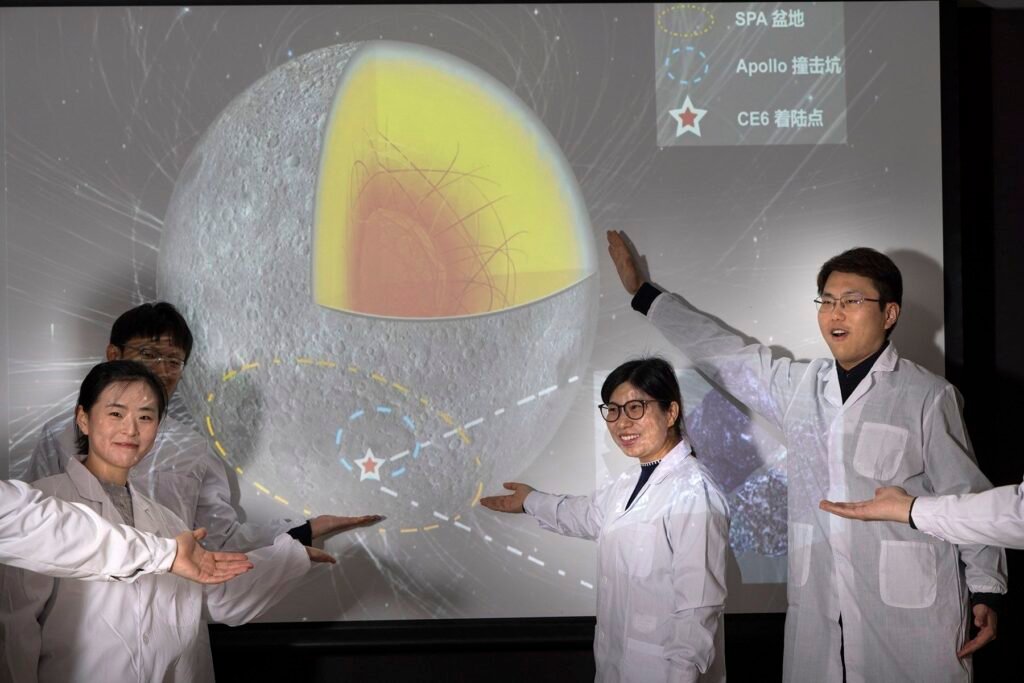
China has now significantly advanced in the field of international science. A new study reveals how China is surpassing the United States in key areas of research and setting the research agenda.
“Scientia potestas est,”- meaning knowledge is power ! This phrase was coined by the English philosopher Sir Francis Bacon in the late 16th century. Bacon did so at a time when his country, England was leading the world in both science and imperial power. Bacon’s aim was to show the people of his time that knowledge could be used strategically. And this principle still holds true today.
The field of global research has now reached a crucial turning point. By 2023, Chinese scientists could lead nearly half of the research conducted with American collaborators, according to a new survey published in the journal Proceedings of the National Academy of Sciences (PNAS). This is a historic figure that reflects Beijing’s rapidly growing influence. Now, when it comes to major international issues, China sets the research agenda.
Traditional indicators like the Nobel Prizes or the number of research publications are no longer sufficient to demonstrate true scientific strength. Newer criteria are now being used to measure China’s scientific progress and impact.
An analysis of nearly six million research papers shows that Chinese scientists led 45 percent of joint US-China studies in 2023, compared to 30 percent in 2010. If this trend continues, China will surpass the US in leading roles in strategic areas such as artificial intelligence, semiconductor research, and materials science by 2027-28.
China also leads in scientific publications. According to the new G20 Research and Innovation Report, nearly 900,000 scientific publications are being published in China. This figure represents a threefold increase compared to 2015.
The Nature Index evaluates 150 leading journals in the medical and natural sciences. China has long surpassed the United States in this ranking. Seven of the ten leading institutions whose journal publications are evaluated by the Nature Index are Chinese.
Despite having approximately 20,000 scientific institutions, Western countries appear to be in a weak position. Although Harvard University in the United States still holds the first position in the Nature rankings, the second to ninth positions are occupied solely by Chinese universities. The Massachusetts Institute of Technology (MIT) in the United States is in tenth place.
Why is China advancing in research ?
China has invested heavily in science, making it a key pillar of its development strategy. The country is now opening its research to greater international collaboration and actively organizing these partnerships. Chinese students and scientists are encouraged to work around the world. This strategy has led to the creation of a strong network of global cooperation.
China is investing heavily, especially in technological industries. It is also using its infrastructure project, the Belt and Road Initiative (BRI), to export education. Under this strategy, billions of dollars are being spent to attract global talent to China and build connections around the world. According to the PNAS study, science diplomacy is being deliberately used as a weapon.
Strengths and Weaknesses of the Chinese System
China’s strengths are rapid, strategic investments, and centrally controlled networks. This is why China’s research results in fields such as engineering, electronics, materials science, physics and chemistry are not only excellent, but also receive the highest recognition (high citation rate) globally.
However, strict central control by institutions has more than just advantages. China lacks original and groundbreaking discoveries in many areas of research. Furthermore, there is a complete lack of freedom in science.
Breakthroughs can be promoted in a controlled manner, but not creativity. In this regard, the US still has a significant advantage over China and Europe, as the culture of new discovery and innovation there is decentralized and corporate-driven.
Furthermore, times are becoming increasingly difficult for international research collaboration. The US and Europe view China as a strategic rival. Recent geopolitical and economic changes have not helped improve relations, making such collaboration even more difficult.
China and the US Rival for Dominance in their lives of Field of AI
The US remains at the forefront of artificial intelligence (AI), but China is also rapidly advancing. The DeepSeek language model is a testament to how quickly and cost-effectively Chinese companies can bring technology to market. Although Harvard still leads innovation in this field, Chinese academic institutions are rapidly catching up.
Today, China is leading the way in AI patent applications. The US is still maintaining good momentum, but when compared globally, even the best European academic institutions often lag far behind.
Why are the US and Europe lagging behind?
China’s rise comes at a time when the US and Europe are declining. The US research sector is facing a crisis due to political instability, budget cuts, and the exodus of top talent.
US President Donald Trump’s austerity measures and the growing open rift between the two superpowers have had a direct impact. This has led to a significant decline in joint research projects. Top scientific talent is now moving from the US to China.
Since the US no longer welcomes the best talent, Europe can seize this opportunity and attract this talent from the US and other parts of the world.
However, the biggest challenge facing Europe is that it has a huge backlog in many scientific fields, meaning much work remains unfinished. An even bigger problem is that attempts to bring about major change within the EU and the rest of Europe often fail due to national sensitivities or mutual restrictions.
China’s rapid advance is changing the balance of power
China’s incredible and rapid advance is completely altering the global economy and geopolitical balance. While China now dictates the direction of the international research agenda, Europe is increasingly lagging behind in this crucial race for future technologies.
One option would be to deliberately collaborate with Chinese teams, at least to maintain parity. However, how the Chinese government will respond to the fragmentation of the scientific landscape and rising geopolitical tensions remains an unresolved question.
Diversity is not a weakness
A concrete solution to counter this growing fragmentation is for European countries to emerge as a unified force, setting aside their national interests. The diversity of Europe’s languages, cultures, and traditions is actually not a weakness, but a strength. This diversity can bring about innovation that is impossible in countries with a uniform appearance, culture, or traditions.