Highlights – The US military has lost six nuclear bombs. In a situation where conflict with Iran has flared up, the US fears that if their lost nuclear weapons fall into the hands of the enemy, it could cause massive destruction
…………………………………………………………………….
During the transportation of nuclear weapons, there have been 32 accidents so far where the United States lost them or they exploded. Although these were later recovered, there have been six cases where the US could not find its lost nuclear bomb. These incidents of losing or accidentally dropping nuclear weapons have been named ‘Broken Arrow.’
According to a report by The Mirror, out of the 32 cases of Broken Arrow accidents, a total of six nuclear weapons remain missing—each of which is sufficient to destroy a city and kill millions of people. The nuclear weapons lost by America are scattered somewhere across the world. Some of these nuclear bombs have been lost in the depths of the ocean, where anyone could potentially find them.
Now, as Donald Trump has threatened severe bombing of Iran, concerns regarding hidden nuclear capabilities in the Middle East have begun to rise. However, the US believes that if it cannot locate its missing bombs, its enemies cannot either.
To date, 32 Broken Arrow accidents involving the US are known, and in six of those cases, the lost nuclear bombs have never been found. Given that the explosion of even one of these lost bombs could completely destroy a city and claim millions of lives, it has become a matter of serious concern in the current situation. In this context, let’s look at when and where America’s nuclear bombs went missing in Broken Arrow accidents.
15-Ton Hydrogen Bomb Lost by the US in 1958
In 1958, an incident occurred near Tybee Island where a fully armed B-47 aircraft, carrying a Mark 15 hydrogen bomb, dropped its nuclear bomb after a mid-air collision. According to The National Interest, as reported by The Mirror US, despite initial claims that it was a dummy bomb, the weapon was never recovered.
The B-47 aircraft was carrying a Mark 15 hydrogen thermonuclear bomb weighing 7,600 pounds. The explosive capacity of the Mark 15 bomb was 3.8 megatons, which was 190 times more destructive than the ‘Fat Man’ bomb. The Fat Man bomb had completely destroyed Nagasaki and forced Japan to surrender. In this accident, the wing of the F-86 was broken, but the pilot ejected safely, while the B-47 was damaged and the pilot feared the bomb might explode. Therefore, the pilot jettisoned the Mark 15 into the sea at Wassaw Sound near Tybee Island.
Using sonar, more than 100 Navy personnel searched for the jettisoned Mark 15. The search lasted for two months, but they found nothing. The Air Force informed the public that the bomb’s plutonium warhead had been removed before the flight and replaced with a lead substitute. However, decades later, documents released from testimony given before Congress in 1994 revealed that the Tybee Mark 15 was indeed a functional nuclear weapon.
A Thermonuclear Bomb Was Also Lost in 1966
In 1966, a B-28 thermonuclear bomb was lost in the Mediterranean Sea after a collision between two US military aircraft, and its warhead is still missing. A Spanish shrimp fisherman had seen a white package falling down. This was one of the four B-28 thermonuclear bombs that were scattered into the sea following the collision of two US military aircraft over the Mediterranean.
…………………………………………………………………..
. What Pentagon says ?
Recent Official Statements and Developments (March 2026)
As of March 2026, the Pentagon’s official stance on missing nuclear weapons remains consistent with its historical position, but recent briefings by top officials have added new layers of urgency due to the conflict with Iran:
1. Priority on Nuclear Readiness and Strategic Stability
On March 3, 2026, Undersecretary of Defense for Policy Elbridge Colby testified before the Senate Armed Services Committee. While he did not provide a specific “update” on the location of the six missing bombs, he emphasized that “nuclear forces are at the top of our priority list.” He stated that the 2026 National Defense Strategy would focus on “strategic stability and on deconfliction” amid the current war. The Pentagon’s position remains that these lost weapons are “irretrievably lost” and do not pose an active threat of being recovered by adversaries due to the extreme depths or environmental conditions where they were lost.
2. Modernization over Historical Recovery
The Pentagon’s recent communications focus heavily on the Sentinel ICBM and B-21 Raider programs rather than active recovery efforts for Cold War-era “Broken Arrows.” In early March 2026, officials reiterated that the US is confident in its current nuclear posture and that the historical “Broken Arrow” incidents are considered closed files, as the technical complexity required to locate and “re-arm” such aged, submerged devices is deemed nearly impossible for non-state actors or hostile nations.
3. Direct Response to Iran Tensions
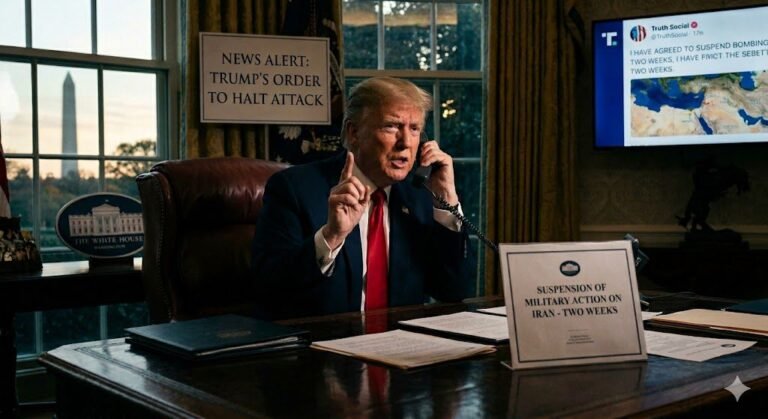
Regarding the specific concern about Iran, the Pentagon has shifted focus to preventing Iran from moving its own nuclear projects underground. On March 12, 2026, in response to questions about regional nuclear security, US military spokespeople emphasized that the primary threat is Iran’s current enrichment capabilities, not the 70-year-old missing “Broken Arrow” artifacts. President Donald Trump also stated on March 9, 2026, that the US is focusing on “securing the stockpile of highly enriched uranium” within Iran rather than searching for historical lost assets.
4. The “Safety” Defense
The official DoD position on the missing Tybee Island bomb (1958) and the Mediterranean B-28 (1966) continues to be that these weapons are likely buried under several feet of silt or at depths that preclude accidental discovery. The Pentagon has previously stated in declassified memos that “if the US military cannot find them with its specialized technology, it is highly improbable that an adversary could.”
In summary- while the Pentagon acknowledges the historical loss of these six weapons, its March 2026 communications prioritize the prevention of new nuclear proliferation in Iran over the recovery of Cold War-era losses, treating the “Broken Arrows” as permanent, unrecoverable features of the ocean floor.