
Summary –
Can a house-cleaning robot or a Wi-Fi router also pose a threat to your personal information ? America claims that many smart gadgets can become a threat to national security. Find out the whole story behind what is in these devices that has increased America’s tension.
………………………………………………………………
Can you ever imagine that the robot vacuum cleaner polishing your floor or the Wi-Fi router sitting in the corner could be spying on you? From the outside, this might sound like a story from a Hollywood movie, but this is the reality of the tech world. Amidst the intense race between America and China to get ahead in technology, the Trump administration in the US has now started banning Chinese smart gadgets one after the other. This time, the targets are not just smartphones or telecom networks, but gadgets that have reached your bedrooms and drawing rooms.
…………………
Strict Action on Chinese Gadgets
…………………………………………………………
America’s communications regulator, the Federal Communications Commission (FCC), has recently implemented new security rules. Under these strict rules, modern smart devices manufactured in certain countries, including China, will no longer be allowed entry into the US market.
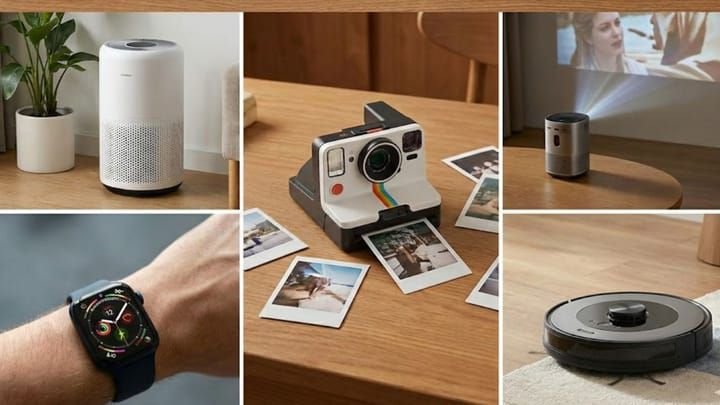
This blacklist includes home-cleaning robot vacuum cleaners, humanoid robots, robo dogs, smart Wi-Fi routers, power inverters, and various advanced AI gadgets connected to the internet. The FCC says that these devices are no longer just machines, but network devices that collect massive amounts of data. If this sensitive data reaches the servers of a foreign government (especially China), it directly poses a major threat to America’s national security.
…………
Trade War Took the Form of a Data World War
……………………………………………………….
In fact, this tech war between America and China is no ordinary trade war. It is essentially a race between the two countries to become the world’s next tech superpower. Today’s era is that of Artificial Intelligence (AI) and machine learning. This entire battle is for that precious data which our smart gadgets are collecting 24 hours a day without getting tired.
Tech experts believe that as smart devices connected to AI and the internet become more convenient, the faster they are also collecting user data. This is the reason why major world powers now consider not just hardware, but data security and digital sovereignty as an essential part of national security.
…………..
Since When Has America Had This Concern ?
………………………………………………………
This matter did not come to light suddenly. It started in the year 2018, when America expressed apprehension about espionage through network equipment by Huawei and ZTE. Although Huawei continuously denied these allegations, the company was nevertheless almost completely barred from the US 5G network.
Following this, questions were raised regarding data security concerning Hikvision and Dahua CCTV cameras, DJI drones, and TikTok. Now, the rapidly increasing use of AI technology has further heightened America’s concerns.
…………
How Can a Robot Vacuum Cleaner Become a Data Collector ?
…………………………………………………………
Most people think that a robot vacuum cleaner only cleans the floor, but modern premium models do much more than that. The LiDAR sensors embedded in them create a 3D map of the entire house. Many models also feature cameras and microphones. These devices remain constantly connected to the internet via Wi-Fi and are operated through mobile apps. Many companies also store data related to them on their cloud servers.
Front cameras in some models can even record inside the house. This is why security agencies believe that such devices can collect users’ personal information, house layouts, and other sensitive data.
…………………………………………………………….
Similar Questions Have Been Raised in India Too
……………………………………………………
Concerns regarding data security have also come to the fore in India. Recently, an advisory was issued by the government mentioning the need to exercise caution regarding CCTV cameras from companies like Hikvision and TP-Link. However, for now, these products are available in the Indian market and no official ban has been implemented on them.
About the Author