By – Jawahar Mishra
……………………………………………………………………
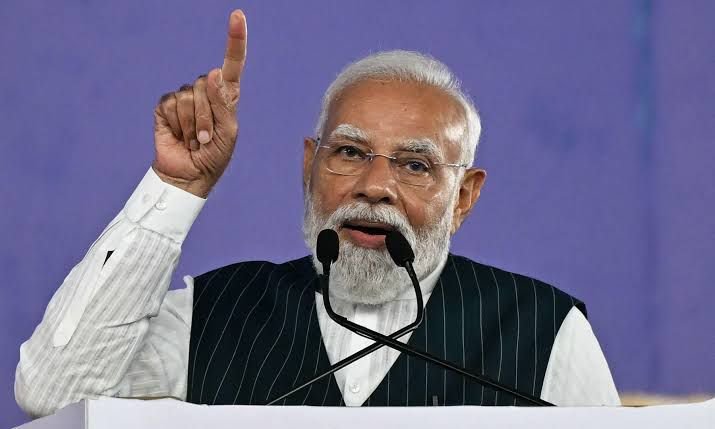
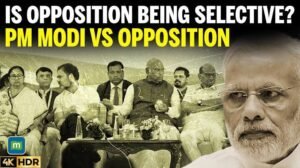
Indian politics has long associated Prime Minister Narendra Modi with themes like development, good governance, national security, and decisive leadership. During election campaigns, he has also prioritized his government’s successes, welfare schemes, and vision for the future. However, in recent days, noticeable changes in his political speeches and strategy have sparked new discussions within political corridors. Opposition parties allege that the Prime Minister is now adopting a more aggressive political style than before, while the BJP views this as a necessity of the changing political environment.
…………
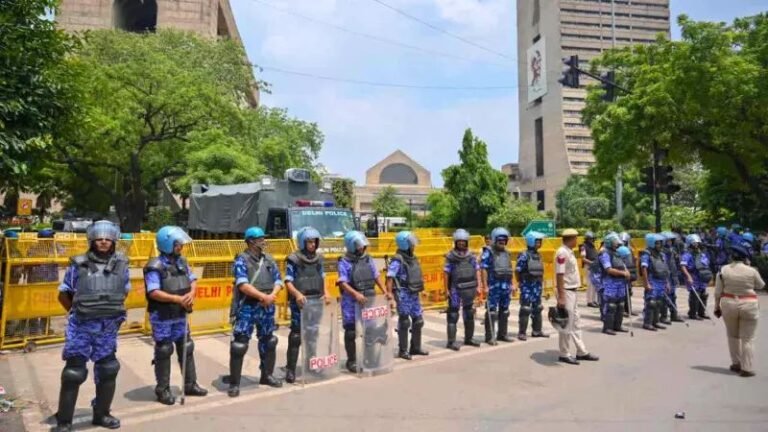
Political analysts believe that the nation’s politics is continuously evolving. The opposition is becoming more organized than before, attempting to corner the government on various issues. From Parliament to election rallies, the level of political conflict has escalated. In such circumstances, the BJP is also altering its strategy to convey its political message more effectively to the general public.
…………
In recent election speeches, Prime Minister Modi has directly responded to the opposition’s allegations and, on numerous occasions, raised sharp questions regarding the policies and working methods of opposition parties. According to political experts, this strategy may be an effort to keep supporters united and clearly articulate one’s stance in the electoral environment. On the other hand, opposition parties claim that the government is encouraging political rhetoric to divert attention from core issues.
…………
BJP leaders state that the Prime Minister’s approach adapts according to the situation. In their view, whenever the opposition continuously levels allegations against the government and raises questions on various issues, responding to them is also a part of the democratic process. The party has claimed that the Prime Minister still considers development, infrastructure, employment, Digital India, Atmanirbhar Bharat, and public welfare schemes as the focal points of his politics.
…………
Conversely, opposition parties state that the tone of political discourse in recent times has become more confrontational than before. Opposition parties allege that the government should pay more attention to inflation, unemployment, agriculture, economic challenges, and other issues concerning the public. According to them, these subjects need to be discussed in detail in Parliament and on electoral platforms.
…………
Experts opine that in any large democracy, political strategies change with time and circumstances. Electoral equations, coalition politics, the role of regional parties, and public expectations inspire political parties to modify their strategies. Therefore, a change in any leader’s political style cannot be attributed to just a single factor.
…………
Upcoming elections and forthcoming parliamentary sessions will clarify how effective this strategy of the BJP and Prime Minister Modi proves to be. Similarly, the opposition will continue its efforts to corner the government on various issues. Political analysts believe that ideological conflict between the ruling party and the opposition is natural in a democratic system, but the ultimate decision always rests in the hands of the general public.
…………
Analytical Insight
Context and Introduction –
…………………………………………………………..
Bharatiya Janata Party (BJP) and Prime Minister Narendra Modi have long centered their political identity on development, good governance, national security, and decisive leadership. However, recent political dynamics have highlighted a notable shift toward a more aggressive political posture, countered by a increasingly cohesive and organized opposition.
…………
Strategic Evolution in Indian Politics
…………………………………………………………………
The analysis reflects a critical juncture in contemporary Indian democracy where traditional governance narratives intersect with intensified political friction. The hardening of positions from both the ruling establishment and the opposition underscores a transition from policy-centric electoral campaigns to high-stakes ideological and confrontational polarization. For Prime Minister Modi, adopting a robust and direct counter-offensive serves a dual purpose: neutralizing opposition narratives in real-time and galvanizing the core voter base.
Meanwhile, the opposition’s concerted efforts to pivot the discourse toward socio-economic pressures—such as inflation, unemployment, and agrarian concerns—demonstrate a synchronized strategy to challenge the government’s primary developmental credentials. Ultimately, this escalating friction points toward a highly competitive electoral landscape where narrative control and grassroots resonance will dictate the final democratic mandate.
About the Author