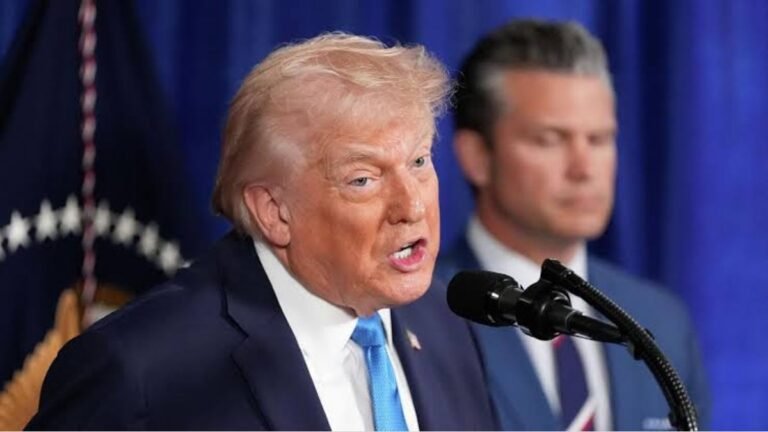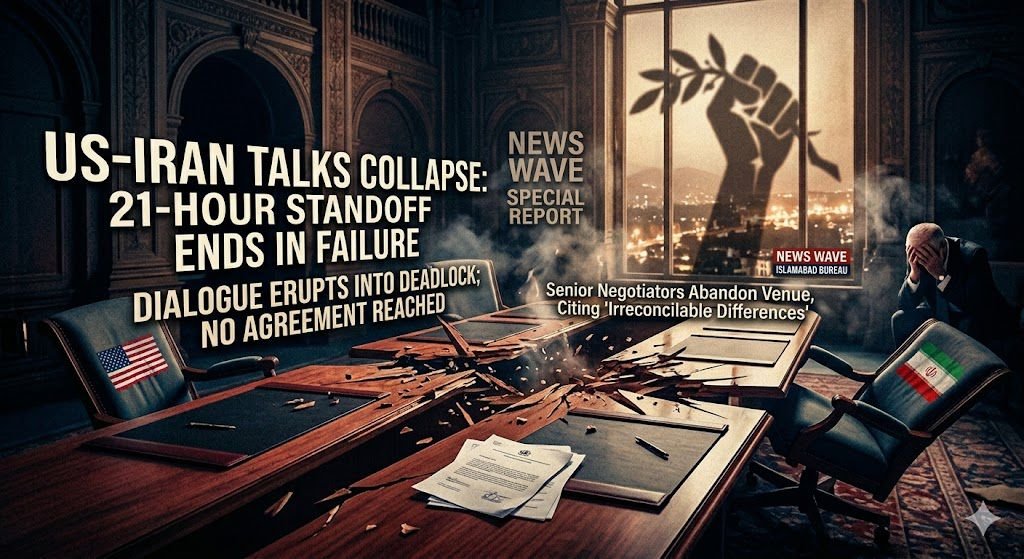
The 21-hour marathon peace talks between the United States and Iran held in Islamabad have failed to reach any specific conclusion. In this meeting organized through Pakistan’s mediation, both sides remained adamant on their respective stands, resulting in the hopes of establishing peace in West Asia being dashed once again.
The main reasons for the failure of the talks were:
Nuclear Program and Sanctions: The US wanted Iran to immediately stop its uranium enrichment, but Iran demanded the removal of all economic sanctions first.
Regional Influence: The US took a tough stance on Iran’s support for various active groups in the Middle East, which Iran described as interference in its sovereignty.
Lack of Trust: After years of long-standing enmity, the “Trust Deficit” between the two sides limited this 21-hour discussion to a mere formality.
Analysis of Subsequent Consequences:
The failure of these talks may lead to the following situations in the coming days:
Rising Tension in West Asia: The proxy war between Iran and Israel may intensify further. If diplomatic channels close, the risk of military conflict will increase.
Impact on Oil Market: Trade through the Strait of Hormuz could be disrupted, potentially causing crude oil prices to skyrocket in the global market.
Challenge for India: Iran is a strategic ally for India. If US-Iran relations sour further, it will be difficult for India to maintain a balance regarding the Chabahar Port project and energy security.
New Equations: Iran will now try to move closer to Russia and China, creating a new ‘polarization’ in world politics.
Conclusion:
The failure of the Islamabad talks is not just a failure of two countries, but a major blow to the global peace process. Unless there is effective third-party mediation in the near future, this cold war could turn into a major military conflict.
US Military Mobilization in Middle East: An Analysis
Background:
In the last two days, the US has deployed an additional 50,000 ground troops in the Middle East region. Following the failure of peace talks with Iran in Islamabad, this aggressive military step by the US has created a stir worldwide.
Main Objectives of this Troop Buildup:
Pressure on Iran: After the failure of peace talks, the US now wants to intimidate Iran by displaying military power instead of diplomacy. The presence of 50,000 troops resembles preparations for a “Full-scale ground invasion.”
Security of Israel: In the current situation, the US could use these “combat-ready” and ever-prepared troops to thwart potential attacks on Israel.
Tightening Sanctions: These troops have the capability to completely block Iran’s oil exports and military supply chains at the regional level.
Far-reaching Consequences:
Risk of World War III: If a direct conflict occurs between the US and Iran, the indirect or direct involvement of Russia and China could push the situation toward a world war.
Regional Instability: Due to the troop deployment, civil wars in countries like Lebanon, Syria, and Yemen will take an even more horrific turn.
Economic Crisis for India: Increased unrest in the Middle East will disrupt the supply of petroleum products to India. Additionally, the safety of millions of Indians working there will become a major headache for New Delhi.
End of Diplomacy: The arrival of 50,000 troops makes it clear that the US has now adopted a policy of deterrence instead of discussion
Conclusion:
Such a large military gathering right after the peace talks indicates that West Asia is now standing on a powder keg. A single small wrong decision could change the map of the entire world.
The Road is Still Open
Despite the failure of the Islamabad talks, Iran has clarified that although the dialogue with the US reached no conclusion, diplomacy is not over yet. Esmaeil Baghaei stated that the current discussion was the longest dialogue in the past year. The talks in Islamabad lasted for about 24-25 hours. These discussions were not direct but through the exchange of messages via Pakistan’s mediation.
Has any agreement been reached?
There was an understanding between the two sides on some important issues, but differences persisted on major issues. For this reason, no final agreement could be reached. Iran has clearly stated that “Diplomacy never ends.” Diplomacy is always a means to protect national interests; whether it is war or peace, dialogue should continue. Therefore, there is a possibility of conversation in the future as well. Baghaei informed that these talks took place at such a time…
On what issues did the talks stall?
Iran has alleged that the US and the “Zionist regime” (Israel) have carried out military attacks on Iran. This is the second time it has happened in the last 9 months. In this round of talks, new issues such as the Strait of Hormuz, the regional security situation, and Iran’s nuclear program were also added, making an agreement even more difficult.
Meanwhile, Donald Trump has signaled that if the talks do not progress, harsh measures like a Naval Blockade could be taken against Iran. Although the talks have failed this time too, Iran has made it clear that the door is not closed. Despite bitterness, distrust, and major issues, diplomatic efforts between the two countries will continue, which may pave the way for a major agreement in the future.