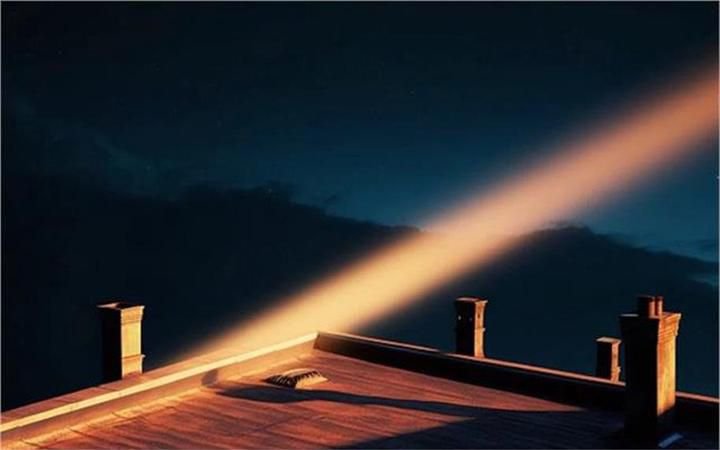
The dream of having daylight on your rooftop even in the dark of night, with solar panels producing electricity nonstop, is about to become a reality. Reflect Orbital, an ambitious American startup company, plans to build a unique satellite system that will beam sunlight directly from space to Earth. The company calls it a “Sunlight on Demand System,” and its primary goal is to keep solar farms active for power generation even at night.
How will this system work ?
This system is based on simple physics, just like focusing light on a wall with a mirror or clock. Huge mirrors on the satellite will capture sunlight and focus it onto a single point on Earth. This will be done from an altitude of 625 kilometers. The company claims that the intensity of the light will be only about 20 percent of midday sunlight. It won’t completely eliminate darkness, but it will be enough to keep solar panels active even at night. It will be brighter than normal moonlight. According to scientific calculations, at this distance the bundle of light will be about 7 kilometers wide, which means that the light will not be bright but diffused and dim.
The First Step Toward a Big Goal
Reflect Orbital has begun advancing its plan:
First Satellite: The company will launch an 18-meter-long test satellite called ‘Earendil-1’ next year (2026).
Mega-Network: This project will grow into a massive network of 4,000 satellites by 2030.
Mirror Size: Each satellite will have a mirror approximately 54 meters wide, capable of focusing sunlight onto any part of the Earth.
Major Challenges Ahead
Although the technology has been successful in ground tests, scientists have identified some challenges regarding its practicality in space:
Test Success: Last year, company founder Ben Nowak tested a 2.5-meter-wide mirror mounted on a hot air balloon, measuring half the intensity of the midday sun, proving the technology’s effectiveness.
Space Challenge – To provide just 20% sunlight from an altitude of 625 kilometers, a 54-meter-wide satellite can only be stationary in one spot for 3.5 minutes.
Thousands of Satellites Needed: The company says that approximately 3,000 satellites will be needed to continuously provide 20% sunlight, and thousands more satellites will need to be launched if the light is needed for an hour.
If successful, this project could prove to be a game-changer in the field of renewable energy and energy security.
About the Author